Follow Us on Google

•Says future is bright, despite challenges
From Sola Ojo, Abuja
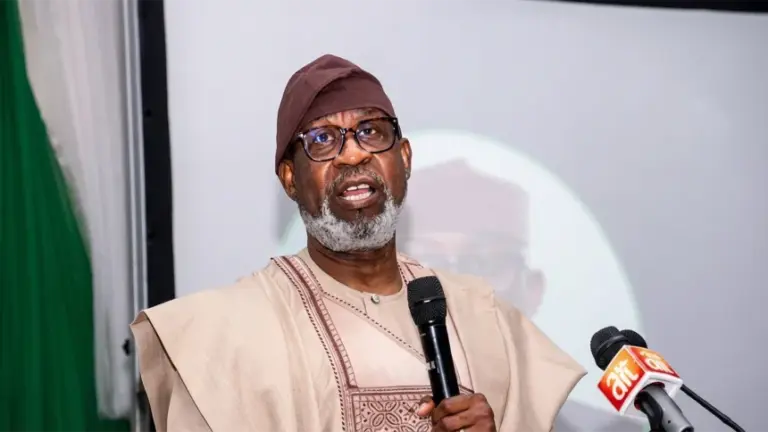
As Nigeria clocked 65 on October 1, Islamic cleric, Sheikh Ahmad Gumi, who shares the same birthday with Nigeria, says he sees hope and steady progress despite insecurity and economic challenges. In this exclusive interview with Daily Sun, the renowned Kaduna-based Islamic scholar stressed that Nigeria’s democracy has taken root and can no longer be truncated by force, noting that diversity has become a source of unity rather than division. This is even as he insisted that dialogue, not force, remains the best path to end banditry and insurgency, while calling for education, healthcare and welfare-driven policies as the foundation for lasting peace and prosperity.
By the grace of God, you are 65 years old, the same age as Nigeria. How do you feel sharing the same age or the same birthday with the country?
Well, it’s really a pleasure for me to be celebrating my birthday together with Nigeria because I was born on Saturday, 1st October, 1960, around 6 o’clock in the morning. So, I don’t need to organise any birthday for myself, Nigeria is doing it. It is a pleasure for me.
From the African perspective, when someone is 65 years old, we expect to see wisdom in such a person. Do you think Nigeria, despite our experience with military and democratic rule, has attained that kind of wisdom at 65?
You see, when you compare an individual to a nation, there is a difference. For an individual, 65 years is a long time; very few people even get there, though with modern medicine many are now reaching their 90s and more. But for a nation, 65 years after independence is still very young, almost infantile compared to older civilisations. That said, I believe Nigeria is developing quickly, fast, and in the right direction even with our security challenges. Why? Because Nigerians now have the chance to elect their leaders, and nobody can doubt that. It is not simply about the amount of money you have as a politician. Take Jonathan’s era as an example: it showed that people can decide who they want. Even when money is shared, Nigerians may collect it but still vote according to their choice. That ability to choose our leaders is a great achievement.
Look at the Gulf states’ leaders who are imposed. Even after the Arab Spring, countries like Egypt elected a leader, Morsi, but the military took over, imprisoned him, and killed him. I don’t see that happening in Nigeria. We have passed that stage. Our diversity has now become a source of unity. No section of Nigeria can hold the rest to ransom. So, the fact that we can freely elect our leaders is a milestone. Let it mature. It is like planting a mango tree: the first fruits are usually small, but as the roots grow deeper, the fruits become better. That is how our democracy is, still young, sometimes scanty in dividends, but gradually taking root.
I have seen in this dispensation and the one before it that every governor now tries to show something he has done. In the past, they didn’t even care. Today, governors compete, even if priorities differ. Some think building flyovers everywhere is an achievement, while others focus on different things. But at least there is a consciousness of accountability now.
You mentioned governors showing what they are doing. But some argue their priorities are misplaced, with flyovers, instead of education and healthcare. What is your view?
The intellectual capacity of a governor shows in how he sets his priorities. A state suffering from poverty, poor education, and inadequate healthcare does not need flyovers and expressways as its first priority. First, tackle education and health. The same people you educate are the ones who will eventually build those bridges. But at least now, every government is trying to do something. Before, there was nothing, no bridges, no education. Today, whether state or federal, whichever party is in charge, they want to show the people what they are doing. That is progress. When our democracy matures and we have more educated and qualified leaders in position, priorities will shift. Resources will be better directed to where they are most needed. That gives me great hope.
You have often spoken about insecurity, banditry, Boko Haram and others. Do you still believe these challenges will fade away?
Yes. Insecurity is like a burning candle. If you are patient enough, it will burn out and die away. Even the bandits, how many are they? They are dying, they are moving. I once asked a bandit we were negotiating with: ‘Please, give us your children for education, we don’t want them to be like you.’ And he agreed. He said he didn’t want them to end up like him. So, if we handle this problem correctly, we can simply take their children, put them in school, and educate them. That way, they become useful citizens. There will be no one left to ride motorbikes as bandits. Boko Haram, too, is dying; what remains is mostly foreign influence destabilising us through dissidents.
Is that why you keep stressing the need for the government to take its citizens seriously and shield them from foreign influence?
Exactly. Groups like the bandits, Boko Haram, and IPOB are heavily influenced by foreigners. For example, someone openly inciting violence, calling for the killing of our armed forces and for secession not through the democratic process, but by agitation, and then a country like Britain grants him citizenship and protection. How can we then say foreign powers are not part of this problem? They use these groups, and they usually target youths. You hardly see a mature, professional elder advocating violent secession. It’s mostly young, restless people. Even the leaders of Boko Haram, like Muhammad Yusuf and Shekau, were all young, in their thirties.
What we have are half-educated, half-baked young men being used against the nation. If Nigeria identifies the root cause, instead of destroying our future by fighting them, we can turn them around. With our intellectual resources and capacity, we can educate and reform them into good citizens.
In the broader African context, how do you see what is happening in countries like Mali and Burkina Faso, where there is talk of ‘indigenous leadership’?
That is exactly why Nigeria must mature its democracy and strengthen its institutions. Where others are going back to military or authoritarian systems, Nigeria must remain steady. Our diversity and democratic process are our safeguards.
Other News
You’ve said democracy in Nigeria has stabilised. What more do you think is needed to strengthen it?
Yes, democracy has stabilised because I don’t see anyone successfully coming out to take over governance by force. What remains now is for Nigerians to learn how to elect good leaders. Leaders who put national interest first, who make Africa the central focus of their foreign policy, and who cooperate with other African countries to entrench democracy. We must also discourage the rule of the gun. If you destabilise your neighbour, you destabilise yourself. So, like what happened in Asia, we should encourage civil society and democratic movements, not military coups.
What gives you hope about Nigeria’s development?
Technology is helping us in every field. Nigerians are catching up. We have programmers, engineers, and innovators. We can start building our own bridges, our own cars, just as China has done. In fact, there are already local car manufacturers, like in Nnewi Anambra State. If the government insists that construction and industries use Nigerian hands, we can become self-reliant. The problem is that many of our politicians prefer cheap, low-quality foreign projects like railways that collapse after a few years. But Nigeria has the manpower and potential to be a very prosperous country. We must play down our differences and live in peace and tranquility.
Some argue that eight years is enough for any President to transform the economy, especially since Nigeria has been practicing democracy since the 1990s. What do you think?
Every leader can only give what he has. From the first republic till now, each one did his best according to his capacity. But a new generation of leaders is emerging. Nigerians are becoming more educated and more exposed. The old cycle of politicians is withering away. They cannot stay forever. Just like General Yakubu Gowon and his military colleagues, the era of imposed leadership has passed. Now we have full democracy: you can only sit on that chair through votes. We are improving.
Many young people believe new leaders like Mr. Peter Obi can quickly change Nigeria, especially when he said four years is enough for him to do that. Can he?
You can only judge a leader by his record. Look at what Peter Obi did as governor of Anambra State; visit the state and assess. The same goes for Tinubu in Lagos, see what he did there. That is the only way you can predict what someone can do on a national level.
If you don’t have a team, you are going to fail woefully. Nigerians should learn not to personify leadership. Don’t say ‘this man must be the one.’ Whoever becomes the leader should have a team of experts, especially in the economy, agriculture, and security.
Right now, we are spending trillions on security but wrongly putting resources in the wrong place. No individual can do it alone. Leadership is not about one person but about a competent team. All the major candidates, Obi, Tinubu and Atiku, are saying the same thing about reducing the government’s role in the economy. They are all saying that the government should disengage from production and let the economy grow naturally. I agree with that in principle but only in highly educated societies like Germany or the UK can that happen.
Nigeria is different: about 80 percent of our people are semi-illiterate, and 80 percent live in abject poverty. If you apply textbook economics here, it’s like a surgeon trying to operate by just reading a manual, it won’t work. We must run a welfare state, empowering the public sector, supporting the poor, and at the same time, gradually encouraging the private sector. That way, we can grow without unnecessary suffering.
Recently, both President Tinubu and Governor Uba Sani of Kaduna State claimed victories in the fight against insecurity. Yet, in the last few weeks, there seems to be a resurgence of attacks, especially in the North-West. How do you see it?
Insecurity can flare up here and there, but overall the situation is better than before. For example, the Abuja-Kaduna Road used to be one of the most dangerous in Nigeria. People abandoned it for the train, but even the train was attacked at some point. Today, the road is much safer. In Birnin Gwari, people could not farm for 10 to 15 years. Now, they are farming again. In Kaduna, Governor Uba Sani has encouraged peace movements. What is bringing this change? Dialogue. These armed groups are misled. If you try to use force alone, what some call the ‘red eye,’ it will not work. Guerrilla warfare is very hard to win. Look at America in Afghanistan, they couldn’t defeat the Taliban in 20 years. Israel in Gaza, even with all its forces, cannot subdue Hamas. The same with FARC in Colombia and rebel groups in Sri Lanka; eventually, governments have to sit down for peace. So, the picture is not gloomy. In fact, it is better than what we had before. Yes, there are still problems, but progress has been made.
You’ve emphasised dialogue in resolving insecurity. But critics say peace deals only shift the violence from one area to another. How do you respond?
That’s why we must approach insecurity holistically, not in a piecemeal or fire-brigade manner. If you make peace in Birnin Gwari, the fighters may move to another place. Tha was what happened in Zamfara, where the governor rejected peace deals. Now the state suffers worse violence, killings, and mayhem almost daily. In Kaduna State, honestly speaking, people are much safer. Before, in places like Millennium City, hardly a day passed without a kidnapping incident. Today, it is quiet, and people are returning to their communities to resettle. In Katsina, too, peace is gradually returning, not because the government initially wanted it, but because the locals themselves started dialogue with the armed groups. Eventually, the government realised it must sit down with them.
What should be the long-term solution after dialogue?
Once there is peace, the government must follow up with education, healthcare, and social development. When people become civilised, they realise it is not in their own interest to remain armed or live as criminals. You can never be a criminal forever. You may enjoy a few years, but ultimately, the law will catch up with you. That is why we must educate them, integrate them, and give them opportunities. I look at it positively: if we combine dialogue with development, the security challenge will end.