Follow Us on Google

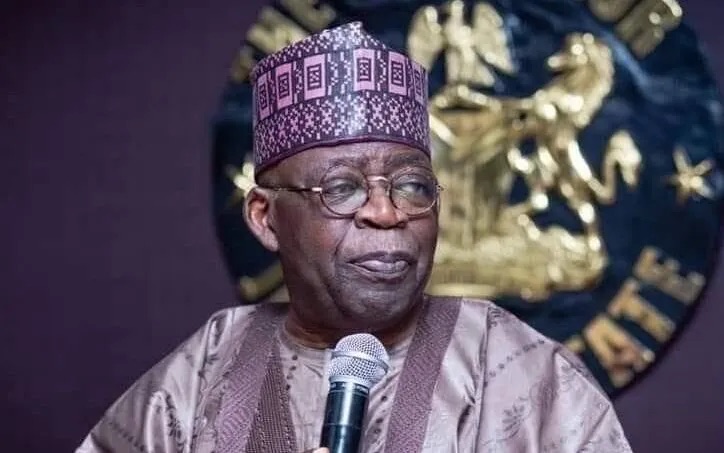
President Bola Tinubu has called for stronger defence partnership among African countries as a strategy for securing the continent and confronting terrorism and other violent crimes. Tinubu stated that the cooperation must go beyond supply of military equipment to the development of local expertise, strengthening of indigenous industries and improvement of the continent’s capacity to sustain its security operations.
The President, who spoke at the opening ceremony of Africa International Defence Exhibition (AFRIDEX) 2026 in Lagos, noted that threats ranging from terrorism and insurgency to banditry, piracy and emerging cyber risks required stronger cooperation among African nations. “From the Gulf of Guinea to the Sahel, from our territorial borders to cyberspace and outer space, the threats confronting us are becoming more complex and interconnected,” Tinubu said.
He added that the threats were claiming lives, displacing communities, disrupting trade and undermining development. According to him, Africa’s security must, therefore, command collective attention, because there can be no enduring prosperity where fear governs daily life.
The President had earlier called for the establishment of a Regional Counter-Terrorism Centre that would serve as a hub for intelligence sharing, operational coordination, and capacity building throughout the continent. He had specifically recommended comprehensive efforts to contain the scourge, including addressing its root causes and cutting off the financial lifelines that fuel terrorist activities, such as ransom payments and illegal mining operations.
The President’s latest recommendation is timely, given the rising activities of bandits and terrorists in many parts of the continent. Insecurity across Africa costs the continent approximately $97 billion annually in direct and indirect economic impacts, according to regional and macroeconomic studies. Specific conflict-ridden zones like the Sahel face an estimated $18 billion in direct GDP losses every year from security-related trade disruptions alone. These are aside losses in human resources and other costs arising from displacements. In August 2025, SBM Intelligence indicated that no fewer than 4,722 people were abducted and N2.57 billion paid to kidnappers as ransom between July 2024 and June 2025, in Nigeria. Within the same period, the National Human Rights Commission (NHRC) reported that there were 3,012 kidnappings and 3,584 killings in a period spanning 15 months. The rate would have increased given the rapidity of attacks and advancement in tactics by the hoodlums. Other African countries are not spared the challenge.
The proposal by Tinubu requires urgent attention from the leaders of the continent. Insecurity is a present danger in Africa. Any arrangement being put in place to halt the menace and secure the continent is commendable. African defence partnership is in the interest of all the countries on the continent. There is nothing wrong in seeking stronger defence alliances given the fluidity of migrations across their borders. No country is an island onto itself. Some of the terrorists are known to have infiltrated through neighbouring countries. A strong regional partnership is expected to check such undocumented movements and reduce the influx of small arms and ammunition into the constituting states.
Other News
The push for the partnership is particularly important to Nigeria as the 2027 elections draw near. While going for the deal, there is need to police the nation’s borders. Former Head of State, General Yakubu Gowon (retd), had identified porous nature of Nigeria’s borders as a contributing factor to the country’s security challenges. Gowon specifically blamed the escalating trends in banditry, kidnappings, and other incidences of violent crimes in the country to the unmanned borders. The porous borders encourage illegal arms proliferation, contributing considerably to the frightening level of insecurity Nigeria is currently grappling with.
These are issues that should not be taken lightly. Nigeria has large stretch of borders. The borders are porous and poorly policed, leaving people to stream into the country unchecked. Data from the Nigerian Immigration Service (NIS) showed that the land borders were vulnerable and the personnel to man them, grossly inadequate. It indicated that there were about 1,500 identified land border crossings into Nigeria, with only 114, covering 4,000 square kilometres, approved control posts manned by merely 23,000 Immigration Officials and other security agencies. Statistics also reveal that Nigeria has international land borders of about 4,470 km (2,513 miles) with Chad Republic, Cameroon, Benin and Niger and a coastline of 774km, which are largely unmanned. These are the loopholes the foreign criminal elements exploit to slip into the country.
Tightening the land borders will drastically reduce the influx of foreign invaders. The provisions of the Economic Community of West African States (ECOWAS) Treaty on Free Movement of Persons, Right of Residence and Establishment, should not be used by undocumented aliens to enter the country. There is need to look inwards in securing the country. No investment thrives in atmosphere of insecurity.
Lasting security requires strong institutions, public trust, reliable partnerships and industrial capacity to sustain defence capabilities. Apart from the regional approach, the government should address the drivers of terrorism and extremism, including poverty, hunger, unemployment, marginalisation, and social injustice.