Follow Us on Google

By Chukwudi Nweje
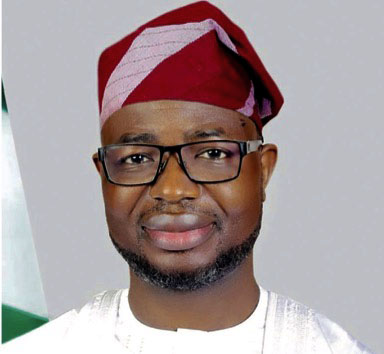
Major Gen Henry Idowu Omolaja Ayoola (Retd), a fellow of the National War College (National Defence College Nigeria) and Member of the Nigerian Society of Engineers is a former Commander, Special Task Force (OPERATION SAFE HAVEN) covering Plateau and parts of Bauchi States. He is also a former Chief of Defence, Research and Development at the Defence Headquarters, a position he held until his retirement. He is currently the National Coordinator of Initiative for Peoples Rebirth and convener, Restructure Actualisation Movement.
The Federal Government has given the Nigerian military a deadline of December this year to defeat terrorism in the country, how do you see this ultimatum?
As an optimist, I know that perpetual optimism is a force multiplier. This quote by the former United States of America Secretary of State is a good way to set a target, and targets have a way of motivating people towards achievements and peak performance, and I guess it will achieve that much. However, when I look back on some of the lessons I learned from the history of wars, I can tell you that given the vagaries and uncertainties of a war, nobody can predict how long it will take to win a war. However, coming from a strategic level with those collections of ministers, with the Chief of Defence Staff (CDS), Gen Lucky Irabor also being there, obviously, they had situation report and update on the state of the nation before coming to that conclusion. But as I said, it is an optimistic posture, and it is good because it will help to motivate the troops and make them know that a timeline is given, so they can do all within their power to bring the war to a conclusion to Nigeria. But, if I go nitty-gritty to that statement, they just mentioned terrorism which makes me ask what about insurgency; terrorism is broad, and it is not all-encompassing in our own situation in Nigeria. The situation we have in Nigeria started majorly with insurgency, and then terrorism as a tool to an end. We have banditry which has involved kidnapping, and hostage taking for ransom among other things. So, is it the totality of all these that the ministers who addressed the press were talking about? We need to clarify that before we make an informed decision.
But again, since the last meeting of the National Security Council (NSC) after the attack that left some personnel of the 7 Guards Battalion dead, remember that statement by President Muhammadu Buhari that the military has been given full freedom to the military? For me, that was the turning point in the war against terrorism. It means that from that time, the service chiefs had the full freedom to determine how and what strategy to employ in the war against terrorism but that full freedom must be interrogated because it is a loaded statement that seems to be saying that the military didn’t have full freedom before that time. But I was optimistic from that time, and I stressed those two words ‘full freedom’ and sincerely I have been vindicated because since then, our troops have been doing well in the North-East against both Boko Haram and the Islamic State of West African Province (ISWAP). Maybe, premised on these successes, they arrived at the conclusion that terrorism will be history by December.
Does the military have all it requires to effectively fight and win the war against terrorism?
For me, for the military to effectively fight terrorism, to deter, and ultimately decimate the forces that are involved, we must do more than we did before. Even now that the military has full freedom, do the services have all that is required to win the war? There is what we call improved battle space awareness, which is an enabler to help the military succeed in their operations, and we need to work on that. We also need to procure all the military technologies that are applicable in the peculiarity of this environment and see how that will help the military to achieve the success we are looking for. Again, we also need to look at logistics and the area of improving the welfare of the troops. I know the CDS, and the Service chiefs are working hard on that. The troops need all the support they can get to meet that deadline. The December deadline is not over-ambitious provided that these requirements are made available to the troops.
Looking at insecurity holistically, what is your prognosis, and if December is not feasible to win the war against terrorism, when do you think is realistic, Nigerians are still held as captives in different forests and people can’t travel without the fear of being kidnapped, what do you say about that.
We can all recall a former Chief of Army Staff (COAS) who during an interaction with the National Assembly made his own prognosis and said that it will take about 20 years to end insurgency. I don’t want to mention his name. Sometimes, just like in a football match, those of us who are spectators see something that the players will not see because he is engrossed in trying to score a goal. It is the same thing here, sometimes those who are spectators could see something the troops in the field will not see because immediately the COAS in question left office, he began to see things in a different light. I will put it in a more cautious way by saying that we should expect all that is possible to be done at once and the seemingly impossible will take some time. Of course, this carries with it the optimism and the necessary motivation to get the work done but of course, giving room for what we call the fog of war in military parlance and other uncertainties. Sometimes, when you set targets and the target is too high, and you don’t meet that target, it has the possibility of downplaying morale, so there must be a balance between the target set and the reality of what is on the ground and how long it will take to get the work done. Usually, any commander that is given a mission will not give a timeline at the ground strategic level; such a commander will give room for flexibility to the military strategic level where the Service chiefs and the field commanders will deal with the nitty-gritty of timing and what it will take to get the work done. We are in September, and December is three months away. There is no harm in setting a target and not meeting it so long as it helps you to retrace your steps and review your tactics appropriately to see how much work you need to put in to get the work done.
This week just as the ministers were setting a timeline to end terrorism, the intelligence agencies also met at the headquarters of the Department of State Security (DSS) to discuss terrorism financing, how important is that?
It is good that the government is doing this now, although it should have come earlier; it is however better late than never. Using only the kinetic approach to fighting insecurity will not get the job done, so we thank the security agencies for taking a comprehensive approach to the war.