Follow Us on Google
• How motorists are held hostage by ‘government touts’
From Juliana Taiwo-Obalo, Abuja
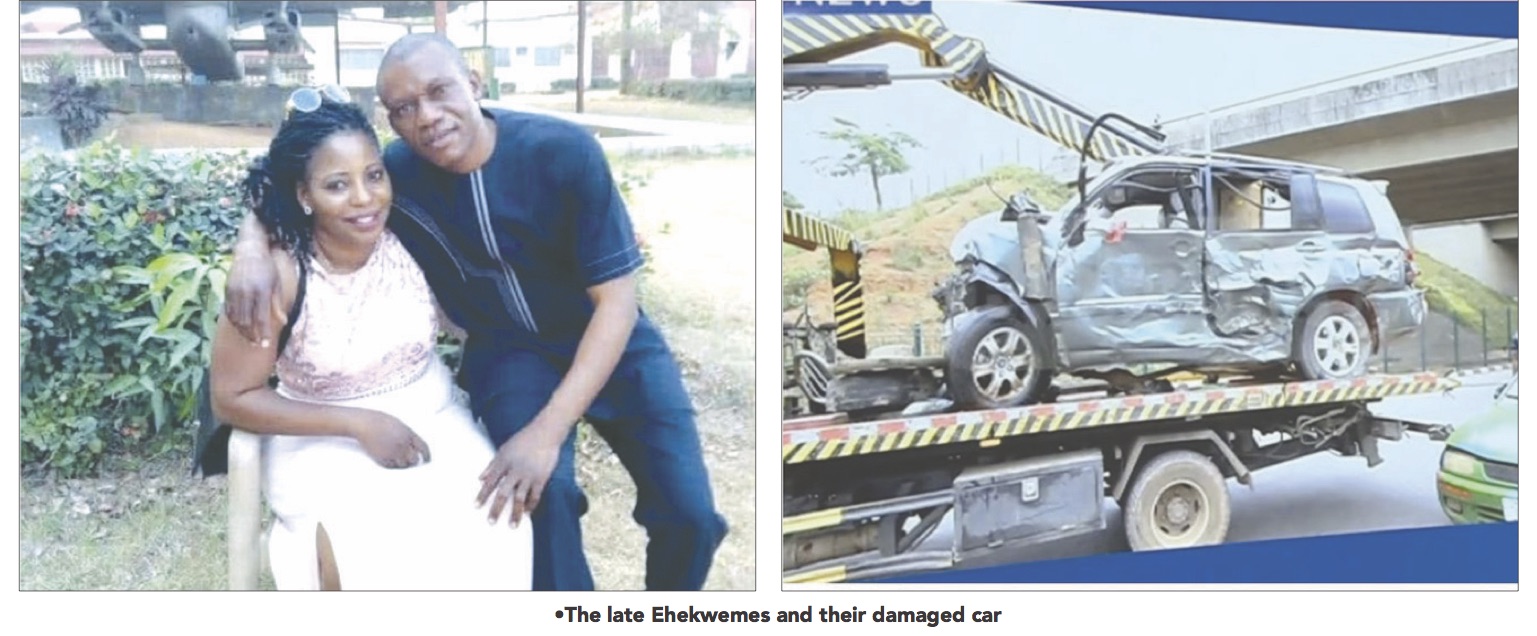
In the heart of Abuja, a tragic incident at Mabushi Bridge, September 3, involving Emeka Ehekweme, driving with his wife and son, exposed deep fractures in the city’s enforcement and justice systems. The incident claimed the lives of the entire family. It reignited serious questions about lawlessness, accountability and the rise of touts masquerading as agents working for government.
It laid bare the challenge of controlling illegal enforcement groups operating with apparent impunity, and the glaring weaknesses in a justice system struggling to protect innocent lives.
Residents have repeatedly voiced their despair, frustration and fear over the rampant activities of touts—locally known as agberos—on the streets and highways of the Federal Capital Territory (FCT). From Banex junction, Banex bridge, passing through Mabushi, Berger bridge, Wuye, Area 1 and 3, Apo bridge roundabout, Lokogoma to Nyanya on the outskirts, motorists and passengers face daily harassment. Despite countless calls through radio and TV shows, innocent residents remain victims of unchecked extortion and violence.
“My name is Mike, the surviving agbero in the Mabushi accident that killed the couple,” he wrote on the Facebook post of “Nigeria News Now” on Sunday, September 7, 2025, five days after the tragic incident that left five people dead.
His confession, raw and heart-rending, peeled back the curtain on a dark underworld few dared speak about openly—a world where fear, violence and extortion prevail, and human lives are tragically expendable.
Mike said he lived in Gwagwalada, one of Abuja’s satellite towns, but he worked in the heart of the city, enforcing the unwritten laws of a brutal and chaotic trade. His duty, as he described it, was to ensure that every commercial vehicle picks up a daily ticket before ferrying passengers—a system supposedly designed to regulate the chaotic informal transport sector: “If they don’t buy, we stop them. If they refuse, we follow them.”
According to Mike, Ehekweme, was stopped by him and his colleagues for allegedly attempting to pick up passengers without the required ticket. Mike said he boarded the vehicle to direct Ehekweme to the union office to settle the issue: “Instead, the driver refused to stop and sped off, sparking a frantic chase. I entered the vehicle to direct him to our office at Vandees but the man refused to stop. He started driving fast. Before I knew it, there was an accident. My leg and hands are broken, the couple and my two fellow agberos that entered the car died, since yesterday, nobody from the union has checked on me.”
The gravity of Mike’s admission brought into fore the human cost of a menace long ignored. The union they belong to collects thousands of naira daily from ticket sales, part of which goes to the leaders who remain distant from the carnage unfolding beneath their watch: “From the N7,000 ticket sales, we give the chairman N3,000, while we share N4,000. I regret joining them. If something happens to anyone, you won’t see any of our leaders. I regret entering that car.”
The FCT Police Command confirmed the deaths of the three occupants of the vehicle alongside two of the self-styled touts involved in the violent encounter. The third assailant remains hospitalised. The fiery rage and heartbreak that followed culminated in an angry mob lynching three of the suspects—a grim reflection of the public’s frustration with a system that appears to have failed them.
This was no isolated incident. In Abuja, similar narratives of violent extortion, harassment and lawlessness have become commonplace. Motorists and passengers alike face daily harassment from agberos, who operate freely at bus stops, motor parks, bridges and busy junctions.
“This is not ticket collection, this is extortion, simple,” said an experienced commercial driver. “You can’t even stop to drop someone without being surrounded. They seize your keys, demand money and threaten violence if you resist.”
Stories abound of motorists being held hostage until they pay sums sometimes as high as N25,000 for the “privilege” of driving, picking up relatives or dropping off colleagues from work in certain areas.
Grace Okokon lives in Lugbe: “My heartfelt condolences to the families affected. It is truly a sad incident that happened. This country is becoming a non-state where some believe they are above the law and nothing happens to them. Touting has been legalised or considered a right in Abuja. This group of touts have powerful godfathers who protect them, which leaves the police helpless.
“The police often tell victims to settle matters on their own with the touts because they know who is behind these criminals. Such impunity allows dangerous individuals to threaten innocent Nigerians as they go about seeking their daily bread.”
Residents like Shirley Daniels from Lokogoma, speaking on a radio call-in programme feel trapped: “Because fuel prices and transport costs have skyrocketed, neighbours, colleagues share rides or pitch in money to buy fuel to commute to and from work. But even then, touts make life miserable by demanding money and extorting those who have decided to be their sister or brother’s keeper.”
The touts often claim legitimacy by brandishing various identity cards. Some bearing National Union of Road Transport Workers (NURTW) or masquerading as officials from Abuja Municipal Area Council (AMAC) or FCT local authorities. “They wear different colour of vests; some maroon, some purple, others just plain clothes,” said an anonymous taxi driver. “It’s all a scam. They are not officially recognised operatives, but they act like they are above the law.”
The challenge is compounded by police complicity or inaction. Some of the callers claim that law enforcement officials frequently advise victims to settle with the touts instead of intervening. Some officers are accused of accepting bribes from these touts. A resident who works in a plaza around Banex Bridge said: “If you report them, police will tell you to settle with them. It’s like the government has abdicated its responsibility.”
Commercial drivers, forced to pay bribes to operate inflate fares to cover extortion. “Fares go up, making transport unaffordable, especially for the poor,” said Emmanuel Dike, an e-hailing driver.
Elder Bamgbose, contributing to the radio call-in programme condemned the jungle justice metted out to the perpetrators, posing a critical question: “Where do we go from here? How do we sanitise the system? How then do you trace these touts? Which office do you go to?
“People said they work under AMAC, but we’re yet to verify that. Even if you pay a visit to the AMAC office now, would you see evidence that these people work under their authority? First of all, they’ve been set ablaze. You have to identify them, trace them, get their details, and then hold whoever authorised them accountable—because why else would they be allowed to operate like this?
“Jungle justice should not be condoned, it should not be supported in any way, manner, or form. I hear people say even if these individuals were arrested and taken to the police, they are often back on the streets the same day. This reflects broader failings of our justice system.
“Police and other law enforcement agencies are trained to carry out their duties without abusing rights or endangering lives. They operate under codes of conduct, so how much more so for these touts and ruffians? Even if these touts weren’t officially recruited, allowing them to operate unchecked is a problem. And if they were recruited, they should be properly trained.
“Uniformed officers who misbehave must answer to the law. But we rarely see that happen as it should. That is why some say those arrested are out the next day. It shows how weak and toothless our justice system has become.
“We must go back to the beginning. Who authorises these people to operate? What is the process? Who answers for the crimes committed against these families? Even if not today, we should pursue this matter. If these are AMAC operators, AMAC must explain why such actions are allowed. If under the FCTA, they must speak up. This conversation did not start today or this year. It has to stop.”
Lydia Ogedegbe shared her bitter experience on her Facebook post: “They detained us for five hours demanding N70,000, calling it a local government tax. It’s blatant extortion and it’s ruining people’s lives.”
The everyday reality is grim. Many residents avoid travel after dark, businesses suffer as customers fear night movement, and rents have soared in safer neighborhoods as people relocate. Panic and trauma are widespread, particularly among women and young people vulnerable to predation.
“I’ve survived harassment multiple times,” lamented Isiaka Wakeel. “There’s almost no safe passage anymore in Abuja.”
Voices like Chizoba Ogbeche’s provide haunting reminders of human suffering. She recounted how one of her church members was attacked and left dying by touts, despite pleading for medical help: “Her family left the matter to God, but the scars remain.”
People’s trust in formal structures has diminished so deeply that jungle justice has become a tragic but understandable response, said one of the callers. The lynching of the Mabushi suspects is an unmistakable sign of a desperate public seizing control where institutions have failed, the person said. They call for thorough reform—proper recruitment and training of transport officials, clear regulation and enforcement against touts, and stringent action by security agencies.
Yet, despite promises of investigations and security meetings initiated by the FCT police under directives from the FCT Minister, real, sustained action appears elusive. Residents remain trapped in a vicious cycle where touts flourish amid institutional neglect, and ordinary citizens face omnipresent threats on their streets.