Follow Us on Google

By Chinenye Anuforo
Telecommunication operators have called for visible regulatory independence, harmonised taxation, stronger infrastructure protection and coordinated government action to sustain recent gains in the sector, while the new Chairman of the Board of Commissioners of the Nigerian Communications Commission (NCC), Dr. Idris Ibikunle Olorunnimbe, assured stakeholders of fairness, accountability and a firm commitment to creating an enabling environment for long-term stability and investment.
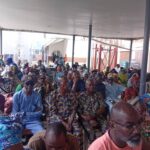
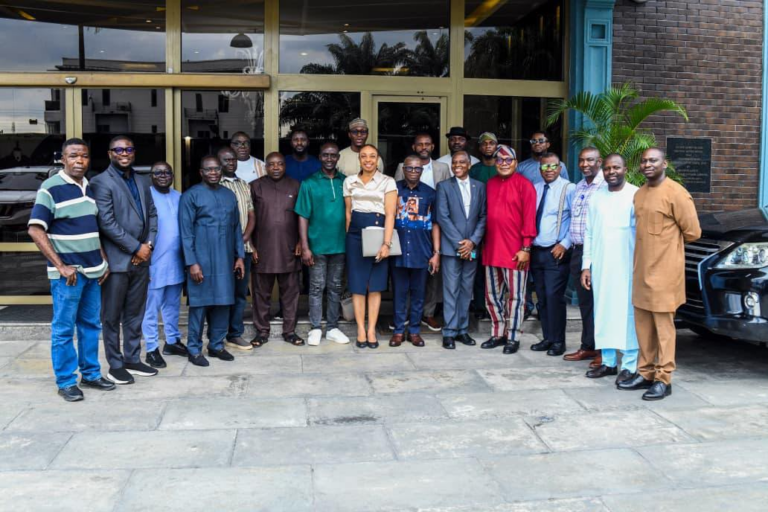
The engagement took place in Lagos during a congratulatory visit by the Association of Licensed Telecommunications Operators of Nigeria (ALTON), marking the first official interaction between the new NCC Board leadership and key industry players since Olorunnimbe’s appointment.
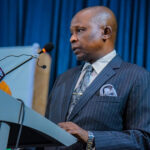
In his remarks, Olorunnimbe thanked telecom operators for their resilience and long-term investments in Nigeria despite difficult operating conditions, noting that the country’s digital transformation would not be possible without their continued commitment.
He stressed that telecommunications has evolved into essential national infrastructure underpinning commerce, governance, healthcare, education, security and everyday social interaction, warning that any widespread network disruption would immediately affect economic and social stability.
The NCC chairman said this reality justified the Federal Government’s designation of telecom infrastructure as Critical National Information Infrastructure, adding that the Commission would work closely with operators and government institutions to strengthen protection and improve service quality nationwide.
Earlier, ALTON Chairman, Gbenga Adebayo, described the sector as emerging from one of the most delicate periods in its history, shaped by financial pressures, regulatory uncertainty, foreign-exchange constraints and infrastructure challenges.
He credited recent regulatory and policy interventions with stabilising the ecosystem and gradually restoring investor confidence.
Adebayo particularly praised the Executive Vice Chairman of the NCC, Dr. Aminu Maida, for resolving the long-standing USSD debt crisis, which had accumulated to nearly ₦300 billion over four years and posed systemic risks to both telecom operators and the digital financial services ecosystem.
He noted that the migration to an end-user billing framework eliminated the debt burden and restored sustainability across the value chain.
He also described the approval of cost-reflective tariff adjustments last year—after 13 years of static pricing despite inflation, currency volatility, rising energy costs and ageing infrastructureas a decisive intervention that prevented service rationing and potential sector collapse.
According to him, the adjustment is already supporting financial recovery, renewed capital expenditure planning and improved network stability.
On the macroeconomic front, ALTON said recent foreign-exchange reforms have improved operators’ ability to meet international payment obligations for bandwidth, satellite services, software licensing and equipment procurement.
Other News
The association added that improved forex availability has reduced foreign debt exposure and strengthened global investor confidence, reflected in renewed infrastructure investment signals within Nigeria’s telecom tower segment.
Despite these gains, operators warned that persistent structural risks could undermine progress if not urgently addressed.
A major concern raised was the frequent damage to fibre infrastructurelargely caused by federal and state road construction contractors—leading to widespread service outages, destruction of critical assets, financial losses and disruptions to banking, education, healthcare and security services.
Responding, Olorunnimbe said any contractor, public or private, responsible for damaging telecom infrastructure must be held accountable and compelled to repair the damage at their own expense.
He added that the NCC would intensify engagement with state governments and other authorities to establish preventive coordination mechanisms and stronger enforcement.
He disclosed that discussions had already begun with the Lagos State Government on Right of Way reforms, with Lagos expected to serve as a pilot for improved coordination, reduced deployment barriers and accelerated broadband expansion into underserved communities.
The broader objective, he said, is inclusive national connectivity that leaves no community behind.
Regulatory independence formed another central theme of the discussions.
ALTON emphasised that while the Nigerian Communications Act guarantees NCC autonomy, such independence must remain visible in practice to sustain investor confidence, transparency and long-term sector stability.
The association also warned that overlapping regulatory interventions by multiple government agencies and excessive sub-national taxation continue to increase compliance costs, weaken service quality and discourage investment.
In response, Olorunnimbe gave strong assurances that the NCC Board’s independence would not be compromised and that regulatory decisions would remain guided strictly by law, fairness and national interest.
He pledged equitable treatment for all operators, constructive resolution of shortcomings and recognition of industry achievements, describing collaboration between regulator and licensees as essential to sustainable growth.
ALTON further called for coordinated executive engagement across national institutions including governors, tax authorities, security agencies and the legislature to harmonise fiscal policies, protect infrastructure and strengthen the regulatory clarity required for broadband expansion and digital inclusion.
The association commended President Bola Ahmed Tinubu for the composition of the NCC Board and credited ongoing economic and sectoral reforms with gradually restoring market confidence.
However, it cautioned that without harmonised taxation, clear regulatory boundaries and effective fibre-protection mechanisms, the sector’s recovery could stall.
In his closing remarks, Olorunnimbe reaffirmed the Commission’s commitment to sustained dialogue, faster responsiveness and proactive policy action.
He emphasised that although the regulator and operators have distinct statutory roles, they share responsibility for protecting and expanding a sector that supports millions of jobs and remains central to Nigeria’s digital economy.