Follow Us on Google

By Chinenye Anuforo
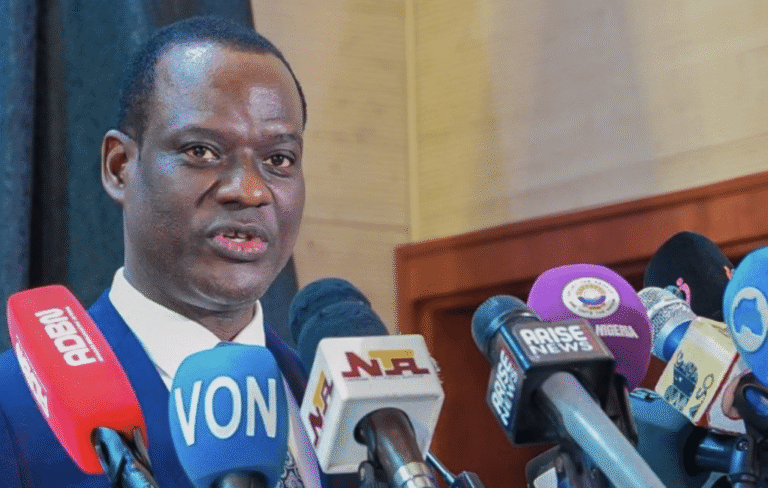
Technology-enabled banking is becoming one of the strongest pillars supporting Nigeria’s long-term economic ambitions, as the country moves from macroeconomic stabilisation to growth, according to Henry Obiekea, Managing Director of FairMoney Microfinance Bank.
Speaking on Nigeria’s financial future, Obiekea said the country entered 2026 at a critical turning point following years of structural reforms, including foreign exchange unification and monetary tightening. He noted that with the Central Bank of Nigeria restoring confidence in the naira and foreign reserves rising to more than 45 billion dollars, the focus has now shifted to expanding economic participation.
“Nigeria is now moving from stabilisation into expansion, and the next phase of growth will be shaped by how effectively Nigerians can participate in the formal financial system,” Obiekea said.
He explained that while commercial banks remain the backbone of the financial system, their physical footprint alone cannot support inclusion at the scale required for a population of over 220 million people. Technology, he said, is filling that gap.
“Technology-enabled banking is extending regulated financial services beyond physical branches into everyday devices, bringing millions of Nigerians into the formal economy,” he said, adding that this model helped push formal financial inclusion above 64 per cent in 2025.
Obiekea also pointed to the scale of digital financial activity as evidence of the economy’s growing dependence on technology. In the first quarter of 2025 alone, Nigeria recorded more than 295 trillion naira in electronic payment transactions, a sign, he said, that faster and more secure financial infrastructure is now driving trade, commerce and productivity.
For small businesses, which contribute nearly 48 per cent of Nigeria’s gross domestic product, digital banking has become a lifeline. Obiekea said technology-driven lending models are helping to close long-standing credit gaps by using alternative data to assess risk and provide small working capital loans to entrepreneurs.
“These small-ticket loans provide the pocket capital businesses need to grow, creating a pipeline of enterprises that can eventually mature into larger corporate clients within the banking system,” he said.
He added that wider use of digital financial services is also strengthening government revenues by increasing transaction transparency and expanding the tax net through mechanisms such as stamp duties.
According to Obiekea, regulatory reforms are reinforcing this shift. He said the Central Bank of Nigeria’s Open Banking framework, which begins rolling out in phases from early 2026, will ensure that all regulated institutions operate under consistent oversight while allowing customers to move their financial histories securely across platforms.
“At FairMoney Microfinance Bank, we see this framework as a social contract,” he said. “Knowing that deposits are protected by NDIC insurance and supported by clear dispute resolution mechanisms gives customers the confidence to participate actively in the economy.”
Obiekea said the future of Nigerian banking lies in the collaboration between traditional banks and technology-enabled institutions. “Traditional banks bring depth and stability, while digital banks bring reach, speed and accessibility. Together, they turn financial access into economic resilience,” he said.
He added that aligning both models will be critical to achieving Nigeria’s one trillion dollar GDP target by 2036, ensuring that everyone from urban professionals to rural traders can play a role in the country’s economic future.