Follow Us on Google
By Rita Okoye
When scientists study the vast ice sheets of Greenland and Antarctica, they rely on airborne radar systems to peer deep beneath the frozen surface. These systems send radio waves into the ice, capturing signals that bounce back from layers buried hundreds to thousands of meters below.
The resulting images, called radar echograms, are filled with complex and noisy patterns that resemble rippling signatures etched in grayscale. Within these intricate signals lie the keys to understanding how ice sheets evolve, how they respond to climate change, and how quickly global sea levels may rise.
For decades, extracting meaningful information from these radar echograms has been an immense challenge. Scientists painstakingly annotated internal ice layers by hand, tracing faint, curved boundaries across hundreds of thousands of images.
This manual approach was slow and limited, creating bottlenecks for climate research. Traditional computer vision techniques struggled as well because radar echograms differ fundamentally from natural images. Low contrast, missing reflections, speckle noise, and variable geometries make them extremely difficult for standard models to interpret.
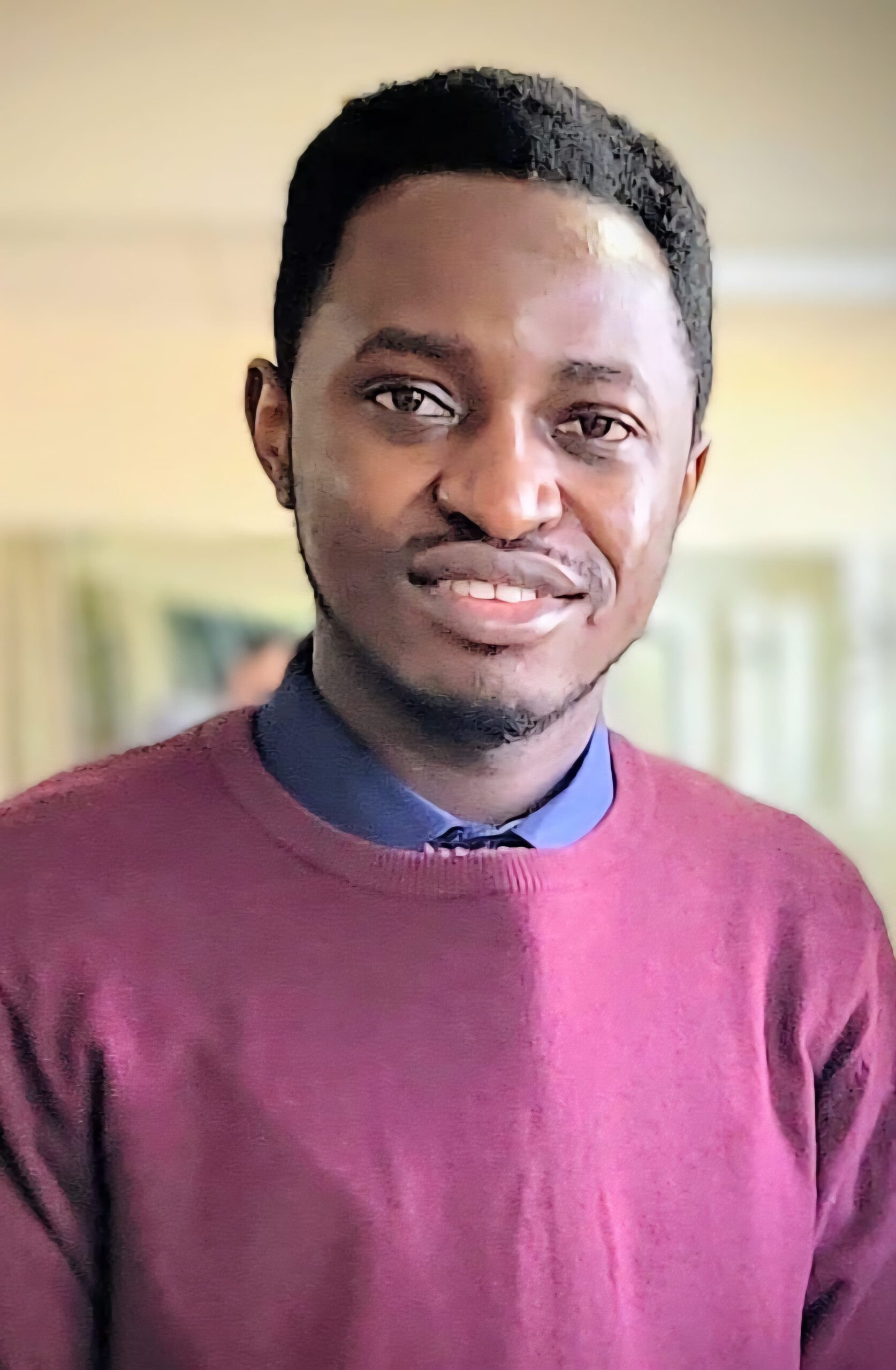
At the Center for Remote Sensing of Ice Sheets (CReSIS) at the University of Kansas, Dr Oluwanisola Ibikunle developed EchoViT, an advanced deep learning model that applies the power of Vision Transformers to radar echogram analysis. EchoViT represents a significant leap forward in automating internal ice layer tracking, overcoming the limitations of convolutional approaches and enabling researchers to process radar data at scales previously impossible.
“Radar echograms are unlike anything most vision models are trained on,” says Dr Ibikunle. “They are noisy, discontinuous, and regionally diverse. We needed a model that could understand not just local patterns but also the global context across an entire echogram. That is where the self attention mechanisms in Vision Transformers made a breakthrough possible.”
Why Radar Echograms Are So Hard to Analyze
Radar echograms from campaigns such as NASA’s Operation IceBridge are incredibly heterogeneous. Differences in radar frequency, flight altitude, ice composition, and geographic location create significant variations in the appearance of internal layers. In some regions, reflections are bright and distinct. In others, they vanish entirely due to scattering, melting, or bed roughness. These discontinuities make manual tracking time consuming and error prone.
Traditional deep learning approaches based on convolutional neural networks performed well only when trained and tested on echograms from the same region. When applied to new areas, their accuracy often collapsed. This lack of generalization limited their usefulness for large scale analysis of polar regions where training data is sparse.
EchoViT was designed to solve this problem. Unlike convolutional architectures, which rely on fixed sized receptive fields to extract local features, Vision Transformers use self attention to learn global dependencies across the entire echogram. Every pixel representation attends to every other pixel, enabling the model to infer missing structures, smooth discontinuities, and correctly align faint or fragmented layers across large spatial contexts.
Inside EchoViT: Technical Foundations
EchoViT is built upon the Vision Transformer architecture but introduces key innovations tailored to radar echogram data. Instead of processing images as continuous 2D arrays, the echogram is first divided into fixed sized patch embeddings, each projected into a high dimensional latent space. These embeddings are then passed through multi head self attention blocks that learn contextual relationships among patches at different depths and scales.
However, raw radar data posed unique challenges. Dr Ibikunle introduced a custom positional encoding strategy that accounts for the vertical depth structure inherent in echograms. Unlike natural images, where spatial relationships are uniform in all directions, radar echograms encode depth along the vertical axis and lateral distance along the horizontal axis. The new positional scheme allowed EchoViT to better model vertical continuity of layers while remaining sensitive to horizontal variability caused by ice sheet dynamics.
Training EchoViT required a large scale labeled dataset. Under Dr Ibikunle’s leadership, the CReSIS team curated and annotated over 150000 radar echograms collected across Greenland and Antarctica. Labeling involved manually tracing layer boundaries to create ground truth masks, a process that demanded deep collaboration between AI researchers and glaciologists. These annotations were used to design a multi task learning objective combining boundary localization with pixel level segmentation.
To enhance generalization, EchoViT was trained using extensive domain augmentation techniques such as simulated speckle noise, adaptive contrast distortion, and synthetic missing segments. These augmentations mimicked real world variations in radar signals, enabling the model to adapt to unseen terrains and instrument configurations.
The results were striking. EchoViT outperformed traditional convolutional architectures by eighteen percent in mean boundary accuracy and reduced manual annotation effort by over eighty percent. Even when tested on echograms from polar regions unseen during training, EchoViT maintained high fidelity in tracking layer continuity.