Follow Us on Google

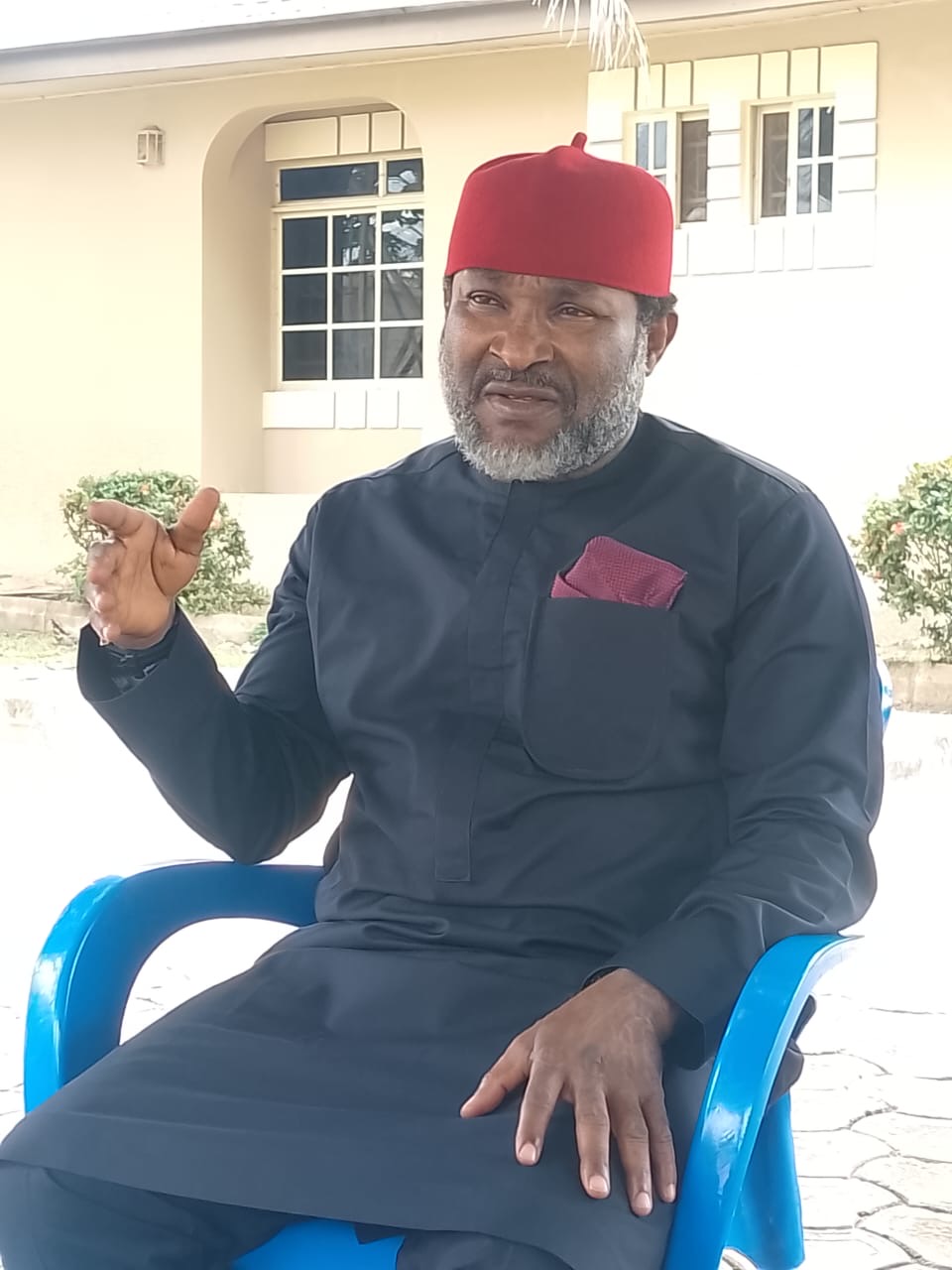
Former Speaker of the Benue State House of Assembly and former Nigeria’s Ambassador to Namibia, Terhemen Tarzoor, has criticized the immediate past Governor Samuel Ortom and the Minister of the Federal Capital Territory (FCT), Nyesom Wike, over their recent comments on Governor Hyacinth Alia, and Federal Allocation accruing to the State.
Tarzoor, who spoke to newsmen in Makurdi on Thursday, described ex- Governor Ortom’s outing on a TV programme, last week, as inappropriate saying the reported remarks by Ortom referring to Alia as a “419”, “a fake Reverend Father” and calling some Benue people “shenanigans” was condemnable.
Tarzoor insisted that political differences should not justify the use of language capable of undermining the office of the Governor and the dignity of the people of the state.
The Benue State coordinator of Renewed Hope Initiative (RHI) campaign for President Bola Tinubu ahead of the 2027 general elections, said Ortom should exercise restraint in his public comments about the incumbent governor.
He said “My take is that the former governor is not in the position to call the number one citizen 419. He has no right to call him that.”
Tarzoor, who described Ortom as an elder brother whom he respects, said he was worried that political disagreements were being expressed in ways he considered unnecessary and capable of worsening tensions in the state.
He particularly faulted Ortom’s reported comments on the administration of the Catholic Church, arguing that the former governor was not sufficiently informed about the Church’s financial accountability mechanisms to make such assertions.
He also expressed reservations that the former Governor had the audacity to pontificate on the Catholic Church administration quoting Ortom as saying that “The Reverend Father (referring to Alia) is running Benue State like a Parish where priests just earn moneys, offertories and spend as they want. Invariably, he is saying there is no accountability in the Catholic Church.
“As a Knight of St. John International, I want to disabuse his mind and the minds of people who listened to that programme that there is a high level of accountability in the Catholic Church,” Tarzoor said.
He explained that the Catholic Church vehemently upholds a strong administrative accountability structures, from the priests to the church faithful and reasons why they have church councils, elders and laity councils, to provide oversight and ensure that priests were accountable to the faithful.
“There is no Catholic priest that can just earn money and spend at ease in the Catholic Church and I therefore say Ortom does not have the equipage to pontificate on such a subject matter,” he said, urging him to be cautious about making statements on the internal administration of a religious institution.
Tarzoor maintained that public officials, particularly those who had occupied high political offices, should demonstrate responsibility in their public engagements and avoid comments that could be interpreted as attacks on religious institutions.
The former lawmaker, who also faulted what he described as an unfair comparison between Ortom’s eight-year administration and Alia’s government, which has served for three years plus, argued that any assessment of the two administrations should consider their respective periods in office, resources available and development targets before drawing conclusions about their performances.
Tarzoor further condemned Ortom’s reported description of the people of Benue as “shenanigans,” saying such language was unbecoming of a political leader who had benefited from the support of the state’s electorate.
“I see that as repugnant, I see that as unbefitting of a personality who have benefitted enormously from the votes of Benue people all his life.”
He urged political leaders to distinguish between disagreements with an incumbent administration and the need to respect the people they once governed, saying “If he has issues, he should apply the right language, apply decorum in the manner to address matters. That is the only legacy we can leave for our children, those yet unborn and not to talk down on someone in the person of the Governor because you are bitter.”
On Wike’s reported comments concerning the revenue accruing to Benue State and the need for the state government to disclose its income and expenditure, Tarzoor questioned what he considered the minister’s selective attention to the state’s finances.
The former Ambassador who wondered when Wike became the Minister of Finance or Minister of Information, argued that if the FCT minister’s objective was to promote transparency in the management of public funds, similar questions should be directed at other states rather than concentrating on Benue.
“Has he spoken about the one coming to Nasarawa, or the one going to Rivers State? Has he published the one in Rivers? Has he published the one in Kano?” Tarzoor asked stating that the disclosure of public revenue and expenditure was a legitimate issue but insisted that such demands should be pursued through appropriate channels and applied consistently across the country.
Tarzoor maintained that the Alia administration was open to scrutiny, noting that members of the public could request relevant government records through established procedures, including the Freedom of Information framework.
He said “Governor Hyacinth Alia is open to all criticisms. The law is clear on freedom of information. You test it; the records will be there for you to see,” he said.
He, however, cautioned against what he described as uncoordinated demands for financial information, arguing that government officials should be allowed to concentrate on governance while legitimate enquiries were handled through appropriate channels.
Tarzoor said the media had an important role to play in promoting accountability by seeking accurate information from relevant government agencies rather than relying solely on political exchanges.