Follow Us on Google
By Chinyere Anyanwu
Africa’s environmental landscape is in the midst of a major shift.
Greenplinth Africa, a Pan-African green solutions corporation, is spearheading efforts to make Nigeria and Africa a clean energy-compliant country and continent.
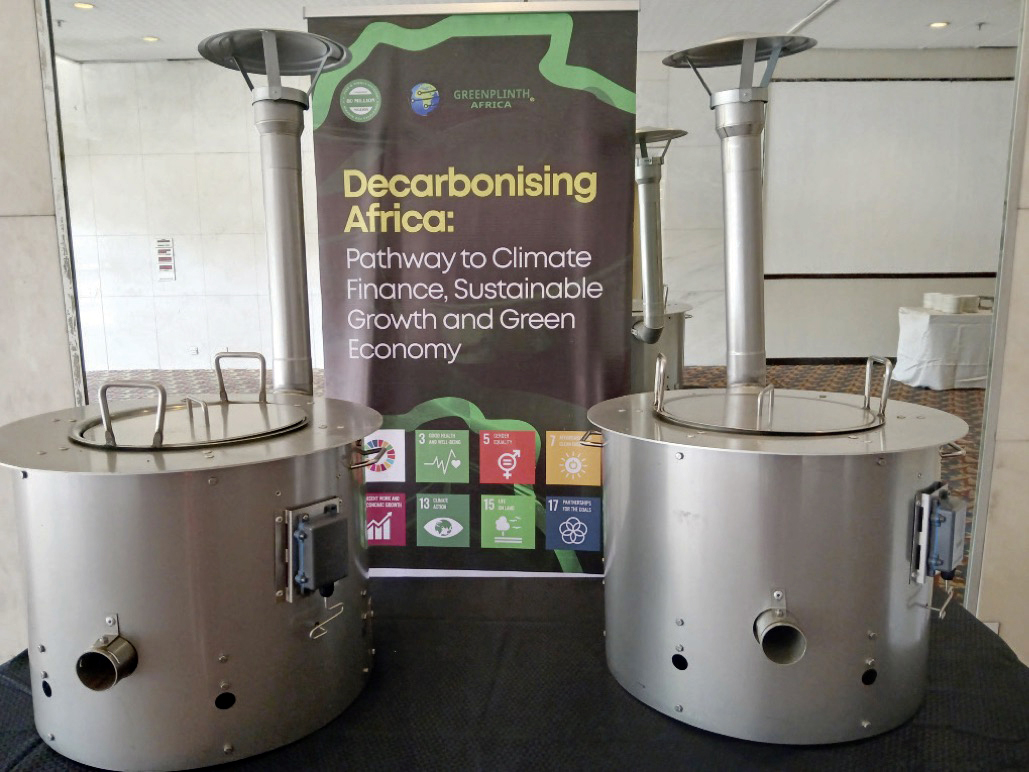
To achieve this, the firm, alongside its strategic partners, are working towards replacing the traditional cooking methods of using firewood and charcoal with its innovative clean cookstoves within the shortest possible time.
Captured under “Clean Cooking Access in Africa, Igniting Socio-economic Change with 80 million Green Cookstoves in Nigeria”, the effort seeks to tackle the challenges of carbon emissions, deforestation, respiratory health issues, environmental degradation and household air pollution.
Under the initial phase of the project, the corporation will distribute 80 million clean cookstoves to households in many vulnerable communities across the country with several other accruing benefits.
The project is also expected to deliver $5 billion financial benefit to the country’s economy annually through carbon credits.
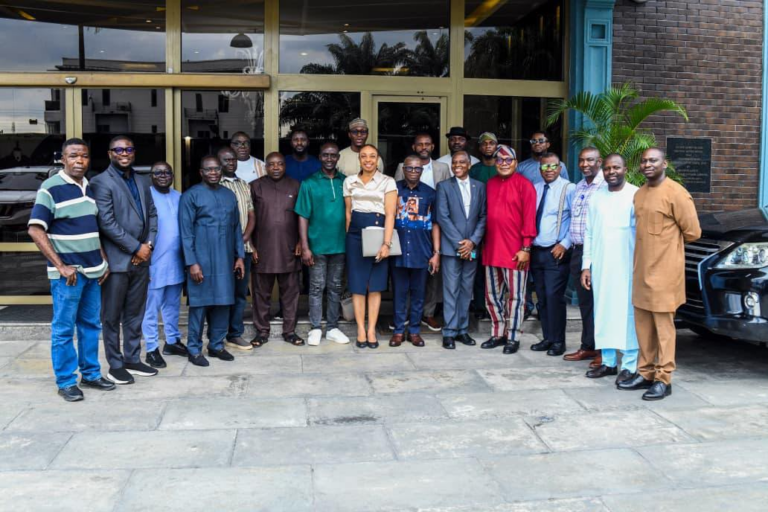
Greenplinth Africa revealed these at a recent Strategic Projects Implementation Management Retreat and Stakeholders Engagement in Lagos.
Human and environmental toll of traditional cooking
The adverse implications of heavy reliance on inefficient and environmentally unfriendly cooking methods (firewood and charcoal) in Nigeria and the African continent cannot be overemphasised. An estimated 900 million people across Africa, according to records, still rely on firewood and charcoal for cooking.
The traditional cooking fuels generate severe indoor air pollution, leading to respiratory diseases. Women and children who typically manage domestic energy collection are affected by the smoke inhalation and the physical labour of gathering the biomass itself.
According to one of the keynote speaker at the stakeholders retreat, Mrs. Titilayo Oshodi, the Special Adviser to the Governor of Lagos State on Climate Change and Circular Economy, “the consequences are enormous. Accelerated deforestation, environmental degradation, household air pollution, rising carbon emissions, health complications and economic vulnerability among low-income communities. For millions of women and children, especially, cooking is still associated with smoke inhalation, with health risks, with time poverty and unsafe energy conditions and this is why clean cooking must be recognised, not simply as an energy conversation but as a climate solution, a health intervention, a gender empowerment, an economic inclusion mechanism and a pathway towards sustainable development.”
Firewood utilisation is the main driver of deforestation. It was revealed that households using conventional firewood stoves consume an average of 10kg of firewood daily. In some larger households, daily consumption reaches as high as 33kg. This has resulted in communities across the country losing 95 per cent of the nation’s forests so far. The most hit are economic trees, which suffer rampant destruction. One of such trees is the shea butter tree, an important economic tree widely grown in Niger State and produces cake for feed and butter used in food, pharmaceutical and cosmetic industries.
Beyond the environmental implications, these figures underscore the enormous burden placed on household incomes, on forest ecosystems and on public health systems.
Available data reveal that over three million people lose their lives annually as a result of diseases related to bad cooking habits.
Mitigating unsafe cooking with 80m clean cookstoves
The project, experts note, would have a transformative impact on the national economy, the environment, beneficiary households and communities.
In the initial phase of the project, Greenplinth Africa will be delivering a guaranteed minimum of two million stoves to each state. The allocations are, however, based on regional needs and population. So far, four states including Lagos, Benue, Niger, and Nassarawa have signed an agreement with Greenplinth Africa to benefit from the project, with Lagos as the pilot state.
According to Greenplinth Africa’s Deputy Managing Director/Group Chief Financial Officer, Babatunde Aina, Lagos state alone is billed to receive eight million cookstoves owing to the sheer size of its population.
Aina said, “we are going to push forward and deliver on this auspicious project because we are moving from projection to reality,” noting that despite having invited all the 36 states of the country, only four states have keyed into the project so far. He is, however, hopeful that other states will identify with the project when they begin to see the numerous benefits that come with the cookstoves.
He said, “the 80 million cookstoves project in Nigeria is one of the boldest clean household energy initiatives ever conceived out of the African continent. It is designed to transform the way millions of Nigerian families cook, live, breathe and participate in the climate economy. This project is about replacing smoke with safety, replacing pollution with protection, replacing waste with value. And it’s about proving that Nigeria can lead the world with a model that is socially inclusive, digitally verifiable, environmentally transformative, and financially sustainable.”
The clean cookstoves will be deployed to households free of charge, but under a structured lease agreement.
The Greenplinth Africa Deputy Managing Director explained that the initiative is not a charity handout but a disciplined impact programme, saying, “the stove must be used for the purpose for which it is deployed. If it is not used, if it is abandoned, or if the conditions of participation are not respected, we reserve the right to retrieve and reassign it to a household that will use it properly. This is how serious we are about accountability, impact and long term.
“But we are not stopping at giving away a stove. Under this initiative, participating families will start to benefit from a powerful welfare and adoption package, a proposed N10,000 per month cooking support stipend, free healthcare coverage for a family of up to eight, and 40kg of free biomass briquettes every month. All structured for a 15-year programme.
“Our stoves are built for longevity and trust. Each stove comes with a 30-year warranty, giving families confidence and assuring stakeholders that this is a long term infrastructure intervention and not a short-lived pilot. Each stove is also expected to save the environment a minimum of 15 metric tonnes of carbon per year, making this not only a household energy project, but also one of the most significant environmental action platforms ever proposed on this scale in Nigeria or in Africa.”
Other News
According to him, the pilot phase has already started in Makoko, Lagos, and is helping the organisation validate the operational model, community engagement strategy, technology performance, and DMRV reporting ecosystem. From there, full-scale rollout in Lagos State will kick off before expanding to other states through a structured national implementation plan.
Economic impact
The project, targeted to generate an annual income of $5 billion from carbon credits for the country, will also create about 35 million green jobs in terms of assembling the stoves, managing the process and distribution.
According to Prof. Babajide Alo, former deputy vice chancellor of University of Lagos, the project will prevent up to 1.2 billion tonnes of CO2 emissions which will help the earth and generate billions in real revenue, fostering a new economy. Aina of Greenplinth Africa stated that the project is built on technology, transparency, and bankable climate value as each stove comes fitted with a digital measuring, reporting, and verification device called DMRV, which means usage is not guessed but measured and verified.
“It is securely transmitted to the cloud through blockchain-enabled systems making the data credible, auditable, and visible to potential offtakers. Through our partners, Carbon Air of Canada, this verified performance data can be seen by potential carbon credit and carbon offset buyers. This means that the project is designed to be funded through carbon credits and carbon offset mechanisms,” Aina said.
Reversing deforestation with 4bn trees
Apart from replacing the unclean and inefficient traditional cooking methods with environmentally friendly clean methods, the 80 million cookstoves project is designed to reclaim the country’s degraded landscape with tree planting exercises.
Aina, of Greenplinth, stated that the initiative is tied to an ambitious environmental restoration programme through the planting of four billion commercial tree seedlings. He said, “this is not merely about reducing emissions in the kitchen. It’s also about restoring ecosystems, protecting our land, strengthening climate resilience, and building a greener national future for our yet unborn generations.”
Salisu Dahiru, pioneer director general, National Council on Climate Change, emphasised that “between 2028 and 2030 and above, we expect to sustain the progress such that we begin to have sustainable forests now existing to be at the service of the people, to protect wildlife, and to ensure that all future generations thrive.
“Eventually, we will have a greener nation, a healthier planet, and a better future. Millions of trees restored, hundreds of millions of tonnes of carbon dioxide emissions avoided, healthier communities, stronger climate, and a happier, great future.”
The grassroots communities will form the fulcrum of the tree planting aspect of the project because they will be actively engaged in planting and nurturing the trees, the former UNILAG DVC, Prof. Alo, explained, stressing that communities have to be carried along because without them, the goal of planting the four billion trees cannot be achieved.
Rollout timelines
The 80 million clean cookstoves project has an implementation time frame. Rollout date for Lagos state is July 21, 2026 with Benue State’s rollout coming up on July 28, 2026. Niger State’s rollout date is early August 2026 (the week following Benue), while Nasarawa State’s rollout date will be Mid-August 2026 (the week following Niger).
The entire project will be in phases. Phase one, the pilot deployment and manufacturing scale-up stage, will entail the establishment of pilot projects and scale-up of local manufacturing capacity in the states that have signed agreement with Greenplinth. Phase two will entail expansion across priority states and strengthening the partnership already existing, while phase three is national deployment to achieve national coverage and impact.
By 2030, the corporation intends to look at impact realisation, end product, final output, delivery, as well as deliver measurable impact for people, for the planet, and for prosperity. This, it said, forms its overall target of deployment across all the 36 states and their cities.
“This, by the special grace of God, is achievable, and Greenplinth is most positioned to deliver this easily, sustainably, collectively, and with all the technical wherewithal it has, because it is making efforts to de-risk mitigation and to de-risk governance by building trust and ensuring impact and also driving sustainable change,” said Aina, the organisation’s DMD/GCFO.
Anticipated challenges
A project of the scope of the 80 million clean cookstoves cannot be devoid of challenges. Among the challenges anticipated, as noted by the pioneer DG of NCCC, Dahiru, is how people who are already in the charcoal making and selling business are going to react to the impact of the project on their livelihood.
Dahiru has, however, allayed their fears by assuring them that a better substitute is going to be provided for them. He said they will be converted to be briquette sellers.
Other key risks that might pose a hindrance to the success of the project include adoption challenges, distribution complexity, supply chain disruptions that may arise from pushback from certain interest groups.
To ensure a successful outcome,
measures for the mitigation of these challenges have been put in place, including but not limited to community engagement programmes, strong stakeholder coordination, blockchain-based monitoring, and independent verification systems.
Stakeholder engagement
Greenplinth Africa’s stakeholder ecosystem is a model for collaboration between various stakeholder groups for a sustainable energy future. The stakeholder groups include governments – federal, state and local; the private sector of which Greenpeace is the lead; Allgreen Energy, which signed a $10 billion manufacturing agreement with Greenplinth; various manufacturers and their logistics providers.
Communities that are the bedrock without whom this project will not succeed, composed of households, women’s groups, youth networks, and community leaders. There are also development partners, including UN agencies, the climate funds, including GERB, Green Climate Fund (GCF), and similar organisations as well as development banks and NGOs.