Follow Us on Google
•Pump price can ultimately fall to N200–N300 –Hashim
•Okogwu, ex-SURE-P board member backs subsidy return, seeks new regime
From Charity Nwakaudu, Abuja
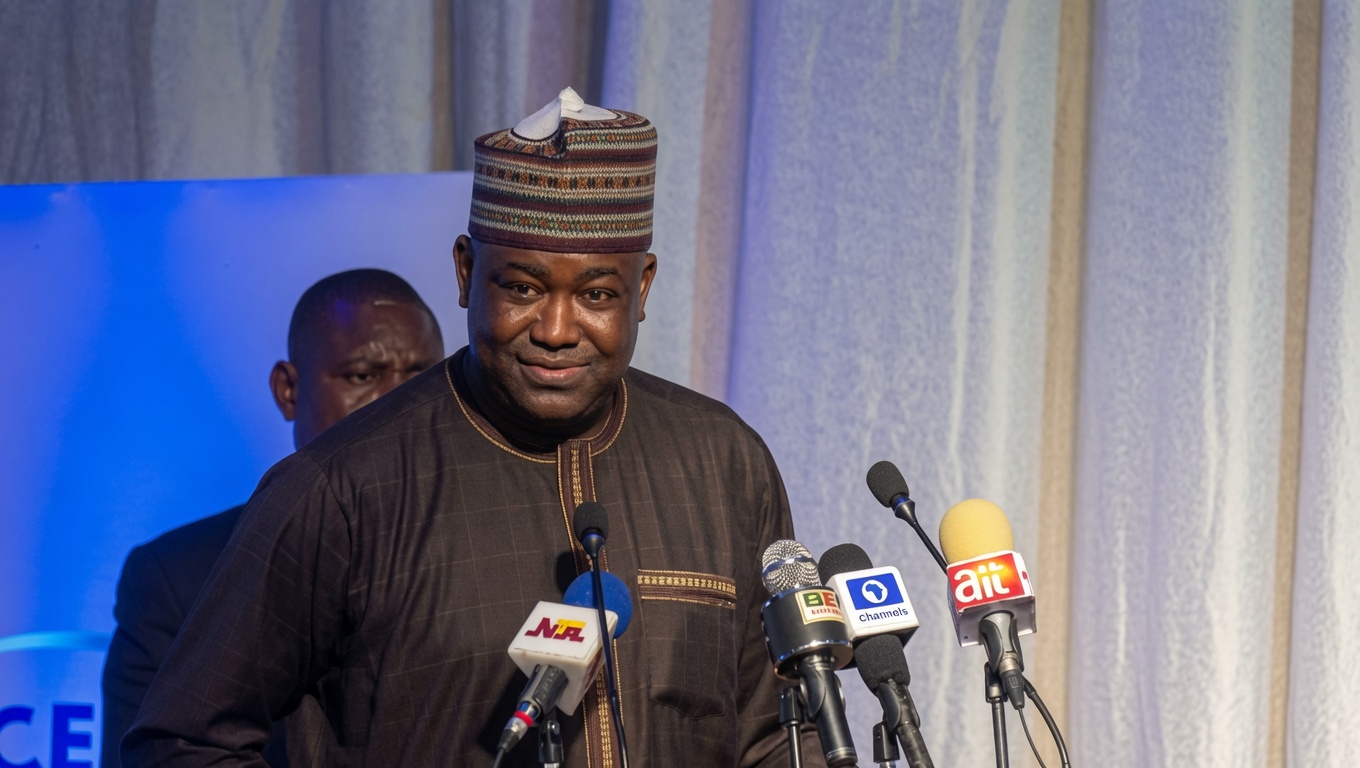
Amid contentious and conflicting prescriptions over the future of petrol subsidy and the price Nigerians should pay at the pump, presidential hopeful, Gbenga Olawepo-Hashim, has insisted on his own model — no return to the old opaque subsidy regime, but a deliberate restructuring of the cost of producing, refining and delivering energy to Nigerians.
For Hashim, who has doubled down on a position he earlier canvassed, petrol can start at about N605 per litre and ultimately fall to between N200 and N300 if Nigeria tackles the underlying costs of its petroleum industry, expands domestic refining and strengthens the naira.
“N605 is where we start. N200–N300 is where we can go,” he said.
“The route is not magic. It is lower production costs, domestic refining, a stronger naira, greater energy production and a government that understands that affordable energy is an investment in national productivity.”
But as Hashim ruled out a return to the old subsidy regime, former member of the Subsidy Reinvestment and Empowerment Programme (SURE-P) Board, Chike Okogwu, yesterday canvassed a different prescription, arguing that Nigeria should reconsider subsidy as a means of cushioning the hardship confronting millions of citizens.
Okogwu, who represented Persons With Disabilities on the SURE-P Board between 2012 and 2015, backed former Vice-President Atiku Abubakar’s proposal to restore a form of subsidy if elected president in 2027, but insisted that any new intervention must be transparent, targeted and technology-driven.
In a statement in Abuja, he argued that Nigeria’s fundamental problem was not subsidy itself but the corruption, leakages and poor management associated with the previous regime.
He proposed the use of Bank Verification Numbers and other digital identification systems to identify beneficiaries, alongside technology-based tracking of petroleum products and payments from refineries to filling stations to minimise diversion and leakages.
Okogwu expressed concern that the rise in petrol prices following subsidy removal had rippled through the economy, increasing transportation, food, healthcare and education costs and worsening hardship, particularly among persons with disabilities, the elderly and low-income earners.
“Any new subsidy system must protect vulnerable groups, including persons with disabilities, widows, students, farmers and low-income earners,” he said.
Drawing on his experience on the SURE-P Board, Okogwu said the programme demonstrated that resources arising from subsidy reforms could be channelled into critical infrastructure and social interventions.
He cited the Second Niger Bridge, Loko-Oweto Bridge, road projects and railway rehabilitation among projects supported under the programme.
Okogwu said SURE-P should not be remembered solely for the corruption allegations associated with it, arguing that individuals found culpable of mismanaging public funds should be held accountable rather than allowing their actions to discredit the entire concept.
He also demanded greater transparency in the utilisation of money saved following subsidy removal, saying Nigerians deserved to know how the funds had been spent and what tangible benefits they had received.
The former SURE-P board member called for increased support for domestic refining to reduce Nigeria’s dependence on imported petroleum products, maintaining that a properly designed subsidy regime could reduce living costs and shield vulnerable Nigerians from further petrol price increases.
He urged the Federal Government to draw lessons from both the successes and failures of SURE-P and fashion an intervention that would be transparent, accountable and directly beneficial to citizens.
Hashim, however, setting out the figures behind his alternative, argues that the more fundamental question is neither simply whether subsidy should return nor what petrol commands on the international market.
Rather, he wants Nigeria to establish how much it actually costs to produce a barrel of Nigerian crude, refine it locally and move the resulting products to Nigerian consumers.
In a statement yesterday, Hashim’s campaign based its N605 proposal on a domestic crude benchmark of $45 per barrel, comprising what it described as an industry upper-limit production cost of $30 and a $15 margin.
It added about $5 per barrel for refining and another $7 for distribution, transportation and insurance, bringing the benchmark to approximately $57 per barrel.
Using the 159 litres contained in a standard barrel as a common denominator for the basket of products obtained from crude, the campaign arrived at approximately $0.36 per litre.
At an illustrative exchange rate of N1,400 to the dollar, the calculation translates to slightly above N500 per litre.
An Energy Stabilisation Tax of approximately N104 per litre would then bring the proposed pump price to around N605.
Other News
The campaign acknowledged, however, that the calculation was a policy benchmark rather than a complete refinery-yield computation, since a barrel of crude does not produce 159 litres of petrol alone but a basket of products, including petrol, diesel, aviation fuel, LPG and other refinery outputs.
Hashim said the answer was therefore to open up the petroleum industry’s books and determine precisely where the costs arise.
He called for an independent forensic audit of the entire petroleum value chain, covering crude exploration and production, contracting, procurement, security, transportation, refining, storage, insurance, pipelines and distribution.
“Show Nigerians the books. Publish the production cost. Publish refinery cost. Publish transportation. Publish insurance. Publish every margin. Let the data speak,” he said.
Hashim also challenged the assumption that Nigerians must automatically pay the international opportunity price for crude produced within the country.
He described the conventional argument surrounding subsidy as “accounting magic,” contending that selling domestically produced petroleum products below what they could fetch internationally did not necessarily establish that government was subsidising consumers.
For him, Nigeria’s growing domestic refining capacity presents an opportunity to fundamentally change that equation.
He advocated greater support for large-scale and modular refineries, regional refining facilities, petrochemical plants, storage infrastructure and crude evacuation systems, arguing that domestic refining should not merely replace imports but reduce energy costs and provide the foundation for industrialisation.
“We must stop exporting cheap energy and importing expensive products. Nigeria must refine more, manufacture more and export more value-added energy products,” Hashim said.
He warned, however, that additional refining capacity would not necessarily produce cheaper petrol if domestic refineries were unable to obtain adequate crude at competitive prices.
Hashim is projecting a naira exchange rate of between ₦525 and ₦700 to the dollar, contending that a stronger and more stable currency would reduce the cost of imported equipment, technology and other dollar-linked inputs throughout the energy sector.
He said bringing together lower crude production costs, efficient domestic refining, increased energy production and a stronger naira would make the longer-term ₦200–₦300 petrol price achievable.
Hashim said the ultimate objective went beyond cheaper petrol to reducing transportation, agricultural, manufacturing and mining costs and making Nigerian businesses more competitive.
“The best revenue strategy is not to make everything expensive. It is to make Nigerians more productive and our manufacturers more competitive,” he said.
The competing interventions by Hashim and Okogwu come more than three years after President Bola Tinubu abolished petrol subsidy on assumption of office.
Tinubu had, in his inaugural address at the Eagle Square, Abuja, on May 29, 2023, dramatically declared that “fuel subsidy is gone,” saying the budget he inherited contained no provision for its continuation and that the mounting cost could no longer be justified.
The Presidency has remained resolute on that position, insisting that returning to the old subsidy arrangement would reverse one of the administration’s central economic reforms.
The controversy has, however, returned to the centre of political discourse ahead of the 2027 presidential election following competing prescriptions by some presidential contenders.
Atiku has proposed the restoration of a targeted form of subsidy to cushion the impact of high petrol prices on Nigerians, a proposition the Presidency has challenged by demanding details of its projected cost, beneficiaries and funding mechanism.
Peter Obi, on his part, has opposed restoring subsidy, although he has faulted the manner in which the Tinubu administration implemented its removal and raised questions over the utilisation of the savings.
Former Cross River State governor, Donald Duke, has taken another route, describing the subsidy argument as a “scam” and contending that an oil-producing country such as Nigeria should be able to sell petrol for about N200 per litre.
It is against these competing propositions that Hashim insists the 2027 presidential election should compel Nigerians to interrogate alternative economic models rather than merely choose between political personalities.
His own proposition remains emphatic: restructure the underlying economics of producing and delivering energy rather than restore the old subsidy system. “N605 is where we start,” Hashim said. “N200–N300 is where we can go.”