Follow Us on Google
By Merit Ibe and Henry Uche
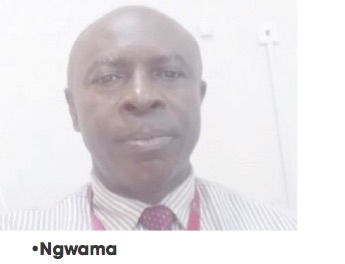
Justice Chidi Ngwama, (PhD) is an Associate Professor and lecturer in Industrial Relations and Personnel Management, Crawford University, Igbesa, Ogun State.
In this interview, he examined the impact of fuel subsidy removal, the perennial rot in Nigeria’s education sector and its impact on human capital, and proffered way forward to restore the lost glory of Nigeria. He also spoke on the informal economy, human resource management and other issues bedeviling Nigeria’s socio-economic development.
Excerpts.
Brief Profile
I am the President, Institute of Governance and Management of Nigeria and a consultant to many organisations. I specialised in the field of Labour Relations and Human Resources Management. My major interest is in the development of the informal sector economy. I was the former Dean of Student Affairs and HOD, Department of Administration and Management. I serve on the editorial board of many journals, both at local and international levels. My experiences in academics span over fifteen (15) years and I have published researched works in several journals both locally and internationally.
I am a member of many professional bodies; Fellow, Institute of Governance and Management of Nigeria, Associate member, Nigeria Institute of Management. Member CIPM.
Economic situation and Nigeria’s HDI
The Human Development Index (HDI) is measured by factors in education, health and standard of living. Considering these three indicators, Nigeria has been rated as an average income country with low HDI score of 0.593, and ranked161 of 189. These are due to our poor social infrastructure, low and unequal income, institutionalised corruption, insecurity and prevalence of disease among the people.The economic situation is devastating; Nigeria is now the world headquarters of poverty in spite of our enormous resources. Our health care system is embarrassing, doctors go on strike because of inadequate maintenance of health infrastructure and remuneration and many of our doctors are exiting to other countries. We train and graduate them for other nations with United Kingdom and Saudi Arabia being the biggest beneficiaries.
On education, we as a nation have completely failed. The decadence in our institution has gone beyond description; ASUU has fought and is tired. Lack of infrastructure in the universities is unimaginable, no technical tools to teach the students. Nigeria lecturers are the worst paid in the world while ordinary senators or members of the house both State and Federal cart away millions and you want them to give the best, it is not possible. Remember if we fail in education, we fail in all, because that is foundation for development. Our budget for essential sectors like, education, health and housing are at its lowest.The average Nigerian cannot eat two good meals a day, the living standard in Nigeria remains the worst. Many are dying the deaths that are not necessary because they cannot afford to take care of themselves. Agencies that government created to assist the common man ended diverting the money into personal pockets and nobody questions their actions.
Subsidy and Palliatives
We look at what is sustainable. In the previous years, governments have attempted to donate buses, vehicles tagged Federal government. assisted mass transit but the questions are where are they today, who is accountable? The basic infrastructure like railways, good roads that ease transportation of goods from local areas to places where they are needed are not there.
Government should provide seedling, fertilizers and other necessary things to encourage subsidised agriculture for Nigerians. Learn to buy off excess harvest from the hinter land and flood the markets in the cities with food; example, yam from Benue, tomatoes, onions, beans, etc from the North. This will considerably reduce the cost of food in the cities. Rural agriculture needs to be encouraged by the government for subsistence living by providing some basic foods needed by individual families.
Education and human capital devt
It is good for us to disabuse our minds about our educational system, it obviously needs improvement but not that it is as bad as we think. We have been to other places and know that they don’t teach better than we do. We have been in those countries and know what they offer and our students go there and overtake them with background they had here. The only difference is that their education is more practical and that is why ASUU is crying to the government to fund universities so they could build world class infrastructure to meet up with the global standard. As for the curriculum, it’s going through review by the National University Commission (NUC) to update and improve our education to meet the global standard. The government must invest heavily in education sector to make it work.
We need investment in the areas of entrepreneurial incubators for startups, investments in farms, agro processing enterprises to provide affordable feeding.
Entrepreneurs and harsh economy
For entrepreneurship development, the government should create a platform for small business owners, the issue of ethnicity, road transport and undue harassment by state agencies who go about collecting money from these small business owners should be addressed.
There is need to inculcate consistency on the part of the youths, empower them with knowledge, financial education, integrity and to be flexible to change, and they should embrace technology.
Government should give soft loans through the banks, with single digit interest with a moratorium of two years. This should be done through financial institutions without discrimination of any sort. Any financial institution found not to be complying should be sanctioned.
Government should find a way of organising the informal economy, their hardship is untold; destruction of their business sites, shops, without alternative is a display of wickedness on the part of the people we elected to in office as our elected representatives. The informal sector has been neglected for too long and there is need for reforms that will translate the informal economy towards improved job creation, better standard of living, economic balance and improved GDP.
How corporate organisations can manage harsh economic situation in relation with personnel
This is a challenging question because every investor wants profit. However, diligent management of organisational resources can keep them afloat. There are other areas organisations can grow; through backward and forward integrations to create more avenues for businesses. The problem is that many chief executives find discharging workers as the best option and that demonstrates their poor level of strategic thinking. You create businesses from the current business and that is what makes for expansion, necessity, they say is mother of invention.
Apply business development strategy, read, research, you could find a better alternative than to reduce your workforce. Manage your staff well by motivating and challenging them with tasks, they will deliver, the fact is that many management underutilise the capacity of their staff.
Create enabling environment, give them sense of belonging; build them into your plans. Integrate their goals and aspirations with that of your organisation, they will give their all to make the organisation succeed. When such challenges arise, give them the task, don’t even underrate the messenger, adopt the Japanese model of top to bottom decision making. You will be surprised at what God has put in them.
What can labour TUC, NLC , others do to ameliorate plight of Nigerians
Labour (TUC, NLC and others) have been going back and forth with federal government, what do you think they should do quickly as the voice of the masses to ameliorate the plight of Nigerians in a time like this?
The issue the organised labour is fighting for is understandable; those issues could not have arisen if government had done proper a consultation with the stakeholders and economic experts. The issue of subsidy has been controversial over the years. Even though it is benefiting the elites and politicians, the masses have stake on the outcome of its removal. Many people are clamouring for its removal not because fuel subsidy is not desirable but it is heavily mismanaged and bedeviled with corruption by the government and their cronies.The government knows the oil marketers and the fraud that is involved and the state has refused to use its power to deal with this organised crime and this is to the detriment of the masses. So, in dealing with this issue where not up to 0.1% of Nigerians are involved, the masses are now to bear the brunt. Why would government not deal with marketers who are defrauding the nation? This is exactly what is obtainable in other sectors of the economy, people loot the national resources with impunity and instead of being punished and they are rewarded at the expense of the masses who now become impoverished. Secondly, if the critical factor such as fuel has to be addressed, it touches the masses that have been impoverished by the political class and their cohorts, the government would have put infrastructure in place. For example, look at the power sector (electricity) in spite of all the reforms in that sector, the story is still gory, we still spend money to fuel our generators, and transportation is nothing to write home about. The few people who have ventured in the business are suffocated by the state agencies like Police, Road safety, VIO, LASTMA and local government empowered “agberos” that extort the poor drivers. The big question is what benefit does an ordinary Nigerian get from the state resources.
The implication of fuel subsidy removal, in other words indicates that the government is shedding off and abnegate its total responsibility on the welfare of the entire citizenry in spite of the fact that Nigeria is one the countries in the world hit by poverty, acute depravation, and destitution, with all the resources, both human and material at our disposal. However, to let the pump price of PMS to the discretion certain/few individuals independent of Government control or more certainly, public finance subsidies, neglecting the above ominous circumstances without adequate palliative measures, organized transport system, adequate electricity to provide power to the small and growing entrepreneurs, will be most unacceptable to the Labour Movement and Nigerian people. If subsidy must stand, government must put a commission in place, made up of Nigerians with honesty and integrity to carefully design programmes and implement projects from funds accrued from the subsidy in areas that will benefit the masses .