Follow Us on Google
• Targets 4m barrels daily within 24 months • Unveils plan to revive 3,000 shut-in oil wells
Fron Ndubuisi Orji, Abuja
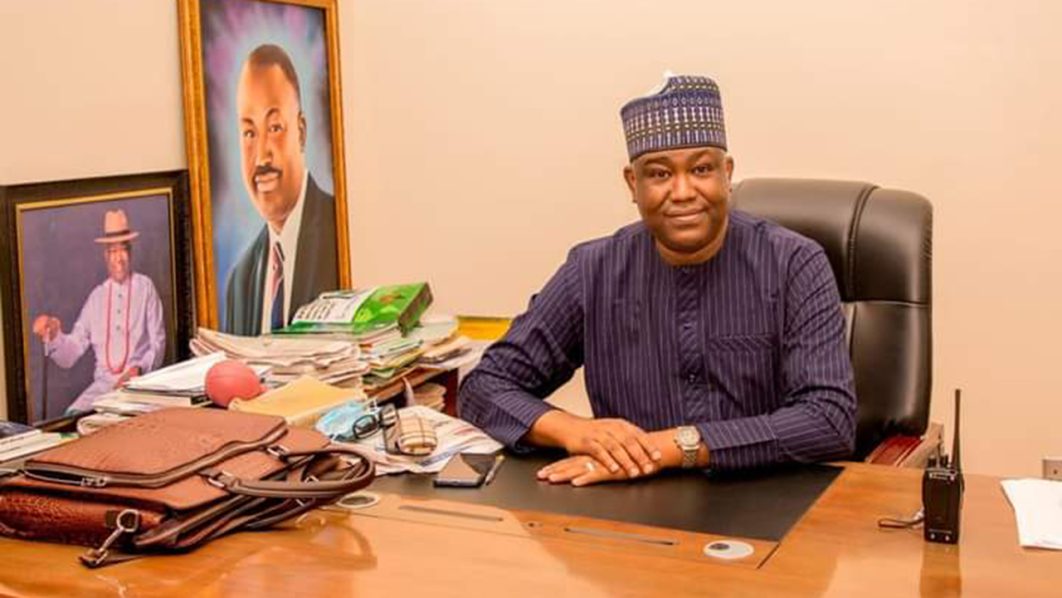
Presidential candidate of the Accord Party, Gbenga Olawepo-Hashim, has insisted that petrol can sell for N605 per litre without returning Nigeria to an unsustainable subsidy regime, arguing that substantially higher crude production and domestic refining could drive down the cost of fuel.
Hashim, who has also projected that petrol could eventually fall to between N200 and N300 per litre, said Nigeria must attack the high cost of energy from the production end rather than accept expensive fuel as inevitable.
Speaking at the weekend, he unveiled what he described as the production backbone of his “Energy First” presidential agenda, including a plan to revive about 3,000 non-producing oil wells and raise crude output to at least four million barrels per day within the first 24 months of an Accord administration.
His intervention adds another dimension to the continuing debate over fuel subsidy and the price Nigerians should realistically pay for petrol, amid arguments over whether lower pump prices necessarily require government subsidy.
Hashim maintained that Nigeria possesses enough petroleum resources and already-developed assets to produce significantly more crude, saying the problem was that much of the country’s productive capacity had been left idle.
“We have oil wells that have already been drilled, assets that have already been discovered and infrastructure that have already been built. Our first task is to put these assets back to work for Nigeria,” he said.
Nigeria currently produces about 1.5 million barrels of crude daily. Raising output to four million barrels would mean adding about 2.5 million barrels per day — an increase of more than 160 per cent.
Hashim said the proposed recovery programme would establish why viable inactive wells were no longer producing and provide the capital, technical intervention and infrastructure required to return them to production.
The interventions, according to him, could include well workovers, artificial lift systems, repairs to gathering facilities, pipeline rehabilitation and improved crude evacuation arrangements. “The question is not how much oil Nigeria has underground. The question is why we are not producing the oil that our existing assets are capable of producing.”
Other News
He argued that government should prioritise investment in assets capable of quickly generating revenue rather than commit scarce resources to projects such as the Lagos-Calabar Coastal Highway, which he claimed might not generate revenue for government for another 20 years.
Under his proposal, an Accord government would establish a National Production Recovery Dashboard to track interventions, investments and every additional barrel brought into production.
Operators, he said, would be required to provide clear production timelines, while government agencies would be mandated to eliminate bureaucratic obstacles delaying investment and production.
Hashim linked the proposed production surge directly to his controversial N605 petrol benchmark, arguing that increasing crude production must be accompanied by domestic refining, lower operating costs, transparent petroleum-sector accounting, infrastructure rehabilitation and greater exchange-rate stability.
“You make energy cheap by making the cost of producing energy cheap,” he said.
He maintained that the objective was not merely to pump more crude for export but to refine a greater proportion locally, enabling Nigeria to meet domestic demand for petrol, diesel and aviation fuel and ultimately export surplus refined products.
Hashim said increased petroleum production would also underpin investments in gas-to-power projects, independent power plants, captive and embedded generation, mini-grids, petrochemicals and industrial energy infrastructure.
According to him, Nigeria’s immediate challenge is to secure sufficient affordable and reliable energy for factories, farms, transportation and households rather than pursue an energy-transition conversation detached from the country’s current supply deficit.
“We want Nigeria to become an energy power, not merely a country that happens to have oil,” he said.