Follow Us on Google

From Juliana Taiwo-Obalonye, Abuja
Governors of the 36 states of the Federation, under the aegis of Nigeria Governors Forum (NGF) have said promoting subnational electricity programme will facilitate the development of sustainable, competitiveness and diversify sub-national electricity markets.
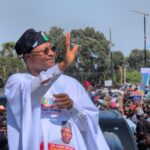
The Chairman of NGF and Governor of Kwara State, AbdulRahman AbdulRazaq said this at a roundtable on the Electricity Act 2023 with theme “Implications and Opportunities for State Electricity Markets” on Wednesday at Abuja.
The two-day event organised by the Nigeria Governors’ Forum (NGF) is funded by the Foreign Commonwealth Development Office (FCDO) and implemented by United Kingdom Nigeria Infrastructural Advisory Facility (UK- NIAF).
According to him, the forum believes that the action would deepen electricity market in Nigeria in a competitive way.
He said: “We believe in partnership and getting divergent views on how to achieve the same goal. This is why this roundtable is so important and we look forward to reboots engagement in this important event.
“I must say with the Act, more questions will be thrown up than answers, but this engagement will bring answers where moving into a new area, which challenges will be enormous and how to address them.
“I hope we will leave here enriched to see how we can implement the Electricity Act and interface with the existing structures that are in place now,’’ AbdulRazaq added.
The British High Commissioner to Nigeria, Richard Montgomery, on his part said the Nigeria’s prosperity depends on getting her power sector right.
Montgomery who was represented by Deputy British High Commissioner to Nigeria, Gill Atkinson, urged Nigeria to find ways to connect the dots between the power sector and inclusive growth.
“This is the time to explore new opportunities to scale up electricity delivery to more Nigerians, which we have already recognised the importance of.
“We need to give primacy to ways to promote expanded renewable integration, both on and off grid.
“Nigeria gave fantastic commitments to COP26 and to the future of its power sector. This forum will help Nigeria deliver those commitments.
“We also need to find ways to connect the dots between the power sector and inclusive growth. Nigeria’s prosperity depends on getting the power sector right,’’ he said.
Montgomery stated that the 90 million Nigerians and the nation’s economy were being negatively impacted by the electricity sector shortfall, and he recommended Nigerians to collaborate with the incoming government to find a solution.
“We have a new government here. It’s embarked on important macroeconomic reforms. The exchange rate and the fuel subsidy are bringing short-term pain to the country and to the people of the country.
“But these are positive changes in the medium to long term that will help Nigeria fulfill its potential for the future.
“Part of this, and a particularly important moment, is the Nigeria’s power sector. Unfortunately, the country has the world’s largest absolute electricity deficit.
“This affects 90 million people. Even those Nigerians who are connected to the grid face frequent outages and hence don’t get a reliable supply,’’ he said.
The British envoy urged Nigeria to understand and acknowledge the impacts of the power supply problems, both on the citizens and on its economy.
“What we’re gathered here to do is to work on the credible reform process that’s needed to resolve both the regulatory and the policy changes that are necessary, and to work together to make sure these are addressed in an integrated manner.
“The Electricity Act, passed in June of this year, is an important component of the current reforms,’’ he said.
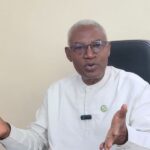
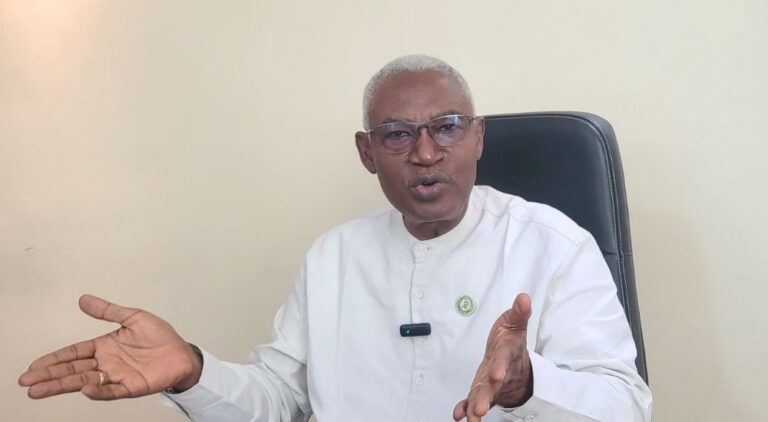
The NGF Director-General, Asishana Okauru in his remarks said that the forum strongly believes that the growth in the electricity sector in Nigeria would inevitably catalyse economic development in Nigeria as well positively impact all the other sectors.
Okauru said that the amended Electricity Act 2023 represents a significant milestone towards achieving a stable, reliable, and efficient electricity supply for the people.
He said that the act also provides a legal framework for private sector participation in the generation, transmission and distribution of electricity.
He described the roundtable discussion as the first in a series of talks and activities that would jumpstart the development and growth of the electricity sector in the country,’’ he said.
“We are often told that the amendment of the Constitution and the signing of the Electricity Act 2023 opens the sub national electricity market.
“To stakeholders and players in the industry, this makes perfect sense but to laymen and perhaps a majority of the populace, particularly those residents in the States, this is mere jargon.
“Our task, therefore, is to facilitate the simplifying of this very complex and highly technical endeavour in a way that both the government and the governed will fully appreciate what is happening, how it should happen and the benefits of it all.
“To achieve this, we have held and continue to hold talks with development partners and international donor organisations that have shown remarkable interest in supporting our efforts in ensuring the success of this initiative,” Okauru said.
He added that the NGF on its part plan to unveil a support effort that would caption the Nigeria Sub-National Electricity Markets Support Program (NSEMSP).
“This is going to be a flagship project of the Forum and it will be designed to facilitate the development of sustainable, competitive and diversified sub-national electricity markets in the country,” he said.