Follow Us on Google
By Chinenye Anuforo
A new case study has provided a rare, data-driven insight into Nigeria’s informal night economy, revealing how digital payments are reshaping transactions across neighbourhood bars, roadside joints and local lounges nationwide.
While premium “Detty December” venues often dominate headlines with reports of daily revenues reaching ₦360 million and table bookings as high as ₦1.2 million, the research shifts focus to Nigeria’s “community nightlife,” where everyday social and economic activity thrives beyond luxury spaces.
The study draws from anonymised transaction data across more than 27,000 clubs, bars and lounges operating on Moniepoint’s payment infrastructure, alongside field interviews and observational research conducted across several Nigerian cities. It forms part of Moniepoint’s broader initiative to provide visibility into Nigeria’s informal economy through sector-specific research.
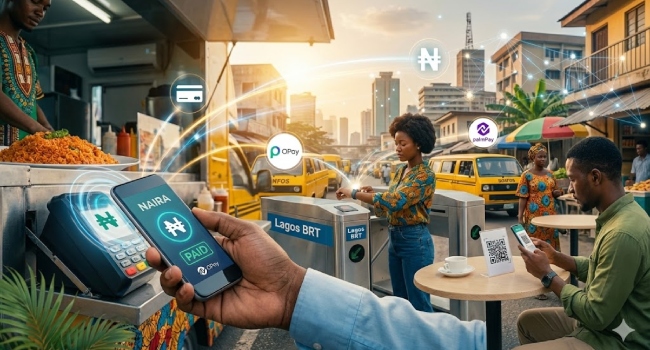
Contrary to trends typically associated with the informal sector, the report finds that cash is steadily declining within nightlife transactions. Bank transfers dominate payment methods, followed by card payments, with many operators actively discouraging cash usage due to security concerns. Transaction data shows that transfers exceed card payments by nearly two million transactions during peak nighttime hours, signalling a significant shift toward digital settlement in Nigeria’s social spaces.
Although nightlife activities extend into the early hours of the morning, transaction volumes rise sharply from 8pm, peak before midnight, and gradually decline thereafter even when venues remain crowded. The findings suggest that economically, the night is largely decided early. For operators, the most critical window for staffing decisions, inventory management, vendor payments and liquidity planning falls between midnight and 6am.
Other News
The report also highlighted nightlife’s role as a major employer within the informal economy. Local bars typically expand their workforce by 30 to 50 percent on peak nights, with conservative estimates indicating that at least 54,000 Nigerians are engaged in nightlife-related labour every evening nationwide.
Tosin Eniolorunda, Co-Founder and Group CEO of Moniepoint Inc., said the findings highlight the importance of recognising neighbourhood nightlife as a structured and economically significant sector.
“Nigeria’s local bars and night-time operators are not peripheral to the economy, they are central to it. This is a substantial and sustained economic sector employing hundreds of thousands of Nigerians nightly and deserving the same recognition given to agriculture, healthcare and retail,” he said.
Further findings showed that common transaction narrations such as “food”, “pay”, “sent”, “POS” and “cash” reflect the wide spectrum of nightlife spending from meals and club entry to transport and after-parties. While alcohol remains a strong revenue driver, food plays a stabilising role, particularly in neighbourhood and informal settings where bottled water and meals often outperform beer and spirits earlier in the evening.
Lagos records the highest concentration of nightlife establishments on the network with 4,856 venues, followed by the Federal Capital Territory (2,515), Rivers (2,362), Delta (1,930) and Edo (1,574). Katsina leads in nighttime food truck payment value, generating over ₦130 million in the past 12 months, while Kwara records the highest transaction count reinforcing the distributed and non-elitist nature of Nigeria’s nightlife economy.
On lending trends, a significant share of loan requests from bar and lounge operators is directed toward renovations, furniture upgrades, lighting and sound systems, underscoring the importance of ambience in attracting and retaining customers.
The study concludes that Nigeria’s nightlife economy is not merely seasonal or elite-driven, but a widespread, technology-enabled ecosystem supporting employment, commerce and financial inclusion across the country.