Follow Us on Google
By Chukwuma Umeorah
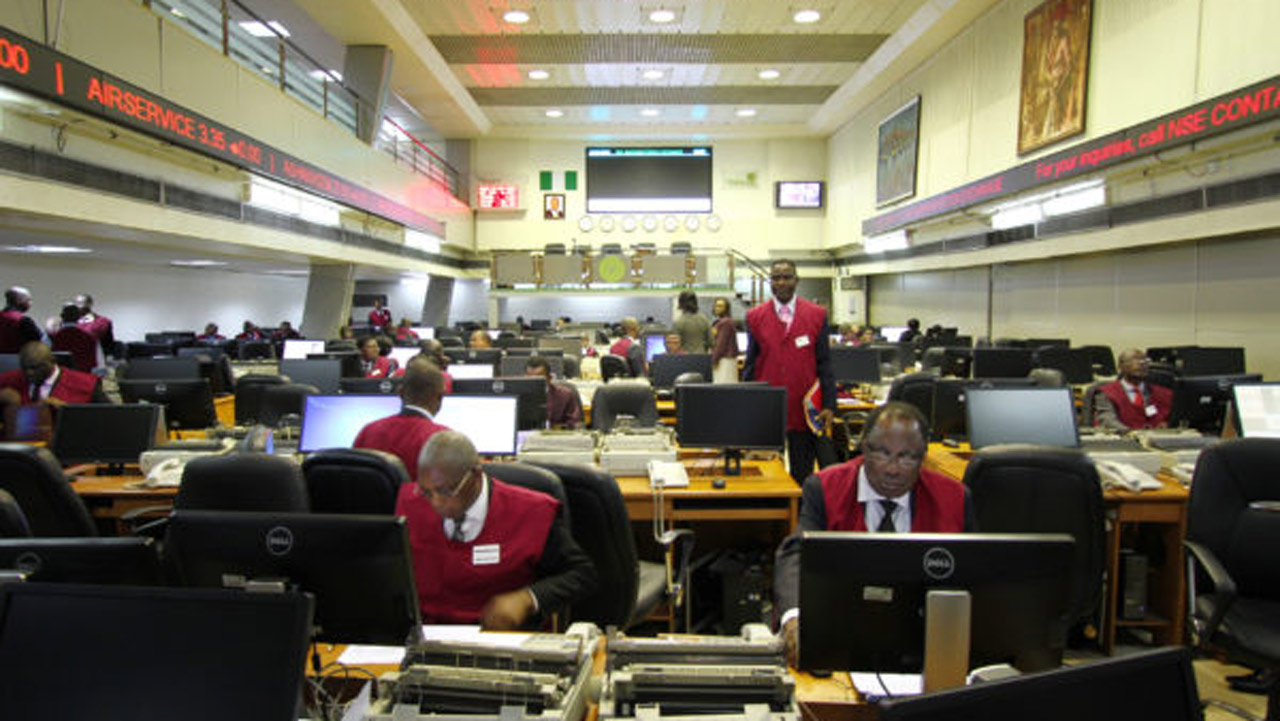
The Nigerian Exchange Limited (NGX) recorded a net increase of approximately N17.6 trillion in market capitalisation in February 2026, as the total value of listed equities rose from about N106.15 trillion at the end of January to N123.76 trillion by the close of trading in the final week of the month.
The expansion came despite a N1.40 trillion decline in the week ended February 27, when the benchmark NGX All-Share Index (ASI) fell by 1.11 per cent week-on-week to close at 192,826.78 points, reflecting renewed profit-taking after a sustained rally earlier in the month.
On a cumulative basis, the ASI advanced strongly through February, rising from the mid-165,000-point range at the beginning of the period to peak near 194,989.77 points during the third week before moderating. The performance translated to a year-to-date (YTD) return of 23.91 per cent, underscoring the scale of gains recorded in the first two months of 2026.
Market analysts attributed the broad-based advance to “a combination of strong corporate earnings releases, renewed institutional participation and policy adjustments that expanded equity investment limits for pension funds.” The revisions, alongside ongoing banking sector recapitalisation efforts, were cited as catalysts for improved liquidity flows into equities.
Trading activity at the start of February was relatively subdued, with marginal gains recorded as investors resumed activity after the January lull. Market capitalisation rose modestly in the opening sessions, supported by selective accumulation in medium and large capitalised stocks as investors positioned ahead of earnings announcements.
Momentum strengthened in the first full trading week, when the ASI gained 3.84 per cent to close at approximately 171,727.49 points. Market capitalisation increased to about N110.24 trillion during the period. Sectoral participation widened, with notable advances in oil and gas, banking and consumer-related counters, while the insurance segment showed comparatively weaker performance.
The rally accelerated in the second week of February. The index rose by 6.2 per cent week-on-week (WoW) to close near 182,313.08 points, lifting market capitalisation to about N117.0 trillion. Trading volumes and turnover improved, indicating increased participation from both institutional and retail investors. Analysts observed that the sustained buying interest was supported by favourable earnings expectations and portfolio rebalancing activities.
In the week ended February 20, the market recorded one of its strongest weekly performances in recent periods. The ASI climbed by 6.95 per cent to settle at 194,989.77 points, while market capitalisation expanded to roughly N125.16 trillion. Gains were broad-based across financial services, industrial goods and commodity-linked stocks. Elevated trading activity was recorded, with multi-billion share volumes exchanged across hundreds of thousands of deals, contributing to enhanced liquidity and price discovery.
However, the final full trading week of the month marked a reversal in short-term momentum. Market capitalisation declined from N125.76 trillion to N123.76 trillion, translating to a N1.40 trillion loss.
Other News
Total volume traded fell by 28.42 per cent week-on-week, while turnover declined by 22.01 per cent, although the number of deals increased by 7.25 per cent to 370,020 transactions. In aggregate, 5.48 billion shares valued at N196.44 billion were exchanged during the week.
Market breadth closed negative at 0.46 times, with 32 gainers against 69 decliners, indicating that the pullback affected a wide range of counters.
Sectoral performance during the correction was mixed. The Oil and Gas index led the gainers with an 8.66 per cent increase week-on-week, supported by renewed interest in selected energy stocks. The Consumer Goods index rose by 7.04 per cent, while the Banking and Insurance indices advanced by 5.68 per cent and 4.73 per cent respectively. The Industrial Goods index declined by 0.69 per cent, reflecting profit-taking in major heavyweights.
At individual stock level, FTGINSURE recorded the highest weekly gain, rising by 56.7 per cent to close at N0.94 per share. OKOMUOIL advanced by 20.9 per cent to N1,765.00 per share, while INFINITY gained 20.6 per cent to close at N19.00 per share. MANSARD appreciated by 17.2 per cent to N18.40 per share, and FCMB rose by 16.8 per cent to N13.90 per share. Other notable gainers included JAIZBANK, AFRIPRUD, CHAMPION, TRANSEXPR and NPFMCRFBK.
On the downside, ABCTRANS led the decliners, shedding 25.0 per cent to close at N6.75 per share. DAARCOMM fell by 20.7 per cent to N2.11 per share, while TANTALIZER declined by 16.7 per cent to N4.50 per share. LIVINGTRUST, UPL, ETRANZACT, TRIPPLEG, MBENEFIT, VFDGROUP and HMCALL also recorded double-digit losses.
Analysts at Cowry Research said they expect the market to “remain cautiously weak in the near term as bearish sentiment and profit-taking activities continue to weigh on performance.” The firm added that “with market breadth still negative and trading volumes subdued, investors are likely to adopt a selective approach, focusing on fundamentally sound and defensive stocks.”
They further advised investors “to take position in fundamentally sound counters,” noting that prevailing liquidity conditions and macroeconomic developments would continue to influence short-term direction.
In the money market, conditions remained liquid during the week under review, supported largely by inflows from maturing Open Market Operations (OMO) bills and the recent monetary policy adjustment by the Central Bank of Nigeria.
System liquidity expanded to N3.75 trillion from N2.26 trillion in the previous week, driven primarily by N770 billion in OMO maturities that returned to the banking system. The elevated liquidity environment contributed to a moderation in short-term funding rates, particularly at the interbank segment of the market.