Follow Us on Google
By Adewale Sanyaolu
The Forum of State Commissioners of Finance has backed President Bola Tinubu’s Executive Order 9, saying the policy is more about strengthening fiscal governance than just revenue expansion.
Speaking on behalf of the states on Arise Television yesterday, its Chairman, Akintunde Oyebode, said the real value of the directive lies in restoring constitutional control over federation revenues and addressing long-standing leakages within Nigeria’s oil and gas revenue architecture.
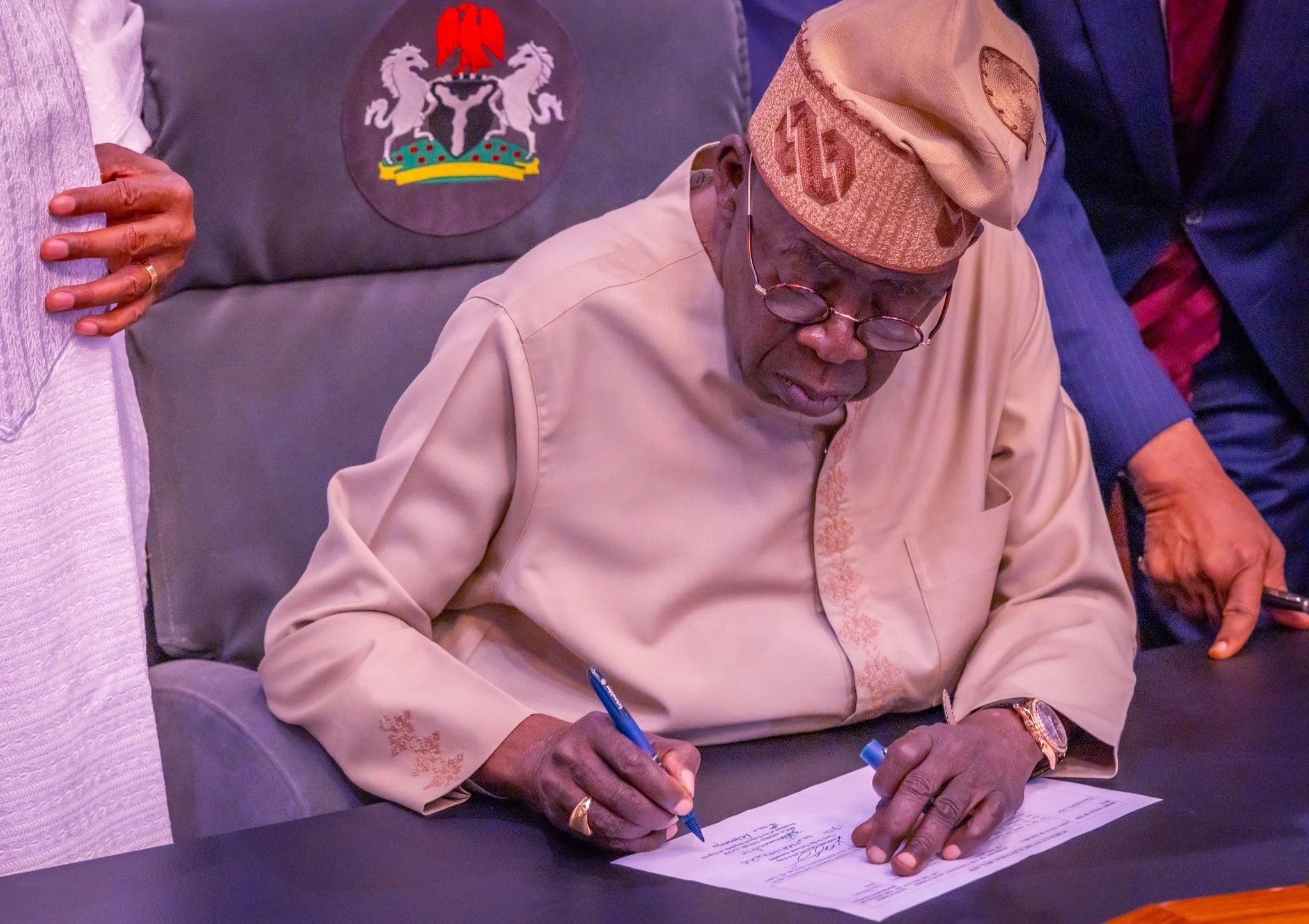
President Bola Tinubu signed Executive Order 9 in February 2026, directing that oil and gas revenues due to the Federation be remitted directly into the Federation Account, curbing deductions and retentions by agencies and requiring that statutory inflows be paid in full before any spending or appropriation.
Oyebode, who is also Ekiti State Commissioner for Finance, said the projected gains from the order are modest when set against the size of the Federation Account.
He estimated that management fees, frontier exploration funds and gas flaring penalties could add about N1.5 trillion annually, but stressed that this represents only a single-digit increase in an account that receives more than N30 trillion per year.
“In monetary terms, this is not even a significant increase to the federation account,” he said. “If you assume that’s an account that gets upwards of N30 trillion per annum, you can do the math. It’s a single-digit impact in terms of growth on the federation account. But that’s not the point,”.
While labour unions, including the Petroleum and Natural Gas Senior Staff Association of Nigeria, have warned that the directive could unsettle the industry and discourage investors, Oyebode dismissed the notion that the measure was about states cornering more funds.
“It’s not about states getting more revenue. It’s about adherence to the Constitution. It’s about doing what is proper,” he said, insisting that public debate should focus on safeguarding federation revenues rather than framing the order as a windfall for subnational governments.
He argued that the most consequential revenue losses lie beyond the specific items targeted by the order, pointing to what he described as a dramatic collapse in joint venture inflows following the implementation of the Petroleum Industry Act.
According to him, joint ventures contributed about $12 billion to the federation before the Act, but that figure has since dropped to roughly $2 billion.
“That’s an area that no one is even talking about,” he said, citing concerns over the transfer of joint venture assets without proper valuation and governance safeguards.
Other News
For the states, he suggested, the deeper challenge is correcting systemic distortions in revenue flows rather than debating the incremental gains from management fees and penalties.
Oyebode also downplayed fears that the order could destabilise NNPC Limited, arguing that the sums involved are small relative to the company’s scale.
He noted that the national oil company reported a N4.5 trillion profit in 2024 on revenues he put at about N45 trillion, describing the amounts under contention as marginal in that context.
Responding to concerns about executive overreach, he declined to offer a legal opinion but maintained that any constitutional disputes should be resolved in court.
He added that investor reaction would hinge on how the order is implemented, noting that a government committee has been set up to work out guidelines.
“If there are valid agreements, contracts in place, it will not affect the repayment of those contracts,” he said, urging stakeholders to await the committee’s framework before drawing conclusions.
Beyond the executive order, Oyebode pushed back against criticism that states are dependent on federal generosity, stressing that revenues in the Federation Account belong to the entire federation and are shared according to constitutional provisions.
He said domestic debt levels in many states have declined by between 15 and 20 per cent in the past two years, while increases in foreign debt valuations were largely driven by exchange rate movements rather than fresh borrowing.
He also rejected claims that states routinely borrow to fund recurrent expenditure, arguing that loans are guided by borrowing plans and typically tied to infrastructure and development projects, particularly those supported by multilateral institutions.
On transparency, he cited reforms under the World Bank-backed State Fiscal Transparency, Accountability and Sustainability programme, saying states now publish budgets, procurement records, quarterly implementation reports and audited financial statements.
He urged analysts and civil society groups to scrutinise those disclosures and hold governments accountable.
For the states, however, the overriding message was clear: Executive Order 9 is less about a revenue boost and more about enforcing constitutional custody of oil and gas earnings and confronting deeper structural leakages that, in their view, have cost the federation far more than the N1.5 trillion now under debate.