Follow Us on Google

- 30 states approve proposed amendment as Kano joins
- Senate targets November 15 for transmission to Tinubu
The Senate has given six State Houses of Assembly yet to communicate their positions on the proposed establishment of State Police until November 15 to do so, warning that failure to respond by the deadline could be interpreted as withholding approval for the constitutional amendment.
They are Benue, Oyo, Cross River, Niger, Abia and Kano, although the Deputy President of the Senate, Barau Jibrin, yesterday informed the chamber that the Kano State House of Assembly had approved the proposal and was transmitting its resolution to the National Assembly.
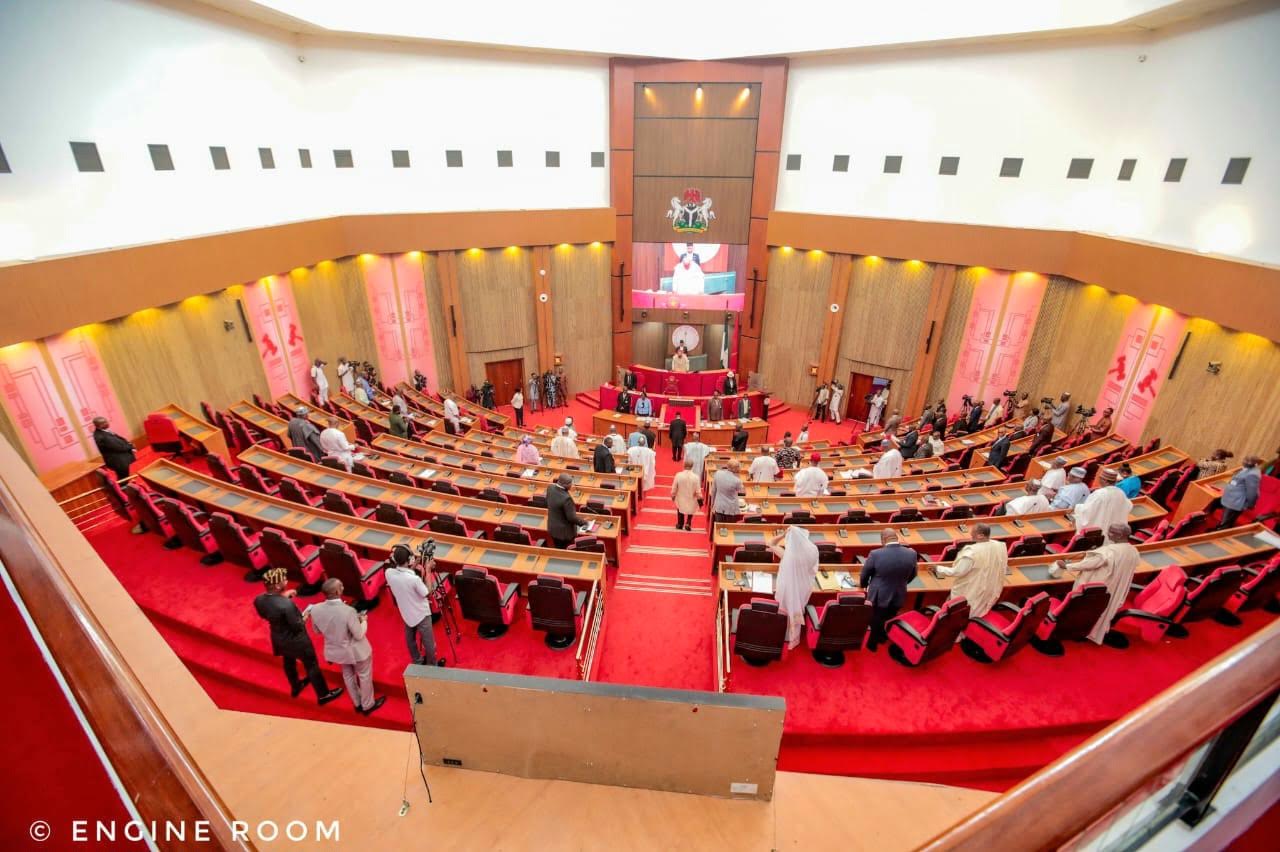
Senate Leader Opeyemi Bamidele disclosed this during plenary while briefing lawmakers on the outcome of consultations with the 36 State Houses of Assembly on the proposed constitutional amendment.
He said 30 state legislatures had already approved the bill, exceeding the constitutionally required two-thirds majority of 24 states needed for the amendment to proceed to the next stage.
However, the Senate leadership insisted that the remaining state legislatures must formally communicate their decisions before November 15, when the National Assembly intends to transmit the proposed amendment to President Bola Tinubu for assent.
The development comes amid efforts by the National Assembly to conclude the legislative process for the proposed decentralisation of Nigeria’s policing system, with the establishment of state police services.
Formally known as the Constitution of the Federal Republic of Nigeria, 1999 (Sixth Alteration) Bill, 2026, it was passed by the Senate on June 24, 2026, and subsequently by the House of Representatives on July 23, 2026, before being transmitted to the 36 State Houses of Assembly for concurrence.
The Clerk to the National Assembly, Kamoru Ogunlana, had on November 3 disclosed that the National Assembly had received and verified reports from 28 state legislatures approving the proposed amendment.
Ogunlana said the verification of the reports and accompanying Votes and Proceedings was undertaken to establish their authenticity and ensure that they accurately reflected the decisions taken by the respective assemblies.
He said the 28 approvals exceeded the constitutional requirement of 24 states, representing two-thirds of the 36 State Houses of Assembly, for an alteration of the 1999 Constitution to be effected.
The Clerk had also clarified that the 30-day period given to the state legislatures to communicate their decisions was an administrative request and not a constitutional deadline, adding that his office would continue to receive reports until the bill was transmitted for presidential assent.
Bamidele, while briefing the Senate, explained that the constitutional amendment process involved three distinct stages: passage by the National Assembly, approval by at least two-thirds of the state legislatures and presidential assent.
According to him, the National Assembly had fulfilled its constitutional responsibility by passing the bill and transmitting it to all 36 State Houses of Assembly for consideration and approval.
He said, “Three key words are used in the Constitution of the Federal Republic of Nigeria, 1999, as amended. The first is passage, the second is approval, and the third is assent.
“The passage of the bill was the responsibility of the National Assembly, and that has been completed. Approval is required from at least two-thirds of the 36 State Houses of Assembly in the country, while assent must subsequently be given by the President to complete the constitutional amendment process.”
The Senate Leader said the constitutional requirements were designed to ensure that amendments to the nation’s supreme law enjoyed the participation and agreement of critical stakeholders across the different levels of government.
He listed the 30 states that had approved the proposed amendment as Adamawa, Akwa Ibom, Anambra, Bauchi, Bayelsa, Borno, Delta, Ebonyi, Edo, Ekiti, Enugu, Gombe, Imo, Jigawa, Kaduna, Katsina, Kebbi, Kogi, Kwara, Lagos, Nasarawa, Ogun, Ondo, Osun, Plateau, Rivers, Sokoto, Taraba, Yobe and Zamfara.
Bamidele said the approvals represented more than the constitutionally stipulated threshold of 24 states, expressing optimism that the remaining legislatures would communicate their decisions before the deadline.
He said, “Two important points need to be emphasised. First, we needed the approval of at least two-thirds of the states for this constitutional amendment to proceed.
“Two-thirds of the 36 states amount to 24. We have already secured approval from 30 states, demonstrating the popularity of this bill among Nigerians through their elected representatives in the various State Houses of Assembly.”
However, Senate President Godswill Akpabio urged the Senate Leader to establish a definite timeframe for the outstanding states to communicate their positions, stressing the need for the National Assembly to know whether they supported or rejected the proposed constitutional alteration.
Akpabio described the establishment of State Police as a significant constitutional development that required broad consultation across the country before the amendment could be forwarded to the President for assent.
He said, “What I would like you to do is to give a specific timeframe within which the remaining six states should communicate their decisions.
“The reason is that we need to know whether they concur with or reject the proposed alteration of the Constitution to allow for the creation of State Police.
“This is an important constitutional amendment, and we must ensure that the entire country has been consulted on such an epoch-making bill and piece of legislation before it is eventually assented to by the President.”
Akpabio consequently proposed that the outstanding states should be given another week to communicate their decisions.
Responding, Bamidele clarified that the National Assembly had already given all 36 state legislatures a 30-day window to consider the proposed amendment and communicate their resolutions.
He disclosed that the Clerk to the National Assembly had formally written to the 36 State Houses of Assembly, fixing November 15 as the deadline for their responses.
Bamidele said, “Well, Mr President, let me clarify that the letter written on our behalf and signed by the Clerk to the National Assembly was conveyed to the 36 State Houses of Assembly on October 15, 2026.
“In that letter, the Clerk indicated on our behalf that the State Houses of Assembly had until November 15 to consider the bill and communicate their decisions. This provides a clear 30-day period to allow them sufficient time to sit, deliberate and take the necessary decisions.”
The Senate Leader explained that the deadline was necessary because the National Assembly intended to forward the proposed amendment to President Tinubu from November 15.
He warned that any state legislature that failed to communicate its position by the deadline would be deemed to have withheld approval, subject to the constitutional implications of its failure to respond.
“We believe that the remaining six states will use the time available between now and that date to do the needful.
“By that date, any State House of Assembly that has not communicated its position will be deemed to have withheld approval, or whatever constitutional implication may arise from its failure to respond,” Bamidele stated.
He expressed confidence that the outstanding states would take advantage of the remaining period to communicate their decisions, adding that the National Assembly hoped no state would want to be excluded from the proposed constitutional reform.
Meanwhile, Barau informed the Senate that the Kano State House of Assembly had approved the proposed amendment and was conveying its resolution to the National Assembly.
He said the communication had been delayed but was already being transmitted to the federal legislature.
Barau said, “Mr President, I have just been informed that the Kano State House of Assembly has sent its response, and it is being communicated to us.
“There was a delay in the process, but the Kano State legislature has done the needful. It is a very outstanding State Assembly.”
Akpabio welcomed the development and expressed satisfaction with the information.