Follow Us on Google
• It’s difficult for struggling economy to fight insecurity
• Power rotation should be vehicle to strengthen national unity, reduce fear of domination
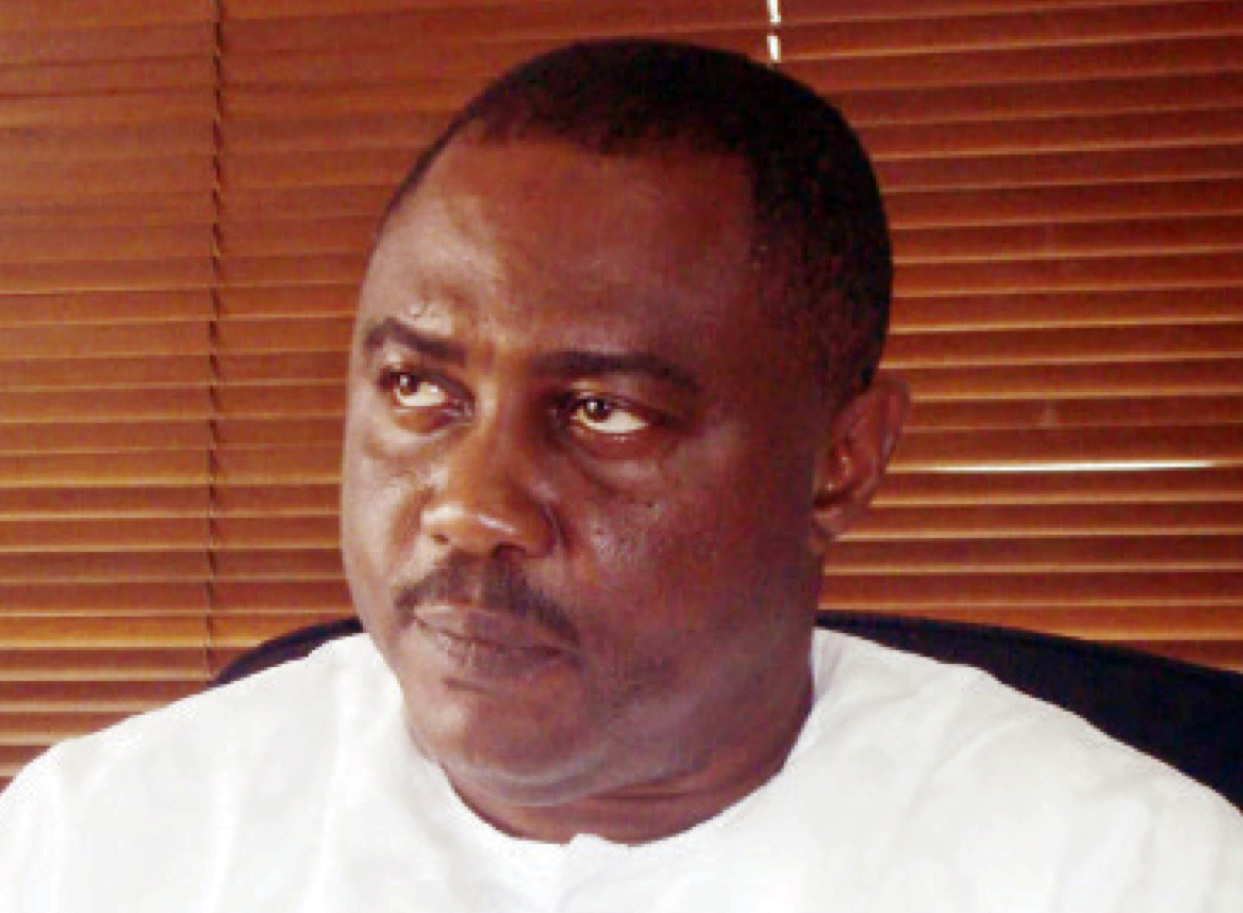
Security consultant, Dr. Ody Ajike, has said that the country has failed to understand that reducing insecurity will certainly require more than military action alone, noting that sustainable improvements on security would largely depend on a combination of socio-economic, political, legal, and military elements of the national power.
Commenting on the reintegration of repentant terrorists into the society, the legal luminary, in an interview with VINCENT KALU, emphasised that the reintegration is a subtle way of the government admitting that they are the cause of insurgency and terrorism because they failed in the social contract responsibilities of the State.
The 2027 election is almost here. What are your expectations?
My expectations for the 2027 general elections are simple. It will be one of the country’s most competitive and consequential elections.
In Nigeria, ideology has never counted in electoral outcomes, so no outcome can be predicated with confidence. This is because several factors are likely going to shape the electoral outcome. As usual with all other elections in Nigeria, there are dominant issues that will shape the elections.
These issues are economy, security, and electoral administration. Nigeria has a very robust youth population, which is a demographic bonus and this will also contribute in shaping the elections. If opposition parties remain fragmented as they are now without a unified messaging system, it could be to the benefit of the incumbent.
Finally, the outcome would only depend on factors that cannot be known in advance and this includes the final candidates, campaign performance, voter turnout, and how effectively the election is administered. My last fear hinges on electoral administration.
The major opposition parties – ADC, NDC, PDP and Labour Parry are still in the courts, do you see any of them making impact just six months to the election?
The major opposition parties are tied up in court not for internal disputes but from induced external hands facilitated by political jobbers. These court disputes would make it harder for the opposition political parties to organise and mount effective challenges against the incumbent or ruling party.
However, this does not necessarily mean they cannot have an impact. The reasons they may still have an impact include public sentiments from voters. Voters may strongly be motivated by the ways these court disputes are generated regularly and they know the direction where these issues are coming from.
Let us not forget that, there is a decline of public trust between the people and the judiciary. There is also, significant public dissatisfaction with the ruling party, so political dynamics may shift quickly during the closing stages of campaigns.
What is your view on the escalating insecurity in the country?
My view is that insecurity remains one of Nigeria’s most serious national challenges because it affects nearly every aspect of our national life, including investments and public confidence.
Our strategic security arena is complex because insecurity is not driven by a single problem and the security complexion of all geo-political zones varies from each other. One of the biggest consequences of insecurity is the impact on ordinary Nigerians across all strata of the society. Farmers, businesses, schools are all affected and many communities live with the fear of attacks or abduction. This creates a cycle that worsens poverty and poverty aids the recruitment of our young population into crime.
It is very difficult for a struggling economy to fight insecurity. The government has continued military operations and at the same time the economy is wobbling though economic reforms are ongoing but not yielding fruits for the prosperity of the people. We have failed as a state to understand that reducing insecurity will certainly require more than military action alone. Sustainable improvements would largely depend on a combination of socio-economic, political, legal, and military elements of our national power.
An infrastructure for peace and governance to address ancient grievances, curb ethnic rivalry, and enhance coordination between federal, state and local governments are necessary. We need a more effective justice system, creation of economic opportunities for the young population and technological systems for enhanced intelligence gathering and policing.
Finally, Nigerians require measurable improvements in internal security management and does not require any arguments.
Do you see any political undertone over these security challenges?
This is a very good question and I will say that, there is what is called the politics of insecurity. Politics plays a remarkable role in security or insecurity but we must make distinctions between political influence and the root causes of insecurity.
Politicians during elections or electoral periods have been accused of sponsoring armed groups for intimidation or to secure electoral advantage. Also, political disagreements can affect how quickly security resources are deployed or how security policies are implemented, and competition between different levels of governments can complicate coordinated security resources. Evaluating all these makes it inaccurate to conclude that Nigeria’s security challenges are primarily political because there are many overlapping drivers of violence and conflict onset in Nigeria. Economic hardship, unemployment, weak governance infrastructure, ancient ethnic or communal animosities, and criminal networks motivated by profit such as kidnapping for ransom are all part of this challenge.
Politics may shape how insecurity is managed or exploited but it is unlikely to fully explain the scale and diversity of the security challenges we face. Without strong and credible evidence on specific security incidents or several incidents of insecurity, it is best to avoid attribution of attacks or violence on political actors. Each event should be assessed on verified facts rather than from assumptions. Evidence-based and transparent investigations should be encouraged for distinguishing genuine political interference in insecurity.
How can this insecurity be addressed or rested?
Insecurity in Nigeria is caused by several factors that are mostly socio- economic and failure of the social responsibilities of the state. Addressing insecurity would require a mix of socio-economic tools, enhanced law enforcement, a more effective judicial system, change of the nature of our political system, strengthen border security, improve governance, and an enthronement of social and political justice to address the root causes of insecurity in Nigeria. Military force alone cannot sufficiently address insecurity because the root causes would remain unaddressed. This means an adoption of immediate security measures and long-term structural reforms.
Don’t you entertain fears for the 2027 elections given the state of the nation and accompanying insecurity?
There are legitimate reasons for concern about 2027 elections and insecurity but these concerns are different from concluding that, the elections cannot be conducted successfully. Some of the risk areas are voter turnout especially in areas affected by violence and instability and election management. Campaigns may also be fraught with insecurity and risk of targeted violence.
Nonetheless, Nigeria has in the past conducted elections under very difficult security conditions and we all have roles in reducing violence for successful elections. How security agencies react and respond to threats will also matter.
Regardless of these, there are credible risks that deserve attention by the state but it would be premature to estimate that insecurity would prevent elections or determine their outcomes because our circumstances could change before the election.
As a way of tackling the security challenges, the process of establishing the state police has commenced. What is your position on the state police?
State police is a highly controversial issue and I am not in support of it for certain reasons. The political misuse of state police is my immediate concern. We have seen governors politically misuse State Electoral Commissions and the state vigilante services. Uneven funding structure is another concern and coordination between states.
Crime transcends borders; so, a clear mechanism is required to coordinate investigations and operations.
Presently, there are no constitutional safeguards or limits on the powers of governors over the operational levels of the state police and no national training and equipment standards for it.
State police is not a guaranteed solution to insecurity. If the root causes of insecurity are not addressed, it would have no effects. I agree that it would improve local policing in terms of intelligence gathering and application but only if accompanied by robust legal safeguards, professional standards and independent oversight.
Other News
For this government, I believe that their pursuit for state police is a goal directed towards the geo-regionalisation of Nigeria and not to improve security overall.
Borno State governor, Zulum, has reintegrated repentant terrorists in the society. What are the implications, and how would their families of their victims view or relate with them?
There is nothing wrong with reintegration of repentant terrorists into the society because reintegration is tool of a broader counterterrorism strategy. However certain conditions must be met.
Reintegration is a subtle way of government admitting that they are the cause of insurgency and terrorism. They failed to provide the slew of public amenities in the society and failed in the social responsibilities of the state. Though I’m an advocate of best fit practices and not international best practices in security, reintegration is not bad after all.
The conditions for reintegration include accountability, security screening, rehabilitation, and equal support for victims.
A very cardinal framework is the DDR – Disarmament, Demobilisation, and Reintegration. This framework has been deployed for use in several African countries. We should be concerned with the goal of reintegration, which is to reduce the likelihood that former fighters do not return to violence.
Here, we need to do a distinction between those people who were forcibly recruited or played very minor roles from those who committed serious crimes or held leadership positions in the insurgent or terrorist groups.
It is trite that those responsible for serious crimes or human rights violations are prosecuted and not reintegrated. Those responsible for minor crimes are usually considered for rehabilitation if they meet very strict criteria.
Nevertheless, this issue continues to generate controversies in Nigeria but we must understand that some of them did not join terrorism voluntarily, while some surrendered and reintegrated fighters provide valuable intelligence.
Rehabilitation and reintegration reduce recruitment, encourage defections of fighters, and enhances the peace process. To a whole lot of the people, they believe that reintegration does not serve the victims, their families and communities. It also appears unfair when reformed fighters receive assistance while victims remain inadequately supported and this undermines public trust.
What should be the campaign message from the different political parties in the 2027 election?
I cannot foresee any campaign message for the ruling party except taxation and foreign loans. For the opposition parties, they will be expected to focus on foreign loans, taxation, economy, and security.
Some political pundits are of the view that the crises in the opposition parties may likely lead to Nigeria becoming a one-party state. What is your take on this?
In theory, yes but in practice, it is unlikely and unconstitutional. This will depend on the ability of the ruling party to overwhelmingly castrate the opposition parties as they are doing right now through proxies.
As long as the people remain unsatisfied with the ruling party, a one-party state cannot be birthed in Nigeria. If Nigeria turns to a one-party state, our democracy will lack the little vitality that we all enjoy now.
Political parties recently concluded their primaries. How can you describe their outcome?
The primaries indicate that there are critical variations in internal party cohesion. However, most of the parties concluded their primaries for certain offices without disputes, while primaries for certain offices were fraught with disputes within the parties with allegations of manipulation, replacements, parallel claims, and calls for reconciliation.
In the ruling party, the power of incumbency remained an advantage, though this is not unusual. I would describe the outcome as mixed and parties largely completed the process within the electoral timetable. Though there are allegations of imposition and irregularities, the real test now is no longer the primaries. It is the general elections because a party or candidate’s success in the primaries does not automatically translate into success at the general elections.
Power rotation between North and South has been a critical issue. Where do you stand on this?
The simplicity of the complexity of Nigeria’s political system can only be expressed through power rotation. Though rotation of power is not constitutional, it has become a political convention used to manage our diversity and reduce tension.
Our diversity is indeed structural and complex, and so rotation reduces this complexity. Rotation should be a vehicle to strengthen national unity, reduce fear of domination, promote inclusion, stabilise elite competition, help maintain the balance of our fragile federation, and help manage post-election competition and acceptance.
It is a non-legal approach towards building a united country but our long-term stability and development will depend not on rotation but good governance, credible elections, and strong institutions.
How can you assess the Tinubu’s reforms?
President Tinubu has undertaken bold structurally significant reforms with very high socially painful impact. Here we need to evaluate President Tinubu’s objectives, implementation, and real outcomes and not just the policy publications.
Some commentators claim the reforms are focused at macroeconomic restructuring and that means the impacts are still fuzzy and unfolding. Assessing the key reform areas also reveals that outcomes are long-term or in the long run. The question is how long is the long run?
For balanced assessment, we need to examine economic stability and ask
questions about what is happening to inflation, unemployment, security, cost of living, government revenue, debt profile, investments and the overall social impact of the reforms.
The current assessment tends to be mixed when you consider government revenue collection which has improved as against the inequities and sharp rise in living expenses of the average Nigerian, high inflation, and economic hardship that Nigerians are faced with. In every economic reform process, timing is critical and it is usually in two phases, which are the short term and medium to long terms.