Follow Us on Google
From Kenneth Udeh, Abuja
Stakeholders across Nigeria’s film, academic, and cultural sectors have raised alarm over the rapidly deteriorating state of the nation’s audiovisual heritage, warning that over 50,000 films face possible loss unless urgent reforms, increased funding, and accelerated digitization efforts are implemented.
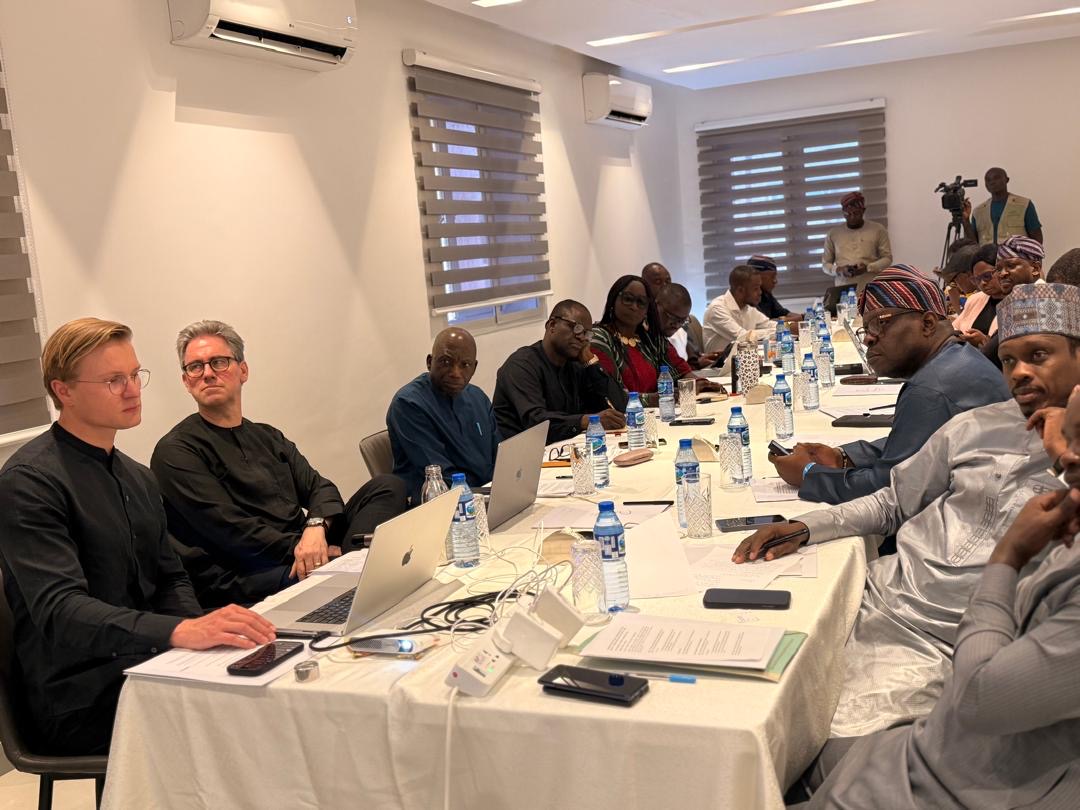
The concerns took center stage at the Stakeholder Archival Studies Master Project Workshop, organized under the DAAD (German Academic Exchange Service) Nigerian-German Cooperation Project in partnership with Goethe University Frankfurt, the Nigerian Film Corporation (NFC), and the University of Jos.
Held in Abuja on Wednesday, the one-day workshop featured technical sessions, presentations, interactive roundtables, and expert-led discussions, all aimed at developing a sustainable framework for preserving Nigeria’s rich film and cultural archives.
The workshop was moderated by Alo Paistik and Prof. Vinzenz Hediger, both of the DAAD Nigerian-German Cooperation Film Heritage Project.
Paistik, the DAAD Film Heritage Project coordinator from the Goethe University Frankfurt, highlighted the importance of collaboration, knowledge transfer initiatives, and scholarship programs to strengthen expertise in film archiving techniques.
Prof. Hediger, Director at Cinémathèque Suisse, Switzerland, and a Professor at Goethe University Frankfurt, emphasized the urgency of preservation, warning that failure to act could result in irreversible cultural loss.
He pledged technical support in digital restoration, workflow development, and infrastructure design, while proposing shared digitization initiatives between Nigeria and Switzerland.
Managing Director of the Nigerian Film Corporation, Dr. Ali Nuhu in his opening address warned that the country must act decisively to protect its film and cultural archives from deterioration and possible loss.
Nuhu described the initiative as a critical intervention designed to build skilled manpower and institutional capacity for the preservation, management, and accessibility of Nigeria’s audiovisual materials.
According to him, the programme, which was inaugurated in 2019, was conceived with “deep patriotism and commitment to save and preserve Nigeria’s audio-visual heritage,” adding that it has continued to provide specialized training in areas such as digitization, restoration, classification, and cultural policy development.
He noted that the hybrid structure of the programme combining academic learning with practical fieldwork was intentionally designed to equip a new generation of archivists with the technical and theoretical expertise required to manage Nigeria’s growing archive ecosystem.
The NFC boss explained that the Abuja workshop was convened to assess the programme’s impact over the past six years, evaluate students’ learning outcomes, and review its curriculum in line with global best practices.
“This engagement offers us an opportunity to assess, review and ultimately strengthen programme offerings after almost six years of unbroken journey,” he said.
He expressed confidence that outcomes from the workshop would produce a more robust and forward-looking curriculum capable of addressing current and emerging challenges in audiovisual preservation.
Delivering a keynote presentation, Head of Department National Film, Video and Sound Archive ( NFVSA ) Jos Mrs. Ajoke Kudirat Ayoola highlighted critical structural and operational challenges facing the National Film, Video, and Sound Archive.
She identified the high cost of digital transformation as a major barrier, noting that transitioning from analog to digital preservation systems requires “substantial investment in infrastructure.” Funding limitations, she added, have forced authorities to prioritize only select preservation activities.
Ayoola also drew attention to a growing human resource crisis, warning of a “brain drain” within the archive system.
“There has been a notable decrease in personnel due to retirements, while remaining staff are forced to double up efforts,” she said, stressing that the loss of institutional knowledge poses a long-term threat to archival sustainability.
She further revealed that the absence of a digital access platform has severely restricted public engagement, leaving most collections inaccessible to researchers who cannot physically visit the archive.
Over 50,000 Films at Risk Amid Storage Concerns
Corroborating these concerns, Mr. Francis Nzekwu, Director of Planning, Research and Statistics at the Nigerian Film Corporation, disclosed that Nigeria’s film archive currently houses over 50,000 titles in outdated formats such as VHS, CDs, and EVDs.
He explained that the sheer size of the archive stems from legal provisions mandating filmmakers to deposit copies of their works with the Corporation.
However, Nzekwu warned that environmental degradation and poor storage conditions continue to threaten the physical integrity of these materials.
Despite previous digitization attempts, he described progress as “a drop in the ocean,” noting that most digitized content is still stored on external hard drives, an approach he said is neither secure nor accessible.
He outlined plans to establish a centralized media server and digital portal that would allow researchers and the public to remotely access Nigeria’s film heritage.
“Rapid Decay” and Funding Gaps Stall Progress
Adding to the urgency, Mr. Enyinnaya Okike, Head of Film Archives at the NFC, revealed that archival materials are undergoing rapid deterioration despite efforts to regulate storage conditions.
He disclosed that attempts to deploy both physical servers and cloud storage solutions have been hindered by financial constraints, describing the situation as a major setback in preservation efforts.
Okike emphasized the importance of international collaboration, stating that learning from global best practices would help accelerate Nigeria’s archival development.
From a regulatory standpoint, Dr. Shaibu Husseini, Executive Director of the National Film and Video Censors Board, clarified that while the Board holds between 50,000 and 60,000 film materials, it lacks the infrastructure for proper archiving.
“Our facility is more of a storage system than a functional archive,” he admitted.
Husseini proposed stronger inter-agency collaboration, including a Memorandum of Understanding with the NFC to consolidate archival responsibilities and transition toward a unified digital repository.
Academic Institutions Highlight Skill Gaps
Also speaking at the workshop, Hon. Aisha Adamu Augie, Director-General of the Centre for Black and African Arts and Civilization, stressed the importance of partnerships and research collaboration in advancing archival development.
“We can also endorse or write supporting letters wherever they are searching for grants for their research things like that. So for us, we’re very open to having a partnership with the university and to obviously have both sides,” she said.
She raised concerns about bureaucratic bottlenecks and weak legal frameworks slowing down progress in Nigeria’s archival sector.
“You can have all the ideas, but the timelines and the bureaucracy…there are things that are vague, there are things that don’t even exist in the documentation,” she said, adding that institutions are still navigating unclear policies around ownership and preservation of cultural assets.
She disclosed that efforts are ongoing to engage relevant government bodies, including the National Assembly and the Ministry of Foreign Affairs, to strengthen policy frameworks and accelerate decision-making processes.
On the broader identity of Nigeria’s film industry, Augie cautioned against fragmentation within the sector, urging stakeholders to maintain a unified national identity under “Nollywood.”
“The whole world, when you say ‘Nollywood,’ it is Nigeria… we need to be under one umbrella,” she stated, noting that the industry’s influence now extends beyond Nigeria to other African countries.
She emphasized the need for clarity and consensus on the industry’s identity, suggesting that stakeholders may need to make an official position to guide both local and international understanding.
Mrs. Afomachukwu Igbedion of the Nollywood Studies Centre at Pan-Atlantic University underscored the need for professional training in archival studies.
She noted that while academic institutions are actively preserving Nollywood materials, they face similar challenges, including format obsolescence, high digitization costs, and labor-intensive cataloging processes.
Igbedion advocated for the proposed Master’s programme in Archival Studies, describing it as critical for building a new generation of skilled archivists.
FESTAC ‘77 Archives Face Space and Preservation Crisis
Representing the Centre for Black and African Arts and Civilization, Mr. Manji Diyal revealed that significant portions of Nigeria’s historic FESTAC ‘77 materials remain stored in inadequate conditions, including original cartons used since 1977.
He highlighted space constraints, lack of ideal storage environments, and limited digitization as key challenges, despite ongoing efforts to preserve over 1,300 reel-to-reel tapes.
Diyal stressed that collaboration, capacity building, and sustained investment are essential to unlocking the full value of these archives.
International Partners Offer Technical Support.
The workshop also featured international technical sessions led by Markus Ruff of the Arsenal Institute for Film and Video Arts, Berlin, and Lisabona Rahman, Training and Outreach Coordinator for the Federation of International Film Archives (FIAF), Brussels.
Ruff explained that the sessions were designed to broaden input for students while providing practical, hands-on knowledge on archival practices. Rahman detailed the three core modules of the training:
Collection Management – providing foundational knowledge for institutions to manage audiovisual holdings effectively.
Media Literacy and Inspection – teaching participants how to read and interpret technical and historical information from analog films.
Content Migration – transitioning materials from obsolete analog formats to digital carriers, ensuring wider access and long-term preservation.
Rahman emphasized the broader vision of the training, noting: “Coming from FIAF, I would like to really call your attention to preserving this technical knowledge within the country and also sharing it with other countries not just in Africa but for the world based on your historical experience and archival collection.”
Across all sessions, a common theme emerged: Nigeria’s audiovisual heritage is under serious threat, but with coordinated policy alignment, funding, and international collaboration, it can be preserved and revitalized.
Stakeholders expressed optimism that the workshop would serve as a turning point laying the groundwork for sustainable archival practices, improved infrastructure, and a digitally accessible national film heritage.