Follow Us on Google
From Adanna Nnamani, Abuja
Recent happenings in the digital space have sparked debates over social media regulation in Nigeria. The challenges of misinformation, hate speech, and online abuse have become increasingly difficult to ignore as the tendrils of social media reach deeper into fabrics of the nation and the society.

From viral rumors fueling communal tensions to malicious falsehoods sowing seeds of discord, the darker underbelly of digital discourse threatens to overshadow the promise of connectivity and empowerment.
This has evoked the clarion call for balance and accountability in the online space to ensure that the rights of all citizens are safeguarded. But amidst the clamour for control, questions abound of how regulation can be balanced with the fundamental principles of free speech and expression.
What role should governments, tech companies and civil society play in shaping the rules of engagement? And, perhaps most importantly, what is at stake if Nigeria fails to navigate this digital frontier with wisdom and foresight?
While some argue for unchecked and unfiltered social media as a platform for free expression, other viewpoints from various citizens and experts in different fields suggest that the discussion on social media regulation is not solely about limiting free speech, but rather about striking a delicate balance between safeguarding fundamental rights and mitigating the spread of harmful content.
Advocates argue for the need to control misinformation and abusive behaviour while opponents raise concerns about censorship and threats to freedom of expression.
David Chiemelie Chukwuma, a Blockchain developer and expert, advocated a balanced approach to social media regulation. He acknowledged the importance of free speech while emphasising the need for reasonable oversight to prevent chaos and abuse of privileges.
He said: “I feel social media could be regulated but only to a certain degree because I feel free speech is a fundamental human right and as a web3 native, it is only natural for me to have this position because web3 represents freedom in our use of the internet and it uses transparent democratic processes to enforce rules. So, in as much as I support not taking people’s freedom and being so harsh to action with banning their accounts unfairly as a platform owner (for instance Twitter) because of your bias or political interests or hunting them down and punishing them as an authority figure or the government whenever they have controversial opinions, I feel people’s use of social media could be managed to a reasonable extent because everything would go to chaos soon if there is no form of order as humans are unpredictable and many people tend to abuse privileges if there’s no oversight.
He added: “A broad scope could be brought into play where the rules and regulations laid down are fair to all concerned and promote free speech but are definitely against extreme things like racism, pedophilia and all those popular condemnable vices we know.
“So, from the point of view of a platform owner such as Twitter, people can be allowed to appeal whenever they are accused of overstepping boundaries instead of just shutting them off without a voice but from the point of view of the government, I feel people should be free to say their mind even if you are against their position or have political differences with them because that is what democracy is all about.
“As long as it is not defamation without facts, people should be allowed to speak freely, but if it is a crime like defamation without facts or some other extreme stuff, then they should be made to face the law with due process after some warnings might have been made to the person behind the propaganda.”
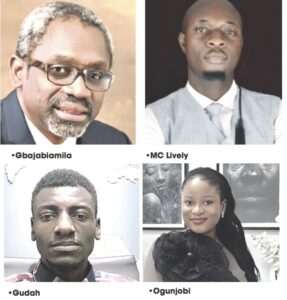
Oladunni Ogunjobi, a legal practitioner, echoed the call for regulation, particularly targeting graphic, sexual or violent content. She emphasised the need to protect users by creating a safe online environment without compromising the principles of openness and fairness.
“I do believe social media should be regulated but for graphic, sexual or violent content. There are so many things I have seen online that should have never made it there in the first place.
“Things like child pornography and intense violence should not be allowed. I am of the opinion that social media regulation should strike a balance between protecting users and promoting a free, open and fair internet usage.
“It is a topic of delicate balance that requires careful consideration and collaboration among governments, tech companies and citizens of the society,”Ogunjobi stated.
Marvel Henry, an ICT expert, also stressed the importance of combating fake news while upholding freedom of expression.
She proposed the establishment of an independent fact-checking body to verify information, citing recent events like the DJ Switch arrest story as examples where misinformation spread rapidly, underscoring the need for proactive measures.
She said: “Yes, I believe social media should be regulated to an extent, mostly to curb the spread of fake news and false stories to the public.
“However, this regulation should not bar freedom of speech and expression which is a fundamental human right. There should be an independent body that fact checks news and stories posted by relevant bodies, individuals and organisations to avoid spread of false information.
“Take for example the DJ Switch arrest story. If such a body existed, I do not think that news would have traveled as fast as it did because it would be the body’s duty to immediately debunk such news with the right information and facts.”
Jesse Gudah, Media & Strategic Communications Associate at Clean Technology Hub, said misinformation and hate speech posed serious threats from unregulated social media, adding that it was crucial to enact targeted regulatory measures to address specific harms without infringing on freedom of expression.
Gudah said: “In Nigeria, where social media platforms have gained immense traction, it is important to strike a balance between fundamental freedoms that must always be protected and managing the potential dangers associated with how communication tools are used.
“I would say that the unregulated nature of social media has given rise to a host of challenges, from the spread of misinformation and hate speech to the incitement of violence and civil unrest. Nigeria have witnessed firsthand how false narratives and inflammatory rhetoric can fan the flames of ethnic tensions and undermine national unity. The killing of Deborah, a Christian girl in sokoto, is a case in study.”
He therefore, advocated for content moderation policies and fact-checking initiatives.
“It is, therefore, important that the country takes decisive actions to curb the proliferation of harmful content on these platforms. However, it is crucial to approach this issue with tact,’Gudah said.
He added that “any regulatory measures must be carefully calibrated to target specific harms without infringing upon the fundamental right to freedom of expression. The government must resist the temptation to implement heavy-handed censorship or draconian measures that could stifle legitimate discourse and critical voices.
“A measured approach to social media regulation could involve instituting reasonable content moderation policies and empowering independent fact-checking organizations to combat the spread of misinformation.”
Kamsi Salita, a National Youth Service Corp (NYSC) member, narrated her firsthand encounters with disturbing material on social media and underscored the urgency of implementing safeguards to protect users from harmful content.
“When it comes to the moderation and regulation of social media, I do have a personal belief that social media should be regulated, but it should be regulated for violent, sexual, graphic or harassment media expression content. In my sojourns through social media, I have come across contents that people should never have had to see.
“Take rape contents for instance, insensitive bullying and child pornography. These are to mention but a few of the things that shouldn’t be out there and they are the simple reasons social media should be regulated,” Salita said.
In February, Femi Gbajabiamila, the Chief of Staff to President Bola Tinubu, announced that the Federal Government was considering regulating social media in order to address misconceptions and misuse.
Gbajabiamila said that social media had evolved into a societal challenge that requires regulation. He noted that it was the government’s responsibility to foster informed civic engagement by ensuring consensus on truth and reality among citizens.
In February, Femi Gbajabiamila, the Chief of Staff to President Bola Tinubu, announced that the Federal Government was considering regulating social media in order to address misconceptions and misuse.
Gbajabiamila said that social media had evolved into a societal challenge that requires regulation. He noted that it was the government’s responsibility to foster informed civic engagement by ensuring consensus on truth and reality among citizens.
According to the Chief of Staff “in the world today, public discourse is driven by alternative facts, dropped with reckless abandon on social media, thereby creating false realities to confuse and deceive people.
“People are living through one of the most fraught periods in modern human history.The world is changing all around us. The international settlements underpinning the global order since the end of the Second World War are being renegotiated in real time across Europe, Asia, and the Middle East.
”Amidst this global turmoil, we are at home confronted by difficult public policy choices and decisions that must be made to ensure our children’s future and our country’s prospects.”
Contrastingly, voices like human rights lawyer, Inibehe Effiong, and entertainer, Michael Amanesi, popularly known as Mc Lively, warn against the pitfalls of excessive regulation
Effiong said during an interview that “the problem with things like regulation in Nigeria is the people in charge of the regulation. It could easily turn to a witch-hunt against content creators or a way for government to silence citizens. That is what makes regulation of social media dangerous. It is important for people to have freedom with creativity, as that is the only way by which creatives can rise to the pinnacle of expression.”
Effiong further said that labeling the use of social media as inherently negative is both misleading and questionable. He further argued that the notion of unregulated social media in Nigeria is logically flawed.
According Effiong, “social media platforms such as X, Facebook, TikTok and Instagram are self-regulating. If a person makes a post on X, for example, other users of X may go under the post to challenge what has been posted, give a different account, and in many instances, present evidence to contradict and show the falsity of what has been posted.
“The owners of the social platform have also introduced community rules and standards, whereby if one posts certain things that violate their community standards, the person who is posting can be sanctioned. They can have the account permanently banned or suspended, or the posts deleted. “It is not correct that social media is entirely without regulation. Other users of social media are also allowed by the owners of these platforms to report users who post offensive posts to the community standards that have been set.”