Follow Us on Google


Stakeholders in Nigeria’s broadcasting industry have called on the Federal Government to declare October 25 the National Day of Private Broadcasting in honour of late media pioneer, High Chief Raymond Anthony Aleogho Dokpesi, whose establishment of Ray Power FM and Africa Independent Television (AIT) helped break government’s monopoly of the airwaves.
The Director-General of the Raymond Dokpesi Centre for Media Development, Dr Christopher Ebuetse, said the proposed national recognition would preserve Dokpesi’s legacy and draw attention to the role of private broadcasting in democratic development, public accountability and citizens’ participation in national affairs.
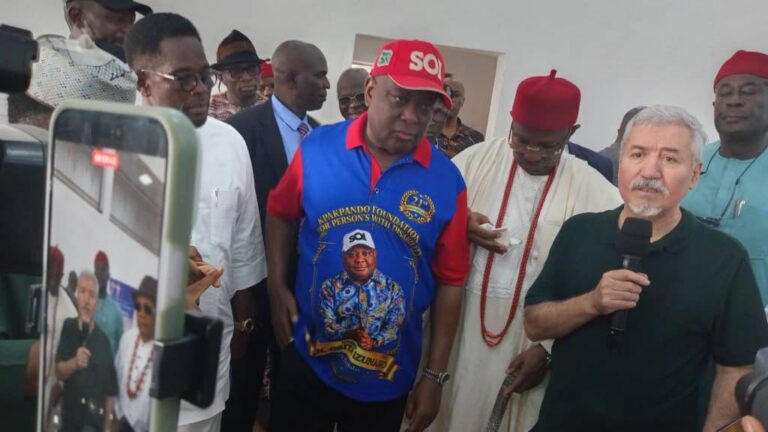
The appeal comes as the media industry marks another anniversary of Dokpesi’s birth on October 25, with participants in the Raymond Dokpesi Endurance Trek and other industry stakeholders renewing their demand for formal recognition of his contribution to Nigeria’s broadcasting landscape.
For the advocates, the campaign is about more than celebrating an individual. It is a call to recognise the transformation of Nigeria’s media industry and the struggle to give citizens access to independent platforms through which they can question authority, express opinions and participate in public discourse.
Dokpesi, who died on May 29, 2023, was widely regarded as a pioneer of private broadcasting in Nigeria. His intervention came at a time when government-owned radio and television stations dominated the airwaves, limiting the space for independent broadcasting and public engagement.
A marine engineer trained in Poland, Dokpesi ventured into broadcasting after recognising the limitations of a communication system in which the government largely controlled the flow of information to the public.
His determination to change that structure led to the emergence of Ray Power 100.5 FM, which began test transmission in late 1993. The station, regarded as Nigeria’s first private radio station, was ordered off the air by the military regime of General Sani Abacha.
Rather than abandon the project, Dokpesi challenged the restrictions and pursued the right to operate. Ray Power eventually returned to full broadcasting on September 1, 1994, following the licensing process.
The development marked a turning point in Nigeria’s broadcasting history, opening the door to a new model in which private operators could establish radio stations and offer alternatives to state-controlled programming.
In 1996, Dokpesi extended the initiative to television with the launch of Africa Independent Television, regarded as Nigeria’s first private television network. AIT subsequently expanded its reach through round-the-clock broadcasting and satellite transmission, taking Nigerian news and programmes to audiences beyond the country.
The platforms helped reshape the media landscape, creating opportunities for journalists, presenters, producers and other broadcasting professionals while broadening the range of voices available to the public.
Today, Nigeria’s broadcasting industry has expanded considerably, with private radio and television stations operating across different parts of the country. Those advocating the proposed National Day of Private Broadcasting argue that the growth of the sector cannot be adequately discussed without acknowledging the risks Dokpesi took to establish independent broadcasting in a restrictive political environment.
They maintain that his contribution was not simply the creation of media businesses but the expansion of public access to information and the development of platforms that could hold public institutions accountable.
Dokpesi’s argument for private broadcasting was rooted in the belief that information was essential to national development and that governments needed to hear citizens’ concerns to address grievances before they escalated.
His supporters say the principle remains relevant as Nigeria confronts questions surrounding media freedom, professional independence, access to information and the economic sustainability of broadcasting organisations.
The 19-year history of the Raymond Dokpesi Endurance Trek has become one of the platforms through which supporters have sustained the campaign to preserve his legacy. Annual lectures and other commemorative activities have also provided opportunities to reflect on the evolution of private broadcasting and the challenges facing the industry.
Those behind the campaign are urging President Bola Ahmed Tinubu to give the proposal serious consideration by officially designating October 25 as the National Day of Private Broadcasting.
They want the date to become an annual platform for broadcasters, journalists, policymakers, media scholars and citizens to examine the industry’s contribution to democracy, assess emerging challenges and discuss the future of independent broadcasting in Nigeria.
The proposed observance, they argue, would also provide an opportunity to revisit the historical struggles that preceded the liberalisation of the airwaves and recognise the individuals whose efforts helped expand the space for private media ownership.
Dokpesi’s supporters further contend that his contribution to national development extended beyond broadcasting. They cite his involvement in efforts to protect Nigeria’s international sporting commitments, including the 2009 FIFA Under-17 World Cup, as evidence of his engagement with issues of national interest.
For the campaigners, however, his most enduring contribution remains the opening of a communication space in which government no longer had exclusive control over the broadcast conversation.
They believe a National Day of Private Broadcasting would help institutionalise that legacy, ensuring that future generations understand the struggles and sacrifices associated with the growth of Nigeria’s private media sector.
As the industry reflects on Dokpesi’s birthday, the central demand is that his contribution should not remain confined to tributes, anniversary lectures and commemorative walks.
Instead, the campaigners want October 25 to serve as a permanent national reminder of the role independent broadcasting plays in informing citizens, widening public debate and strengthening democratic institutions.