Follow Us on Google
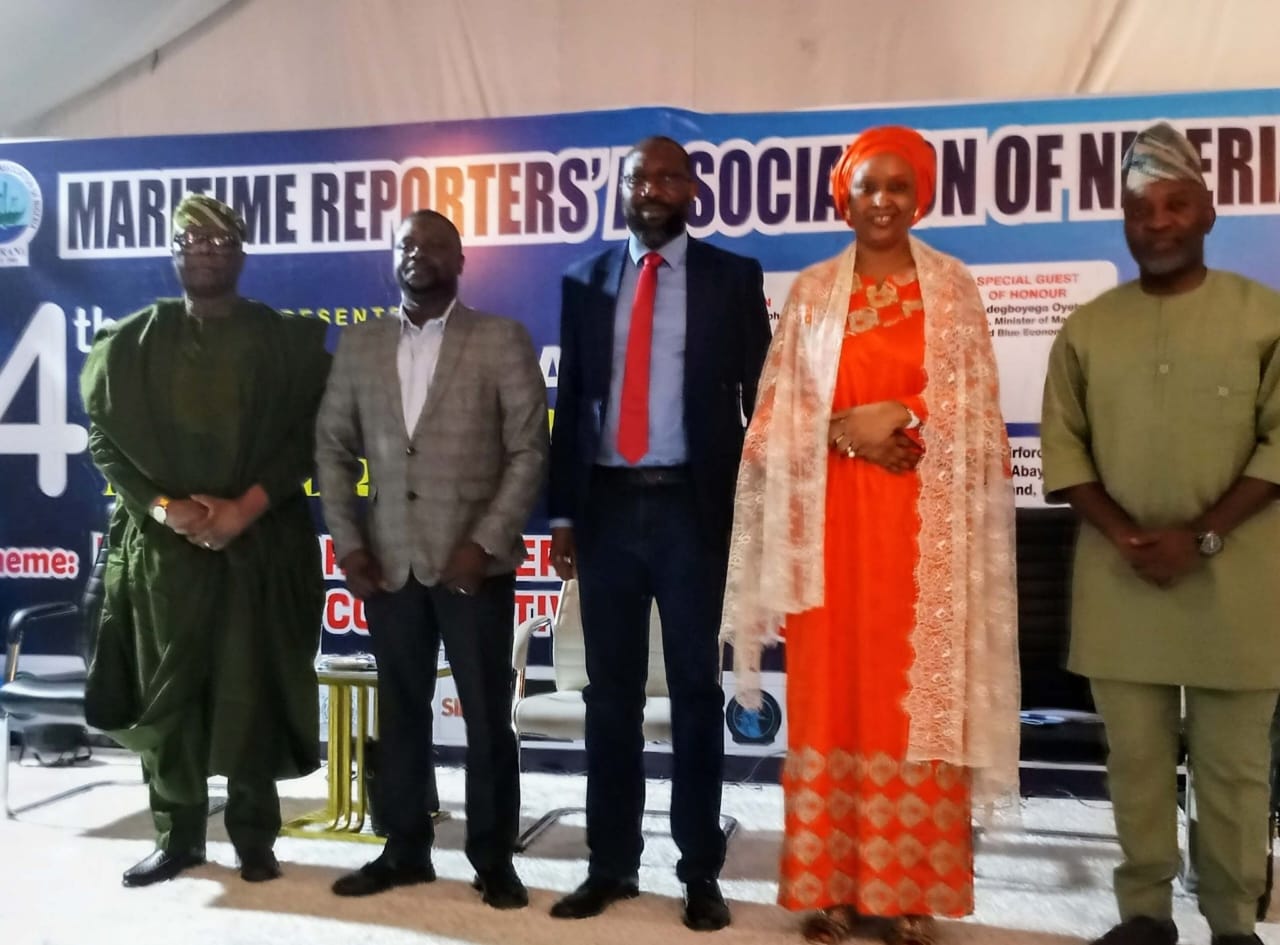
Stakeholders in the nation’s maritime industry have called for a comprehensive review of port tariffs and improved vessel turnaround times as part of efforts to position Nigeria as the leading maritime hub and trade gateway in West and Central Africa.
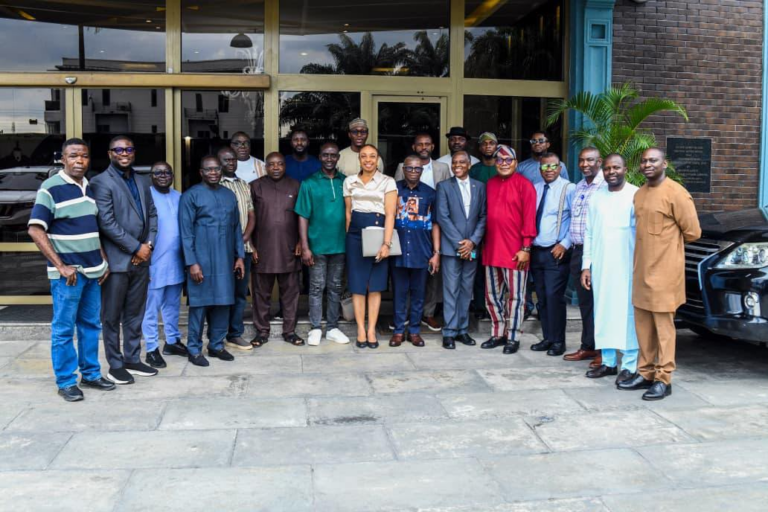
This call was made against the backdrop of growing concerns over port costs, congestion, cargo evacuation and the competitiveness of Nigerian ports at the 2026 Annual Maritime Lecture organised by the Maritime Reporters Association of Nigeria (MARAN).
Delivering the keynote address, the special adviser to President Bola Ahmed Tinubu on Policy Coordination, Hadiza Bala Usman, said Nigeria’s port modernisation efforts must ultimately deliver lower cargo-handling costs, faster vessel turnaround and improved export capacity.
Usman, who is also the former Managing Director of the Nigerian Ports Authority (NPA, warned that port modernisation should not be measured by the amount of money invested in infrastructure alone, but by its impact on the movement of cargo and the wider economy.
She added that Nigeria’s seaports handle more than four-fifths of the country’s physical imports and exports, making their efficiency critical to economic growth.
However, she identified six key dimensions of port transformation: infrastructure and operational models, modern equipment, digitalisation, institutional reform, human capital, and commercial modernisation. According to her, high port costs ultimately translate into higher prices for goods and raw materials, while also increasing pressures on businesses and the exchange rate.
She therefore called for a comprehensive review of port tariffs, stressing that policymakers should focus on the total cost of moving cargo through the supply chain rather than considering individual port charges in isolation.
She advocated a predictable, transparent and performance-based tariff regime, alongside the publication of an annual Port Economic Performance Report.
Such a report, she said, should track vessel and truck turnaround times, cargo-handling productivity, customs clearance, logistics costs, digital transactions, export connectivity and customer satisfaction, saying that a port cannot be globally competitive if its hinterland is not competitive.
Usman also pointed to improvements recorded at Nigerian ports, noting that Tin Can Island Port and the Lagos Port Complex in Apapa were ranked among the world’s most improved container ports between 2020 and 2025, according to the World Bank and S&P Global Market Intelligence’s Container Port Performance Index.
She, however, stressed that the gains must be sustained through continued investment and stronger performance measurement, particularly in road, rail, barge, inland logistics and dry-port connections.
Meanwhile, the Minister of Marine and Blue Economy, Adegboyega Oyetola, represented at the event by the NPA’s General Manager, Corporate and Strategic Planning, Seyi Iyawe, said the Federal Government was implementing a comprehensive modernisation programme for Apapa, Tin Can Island and other ports.
Other News
He said the programme would involve rebuilding critical infrastructure, deepening channels, replacing obsolete equipment and overhauling port operations to accommodate larger vessels, reduce turnaround time and lower cargo-handling costs.
Oyetola also highlighted government investments in deep-sea ports, marine crafts and maritime security, noting that Nigeria had maintained a zero-piracy record in its territorial waters for four consecutive years.
He said the establishment of the Nigerian Ports Economic Regulatory Agency would further strengthen economic regulation, enforce service standards, monitor tariffs, promote competition and protect port users from arbitrary charges.
Also speaking, Executive Director, Operations and Technical, Tantita Security Services Nigeria Limited, Capt. Dr. Warredi Enisuoh, warned that port modernisation would have limited impact if improvements did not extend beyond the port gates.
“You cannot modernise a port without modernising your exit point,” he said.
Enisuoh called for improved cargo evacuation through roads, rail and inland waterways, better truck management and a reduction in the number of checkpoints along cargo corridors.
He also advocated a genuine one-stop-shop system that would integrate the requirements of agencies including the NPA, Nigerian Maritime Administration and Safety Agency (NIMASA) and Nigeria Customs Service to reduce delays and lower logistics costs.
He urged the Federal Government to develop ports beyond Lagos to distribute cargo, ease pressure on existing facilities and establish more efficient trade corridors into the hinterland.
The stakeholders agreed that achieving competitive Nigerian ports would require an integrated approach combining infrastructure, technology, regulation, security, tariffs and hinterland connectivity.
Usman also urged maritime journalists to strengthen their accountability role by tracking port performance, investigating cargo-movement costs and benchmarking Nigerian ports against competing African gateways.
“Behind every statistic is a business, behind every delay is a cost, and behind every efficiency gain is an opportunity for national growth,” she said.