Follow Us on Google
…Say N5trn needed yearly to house Nigerians
By Maduka Nweke
Stakeholders in Nigeria’s housing sector have faulted the Federal Ministry of Housing’s N106 billion budgetary allocation, describing it a drop in the ocean and grossly insufficient to address the country’s deepening housing crisis. They argue that the provision represents only two per cent of what is required to close Nigeria’s widening housing gap, estimating that the sector needs about N5 trillion annually to deliver affordable homes, upgrade infrastructure, stimulate private investment and meaningfully tackle the nation’s growing accommodation deficit.
The N105.9 billion Federal Government Housing budget for the Housing Ministry that aims to keep alive the Sustainable Renewed Hope Cities Initiative is seen by some real estate experts as a drop in the ocean. Most experts who spoke to Daily Sun are of the view that the Federal Government’s repeated assurances about providing shelter for Nigeria’s teeming youth population amount largely to rhetoric, unsupported by a clear, actionable framework. While policy statements continue to emphasise housing as a social priority, industry players argue that budgetary provisions and implementation strategies fall short of what is required to address the scale and urgency of the challenge.
The total budgetary allocation to the Federal Ministry of Housing and Urban Development for 2026 is put at about N105.9 billion. Out of that, personnel costs stand at N7,868,368,004, which cover salaries, allowances and social contributions of the ministry’s staff.
N2,753,391,993 is for overhead costs which is the day-to-day running of the ministry and its operational requirements.
However, another official source indicates a slightly different figure, showing N91.7 billion earmarked for capital projects out of a total envelope of N97.077 billion, suggesting that adjustments were still ongoing during the legislative review process. Regardless of the final figure, respondents sampled by Daily Sun maintain that the allocation is grossly inadequate for a sector grappling with a massive housing deficit and years of underinvestment. They note that the funds are largely directed toward Sustainable Renewed Hope Cities and Estates, urban renewal and slum upgrading programmes, as well as the National Social Housing Fund, yet remain far below what is needed to make a meaningful impact.
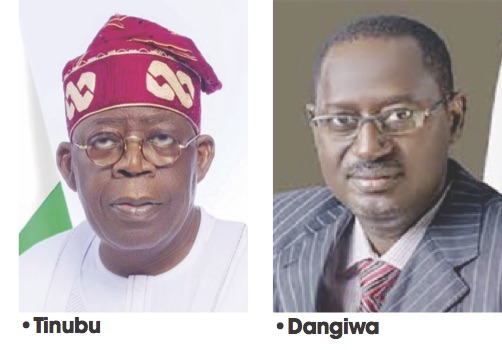
Operators in the real estate industry have consistently lamented what they describe as poor attention to a sector that also suffers from weak regulation and policy inconsistency. However, the Minister of Housing and Urban Development, Ahmed Dangiwa, has defended the 2026 budget, explaining that it prioritises the completion of ongoing projects, particularly the Renewed Hope Housing Projects, rather than spreading limited resources across numerous new initiatives. For some professionals, this approach itself is part of the problem. Anthony Nwite, a real estate practitioner, questioned the long-term implications of such a strategy. “Are we going to limit our housing production to the completion of abandoned projects? What it means is that we don’t have any further prospects than the initiatives of the past administrations that did not see the light of the day? We should project for the growing populations because the past government projected for the population of their time,” he said.
Other News
Mrs. Monica Efe Osaghae, Managing Director of Efe Enterprise Limited, described the 2026 housing allocation within President Bola Ahmed Tinubu’s Budget of Consolidation as signalling an important, though insufficient, shift in confronting Nigeria’s chronic housing shortage. “With the Federal Ministry of Housing and Urban Development allocated N105,946,305,272 in the 2026 Appropriation Bill, is poor compared to what other Ministries receive because the figure should represent more than just funding. It should reflect a strategic framework to transform housing delivery through sustainable interventions and private sector engagement. Amid a nationwide shortage of roughly 20 million inadequate housing units, the deployment of the funds ought to redefine affordable housing access across the country,” she said.
Under Dangiwa’s leadership, the Ministry has begun repositioning itself from a traditional provider of housing to an enabler of private sector participation. This approach mirrors what has been implemented by the Lagos State Ministry of Housing, which has leveraged private investment to open up rural and peri-urban areas and expand access to shelter. Recent examples include developments in Badagry and the Abraham Adesanya axis of Ajah. The underlying philosophy is that every naira in the 2026 housing budget should serve as a catalyst for broader investment, rather than merely financing government-built estates. At the centre of this model are the Sustainable Renewed Hope Cities, designed to support interest-free construction in selected states, with a focus on accessibility for low-income earners.
The 2026 housing budget is also shaped by the Federal Government’s 70 percent Capital Ceiling Rule, which places emphasis on completing priority projects initiated in 2024 and 2025 instead of launching an unwieldy number of new schemes. This fiscal discipline is reflected in three major focus areas: the development of Sustainable Renewed Hope Cities and Estates, slum upgrading and urban renewal programmes, and the National Social Housing Fund, which targets the delivery of 100 affordable homes in each of Nigeria’s 774 local government areas. Through a combination of direct funding and strategic partnerships, the Ministry aims to stretch limited resources while maximising social impact.
For stakeholders across the property value chain, the implications of the 2026 housing budget are mixed. Low-income earners could benefit from structured homeownership schemes such as the National Housing Fund and Rent-to-Own programmes. Developers may see new opportunities in urban renewal contracts and Site-and-Services schemes, while investors are likely to anticipate rising land values in peri-urban corridors as Renewed Hope Cities and social housing projects expand.
Yet, despite these initiatives, the enormity of Nigeria’s housing crisis remains daunting. Minister Dangiwa has acknowledged an annual funding gap of about N5.5 trillion, a figure that dwarfs the N105.9 billion allocation. To narrow this gap, the Ministry is intensifying its reliance on Public-Private Partnerships, allowing private developers to build at scale.
While homes directly supported under the Renewed Hope Cities programme are priced between N8 million and N12.5 million, PPP-backed units in premium locations such as Karsana, Abuja, may cost up to N22 million due to financing structures. Supporting these efforts is a collaboration with Shelter Afrique to pilot 5,000 housing units, backed by advisory services, developer financing and state government contributions of free land and infrastructure to moderate costs.
The 2026 housing budget has also introduced fixed pricing for units under the Sustainable Renewed Hope Cities framework. A one-bedroom semi-detached bungalow is priced at N8.5 million with a National Housing Fund mortgage option at 6 percent interest, a two-bedroom unit is offered under a Rent-to-Own scheme at N11.5 million, while a three-bedroom unit is available at N12.5 million through outright payment or a 12-month installment plan. These measures aim to make homeownership attainable for vulnerable households, ensuring that budgetary allocations directly translate into tangible housing outcomes.