Follow Us on Google
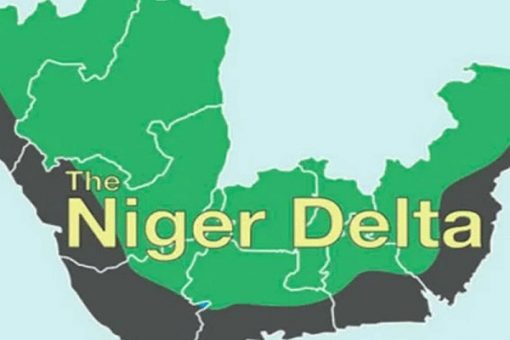
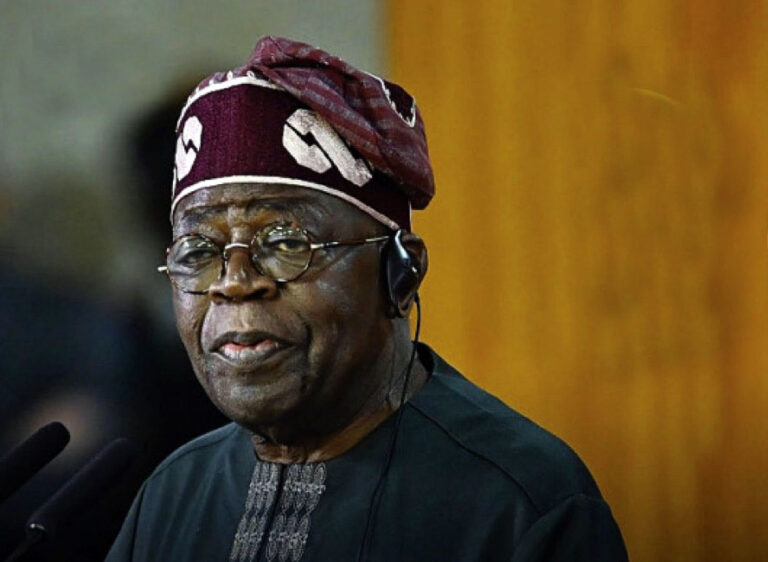
The Niger Delta Stakeholders’ Forum and Niger Delta Ethnic Nationalities have warned that unless President Bola Tinubu takes remedial steps to address certain government policy imbalances in the region, it may descend into another conflict, especially concerning pipelines and oil and gas infrastructure surveillance contracts.
In a communiqué after a strategic meeting in Port Harcourt on Wednesday, the groups warned that the signs of conflicts that bedeviled the region were all over again except the government takes preemptive action to address the obvious concerns.
“We, the Niger Delta Stakeholders’ Forum and the Niger Delta Ethnic Nationalities, after a strategic meeting, comprising community leaders, youth representatives, former agitators, stakeholders and critical opinion leaders from across the Niger Delta region, hereby issue this communiqué to the President of the Federal Republic of Nigeria and the general public.
“We speak not merely as stakeholders, but as individuals and leaders who have lived through the cycles of conflict, peace, accountability, betrayal and reconstruction that continue to define the security architecture of the Niger Delta region.
“We also speak collectively for the broad spectrum of ethnic nationalities and host communities across the region whose peace, stability and economic survival are directly tied to the decisions being taken at this critical moment.
“This communiqué is both a warning and a sincere appeal, one that must be listened to carefully,” they stated.
While appealing to President Tinubu, they said: “Mr. President, we speak as leaders and stakeholders, who stood for Nigeria when it mattered most. We urge you to learn from history; correct the current imbalance; protect institutions of peace from politicisation and misuse and restore equity, fairness and confidence in the system.
“The Niger Delta has seen crises before. We know the signs. If the current trajectory is not urgently corrected, the consequences may once again be severe, not just for the Niger Delta, but for Nigeria as a whole.”
The communiqué, while justifying their call for decentralisation of pipeline contracts, pointed out that under President Goodluck Jonathan, oil production peaked when pipeline surveillance contracts were decentralized, thereby giving a sense of belonging and ownership to communities as against what obtains presently.
Despite spending more on centralised surveillance, the country is unable to meet its Organisation of Petroleum Exporting Countries (OPEC) quota.
Other News
“We recall that during the twilight of the administration of former President Jonathan, pipeline and oil and gas infrastructure surveillance was strategically decentralised across the Niger Delta states. This structure empowered local stakeholders, aligned responsibility with indigenous leadership and created ownership of national assets.
“The result was clear and measurable. Nigeria’s crude oil production stabilised and rose to an average of approximately 2.4 to 2.5 million barrels per day before May 2015. This was not accidental, it was the direct outcome of a decentralised, community-driven security architecture,” they pointed out.
The position paper was signed by the President, Ijaw Youth Council Worldwide, Dr. Alaye Tari Theophilus; President, Ogoni Federated Youth, Emmanuel Goteh Bieh; President, Ibom Youth Council, Lord Mammoth Knight; Ikwerre Youth Assembly, Chief Henry Assor; National President, Oro-obolo Youth Assembly, Joseph Etim Antai; President, Isoko Leadership Forums, Usiwo Oghene Efezino; President, Coalition of Ndokwa Youth Leaders, Chief Chika Obielumani; Chairman, Warri Indigenous People’s Movement (WIPM); National Chairman, Odavwe R’Urrhobo Group, Chief Mathias Efe Olowu and National Coordinator, Ndokwa Advocacy for Development and Good Governance, Prince Obi Oyemike.
They lamented that when chips were down, which led to a near return to the trenches, some of the region’s leaders were invited for questioning. While some responded and cleared the doubts, some returned to the creeks to form the Avengers which attacked national assets in the region.
They regretted that while some of the leaders like King Tom Ateke, Dokubo Asari, Ben Ebijabowei, Biopere Ajube and Michael Jonny garrisoned their domains to ensure that the spread of agitation and violence were checked and confined to the Delta State region, those who sided with the Federal Government for peace have been left out and sidelined, even as those who took up arms to fight the government have been rewarded with contracts.
In what they called “dangerous reality,” they referred to repositioning of a private security operator with better funding, better organisation and more technologically equipped with night vision drones that could be launched from the back of vehicles as already demonstrated, warning that “the development does not strengthen national security but weakens it.”
They observed that despite all the centralisation, the result even on huge expenditure, have been dismal, which they insisted called for an audit and review as decentralization does not mean disorganisation.
On the amnesty programme, they called for review, as well as ensuring that it doesn’t lose its status of equity and peace to descend into murky political waters as have been lately noticed.
The communiqué called for upward review of stipends paid to former agitators, which has remained at N65,000 a month, in spite of weakened currency and inflationary effects. They alleged that a particular former agitator has, in cahoots with the head of the amnesty programme, increased by over 500 percent, allocation to the unnamed group and called for probing the programme from inception as to probe the tenure of Chief Dennis Otuaro for transparency, accountability, public trust and sustainable peace in the region.