Follow Us on Google
By Chinenye Anuforo
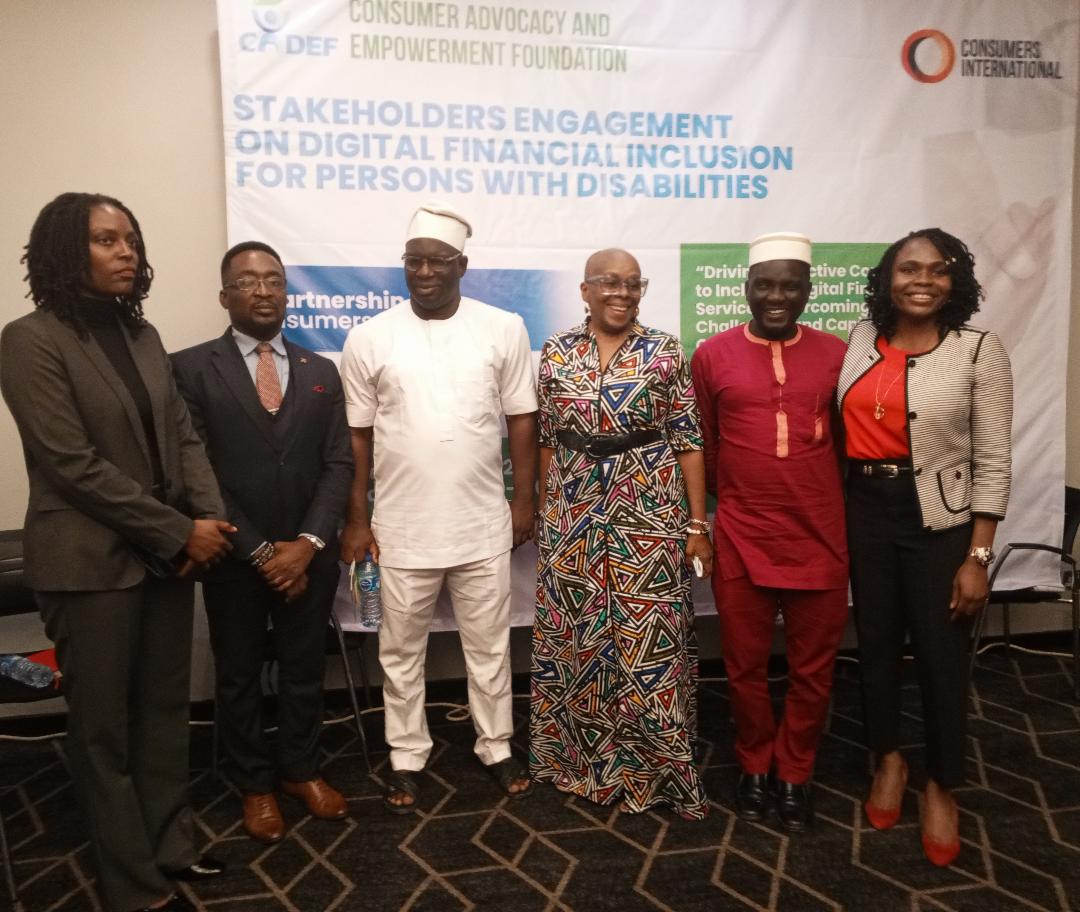
Stakeholders from different sectors including representatives from government agencies, non-profit organizations, and financial institutions, convened on Friday to advocate for greater digital financial inclusion for persons with disabilities.
The group at a one-day workshop on ‘Improving Access and Inclusion for People with Disabilities in Digital Financing’ organized by Consumer Advocacy & Empowerment Foundation (CADEF) in Lagos emphasized the importance of providing accessible financial services to this underserved population, enabling them to participate fully in the digital economy and improve their overall quality of life.
The forum discussed the challenges faced by PWDs in accessing financial services and proposed solutions to address these barriers.
In his keynote speech, Safiu Babatunde, Head of Legal Services at the Lagos State Office for Disability Affairs, emphasized the importance of financial inclusion for people with disabilities. He highlighted the challenges faced by individuals with disabilities in accessing traditional and digital financial services and called for innovative solutions to address these barriers.
“Disability related obstacles affect the participation of individuals at every stage of developmental interventions intended to boost livelihoods of people. Key among the resources essential for enhancing the livelihood of individuals is having access to financial resources for undertaking economic activities,” Babatunde said.
He continued, “Unfortunately over the years, traditional banks do not seem to have served people with disability related obstacles. Persons with disability have limited access to financial services, including traditional and alternative banking, online payment services, and financial transactions as well as mobile banking applications.”
Babatunde emphasized the need for public-private partnerships to promote financial inclusion for people with disabilities. This partnership can bring together government agencies, financial institutions, and disability organizations to collaborate on developing and implementing initiatives that promote financial inclusion for these concerned populations,” he said.
“Many of our members struggle to navigate digital financial platforms due to their disabilities. This exclusion limits their ability to participate fully in the economy and leads to financial hardship”, said Mr. Lukeman Salami, a representative from a disability organization.
Salami who told a story of the discriminatory treatment he encountered when attempting to obtain a simple ATM card from his bank advised that banks should develop applications that are friendly to all if they are serious about financial inclusion.
He described the inaccessible forms and lack of assistance from staff, ultimately resulting in him being unable to manage his own account.
He highlights other challenges faced by PWDs, such as: ATMs not being accessible for blind users (lack of speech functionality), physical barriers in bank branches (e.g., inaccessible entrances) and untrained staff who are not prepared to assist PWDs
Salami pointed out collaboration between banks and disability organizations as a key solution.
He advocated for accessible digital platforms (websites and mobile apps) with features like screen readers and voice recognition. Accessible ATMs with speech functionality. Staff training on disability awareness and how to assist PWDs and inlusion of PWDs in the design and development of financial services.
In her opening remarks, Professor Chiso Ndukwe-Okafor, Executive Director of CADEF, highlighted CADEF’s commitment to promoting financial inclusion and empowerment for marginalized communities. She emphasized the need for inclusive financial products and services that cater to the specific needs of people with disabilities.
“We have already successfully empowered over 50 persons with a hearing disability and over 30 persons with visual disability. We empowered them, we provided financial literacy training, we took them through the program, we listened to their voices, and that’s why this final session is here.”
The workshop focused on several key areas, including: Building public-private partnerships to develop accessible financial products and services. Addressing security and privacy concerns for people with disabilities in the digital age. Promoting financial literacy among people with disabilities and advocating for policies that support financial inclusion.
At the conclusion of the workshop, participants agreed on the need for concerted efforts to improve financial inclusion for people with disabilities. They pledged to work together to develop and implement practical solutions that will empower individuals with disabilities to participate fully in the financial sector.
..