Follow Us on Google
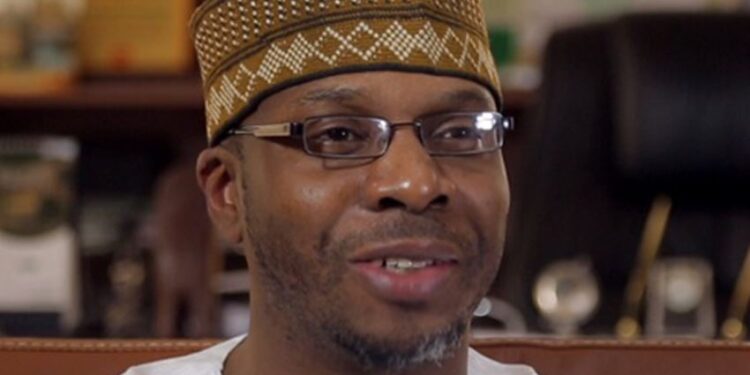
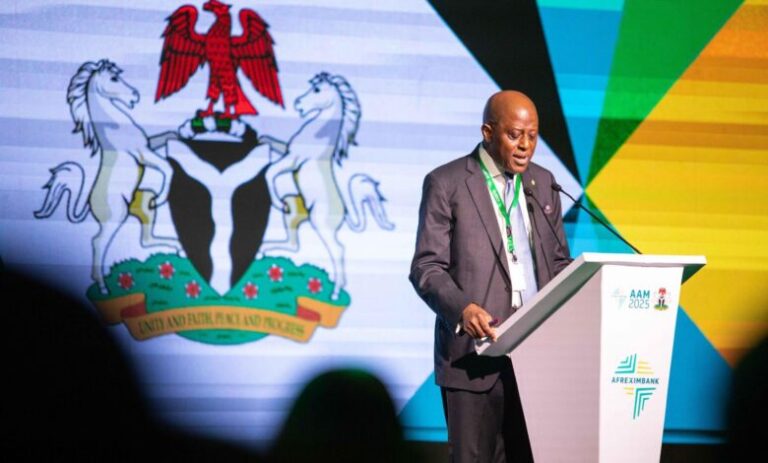
Nigeria has entered a critical period of economic recalibration, with growth, inflation, and external reserves showing signs of stabilization, but experts warn that stability alone does not guarantee development. Speaking at the Nigeria Economic Outlook 2026 hosted by FirstBank under the theme “The Great Recalibration: Mastering Resilience in an Era of Asynchronous Growth,” Dr. Yemi Kale, Group Chief Economist and MD of Research and Trade Intelligence at Afreximbank, painted a nuanced picture of the nation’s economic landscape.
“Nigeria has entered a period of stabilisation. Growth is strengthening, though still fragile. We are seeing a decline in inflation trends, which is creating room for cautious monitoring and calibration,” Kale said. He added that improved external reserves have bolstered buffers and restored credibility in the foreign exchange market. Yet, he cautioned, “Stability does not eliminate risk. It is only the first step.”
Kale identified weak coordination among policymakers as a major barrier to reform effectiveness. “Before, policymakers took positions independently of other policies, and that is not the way it should work. If the central bank does this, how does it affect trade, how does it affect growth, how does it affect employment? Decisions should be taken in line with the net benefits to the overall economy, not just individual mandates that create distortion and confusion,” he explained.
While macroeconomic stabilization allows for long-term planning and investment, persistent structural weaknesses—such as infrastructure deficits, unreliable power supply, skills mismatches, and governance risks—continue to constrain Nigeria’s growth potential.
Kale observed, “These challenges explain why growth is often fragile and unfelt by the public,” noting that GDP expansion driven by incomplete or inefficient projects frequently fails to translate into tangible benefits for households and businesses.
Highlighting opportunities in economic diversification, the digital economy, agro-industrial value chains, and creative and service exports, Kale stressed that success hinges on clear priorities: fiscal discipline, revenue mobilization, accelerated infrastructure development through public-private partnerships, human capital investment, and predictable institutional frameworks. “Long-term policy alone is insufficient without private sector leadership. Long-term domestic capital is as important as foreign capital, and innovation and productivity improvements, especially among SMEs, are critical for competitiveness and job creation,” he said.
Global dynamics will also shape Nigeria’s 2026 outlook. Segun Zaccheaus, Chief Economist at PwC, advised businesses to monitor key indicators like global interest rates and OPEC+ oil production, noting that capital flows to emerging markets are highly sensitive to these variables. “Where rates are going will determine global financial conditions. If rates ease in advanced economies, capital is more likely to flow into markets like Nigeria—but only if domestic policies are right,” he said.
From a resilience perspective, Deputy MD of FirstBank Ghana, Osahon Ogieva, emphasized that 2026 will reward firms that withstand shocks rather than chase rapid growth. “Resilience is not about who grows fastest, but who can perform on a bad day,” he said, noting that banks prioritize companies with disciplined cash flows, sustainable revenues, strong governance, and active risk mitigation strategies, especially around infrastructure.
On tax reform, PwC’s Kenneth Erikume warned of urgent system upgrades to comply with new thresholds and rates, particularly in payroll and VAT. “Getting it right the first time is critical. These are not areas to leave to manual processes or human error,” he said, highlighting opportunities in VAT credits if properly automated.
Other panelists stressed adaptability and execution. Niyi Yusuf of Verraki urged companies to shift from rigid, transaction-focused models to customer-centric strategies, while Trans Saharan CEO Francis Anatogu stressed that AFCFTA success requires speed, skill, and market dominance: “Export is not about playing, it is about domination.”
The consensus from the event was clear: Nigeria’s growth trajectory is stabilizing but fragile. Turning stability into broad-based prosperity will require coordinated policies, private sector leadership, technological adoption, infrastructure investment, and agile adaptation to both domestic and global shocks.