Follow Us on Google
From Stanley Uzoaru, Owerri
The push for a South-East presidency took center stage again on Thursday after a senior APC chieftain criticized a reported agreement for Peter Obi to serve only one term if elected, calling it a “half-measure” that would further sideline the Igbo.
Dr. George Agbakahi, South-East Leader of the Tinubu Support Organisation, rejected claims that the Nigeria Democratic Congress (NDC) presidential candidate, Peter Obi, and his running mate, Senator Rabiu Kwankwaso, signed a written pact limiting an Obi administration to four years.
Buttressing his reasons for resentment on the pact in a statement he released to journalists in Owerri, Agbakahi said Peter Obi’s one-term pledge undermines Southeast aspirations,”. He noted that the region deserves a full tenure, not what he described as “a symbolic and abbreviated stint.”
“After decades of waiting, the Igbo people merit more than a symbolic interlude; they deserve the opportunity for a complete and consequential tenure that can address historic grievances and contribute meaningfully to national development,” he said.
Agbakahi anchored his argument on the South-East’s limited time in Aso Rock since independence in 1960. He noted that the only time an Igbo man held the office was during the brief military rule of Major General Johnson Thomas Umunnakwe Aguiyi-Ironsi, which lasted about six months before he was killed in the July 1966 counter-coup.
“The South-East’s share of presidential tenure remains less than one per cent despite the Igbo constituting a significant component of Nigeria’s population,” he stated.
He said zoning and rotational leadership, though not written into law, were meant to correct historical imbalances, and that capping an Igbo presidency at one term would defeat that purpose.
The APC chieftain referred to a Channels Television interview on July 20, 2026, where Kwankwaso was reported to have said he and Obi signed a document ceding power back to the North in 2031.
“This is no casual understanding. It is a documented pact, signed and affirmed publicly,” Agbakahi said.
“In a political system defined by the enormous advantages of incumbency, control of federal resources, security agencies, appointments and patronage networks, voluntarily foreshortening one’s tenure before even entering office represents more than tactical compromise. It amounts to a pre-emptive surrender.”
He warned that accepting another short stint would mean “roughly four and a half years in total across more than six decades should suffice for a major ethnic nationality.”
Agbakahi also questioned the legality of the arrangement, citing Section 137 of the 1999 Constitution which permits a president to seek re-election.
“Private political pacts, however solemnly drafted, cannot supersede constitutional provisions, and the public has yet to see clear enforcement mechanisms, sanctions or detailed succession protocols in the Obi-Kwankwaso documents,” he said.
He further pointed to Obi’s history across APGA, PDP, Labour Party, ADC and now NDC, arguing that past assurances of loyalty had shifted.
“Supporters maintain that this time Obi will honour his word because he is a man of integrity. History, however, cautions otherwise,” he said.
Rather than accept limited terms, Agbakahi urged Ndigbo to back President Bola Ahmed Tinubu and deepen engagement with the APC. He listed economic indicators under the Renewed Hope Agenda including GDP growth, declining inflation, rising external reserves, increased tax revenues, and stock market gains.
He also cited infrastructure projects such as the Lagos-Calabar Coastal Highway and Sokoto-Badagry Highway, Nigeria’s removal from the FATF grey list, and improved security cooperation.
Drawing from the South-West experience, he said Yoruba support for Muhammadu Buhari in 2015 helped pave the way for a Yoruba president in 2023.
“That alliance produced eight years of northern leadership. When power shifted to the South again in 2023, it returned to a Yoruba president. This was political reciprocity at work,” he said.
He urged the South-East to adopt “strategic patience,” support Tinubu through 2031, and build on what he called growing regional collaboration, referencing endorsements from Enugu Ohanaeze and Anambra Governor Chukwuma Soludo.
“The way forward for the Igbo is therefore one of strategic realism rather than premature concession,” Agbakahi said. “They must reject any notion of a half-presidency and insist on full representation.”
He concluded: “Peter Obi’s one-term pledge, however sincerely offered, risks becoming a self-inflicted wound. It concedes the architecture of power before the South-East has even begun to reshape it. By choosing strategic alignment over half-measures, the South-East can finally convert long-suffering patience into enduring political equity.”
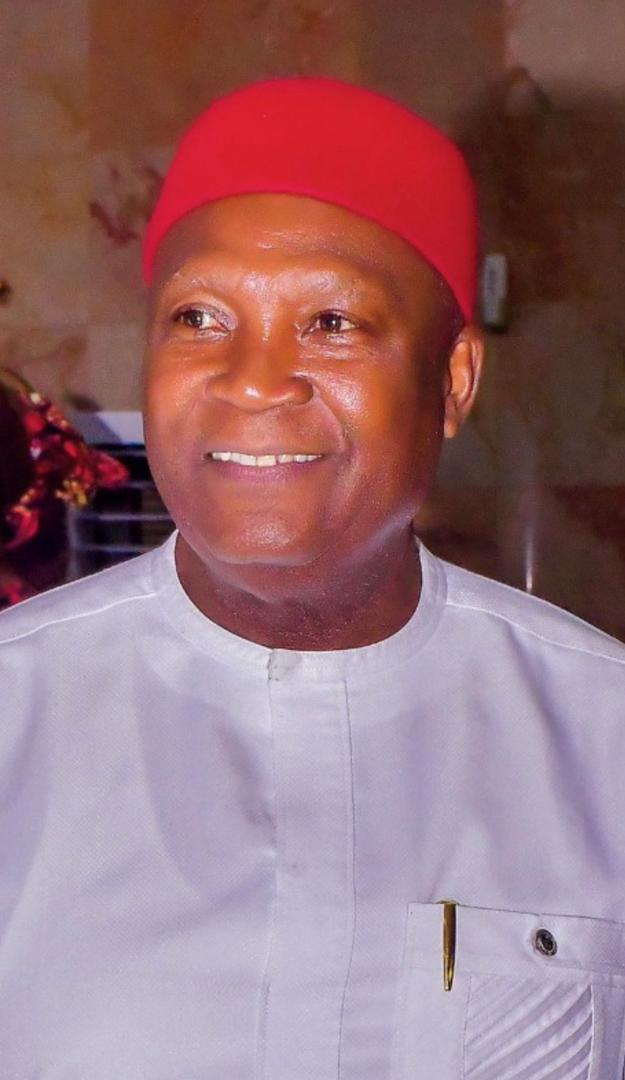
Dr. George Agbakahi