Follow Us on Google
By Bobby J. Moroe
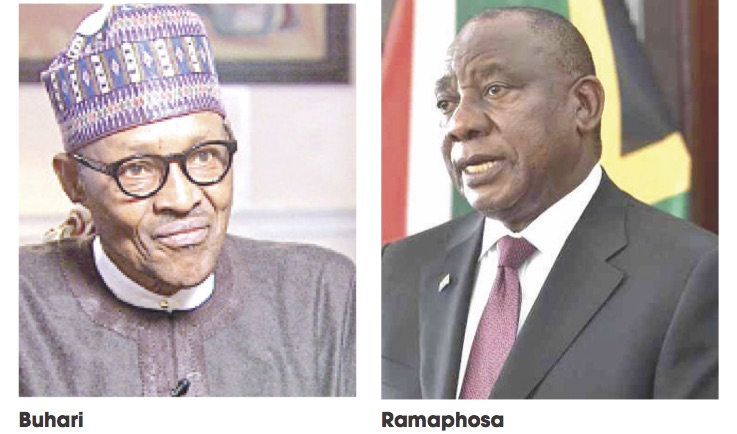
The dawn of South Africa’s new democracy culminated in the establishment of formal diplomatic relations between South Africa and Nigeria in 1994. Although their formal diplomatic relations resumed in 1994, the two continental giants have always enjoyed cordial fraternal relations dating back to the early days of South Africa’s struggle for freedom and liberation, a dark period during which Nigeria stood by South Africa. Having established their formal diplomatic relations in 1994, buoyed by their strong historical ties, the two countries established the Nigeria-South Africa Bi-National Commission (BNC) in 1999. Initially, the BNC was conceived at the level of Vice President/Deputy President(s) as a mechanism to manage their diplomatic relations. It was not until 2016 when the two countries elevated the status of this mechanism to Head of State. Since then, the mechanism has operated at the highest level between any two nations who enjoy diplomatic relations, and this on its own signifies the strong bonds and ties that exist amongst the two countries, and its people.
There is no shadow of doubt that the relations between South Africa and Nigeria are among the most significant in the continent due to, among others, their enormous economies, abundant influence and conspicuous stature. In his book titled ‘The Eagle and the Springbok’, Professor Adebajo Adideji, validates the notion of two powerful states by asserting that ‘the success of political and economic integration in Africa rests heavily on the shoulders of these two regional powers that have both collaborated and competed with each other in a complex relationship that is Africa’s most indispensable’. In contrast, the same relations are depicted in the public discourse as messy, truculent, and laced with enmity. Since 1994, much has been written about the perceived or imagined rivalry, competition and the quest for the hegemony of the continent between South Africa and Nigeria, and much less about their successes, cordiality and milestones over the years. Even fewer works that are available only focus on the socio-economic contrasts between Nigeria and South Africa in ways that seek to project and promote competition.
To this day, narrative remains strong, an has disappointingly bred a narrow-minded and myopic picture about the two countries, and how they view each other. It is in the inherent nature of diplomatic relations that nations states, in their journey of building credible relations, will always be confronted with challenges – South Africa and Nigeria are no exception. But to bundle these challenges and posture them as a singular and finite measure of success will present a gross misrepresentation of facts. For many years, these relations seem to have been playing in the hands of mischief, and the menace of this mischief is that the negative narrative continues to gain traction amongst those who are oblivious to the real facts about South Africa and Nigeria. It is for this reason that these relations will be impoverished if they are understood within the context of the narrow confines of their divergences, and not in their shared common history, aspirations, and global influence. It is important to change the existing narrative, and focus on what enjoins the two countries towards a common destiny, than what can potentially destroy the very fiber of their relations.
There is, therefore, an urgent need, in the public discourse, to overcome a lack of substantive theoretical framework in defining the relations between South Africa and Nigeria, and contextualize them within the framework of what they seek to achieve. By so doing, understanding relations within this framework will close the existing gap in the inadequacy of research conducted on how greater social and economic value can be achieved from harnessing South Africa-Nigeria solidarity for concrete, stronger and revived economic and social cooperation.
The National Development Plan (NDP) Vision 2030 in Chapter 7 asserts that ‘The shift of global power towards developing countries provides South Africa with an opportunity to maximise its regional and international influence over the next 20 to 30 years’. Among the other strategic key intents of the two countries is their collective desire to drive and lead the advancement of the AU’s Agenda 2063. Advancing this agenda is critical for the continental development and the two countries are key in this process.
South Africa’s international relations are guided by the promotion of the wellbeing and upliftment of its people, protecting the planet for future generations and ensuring the prosperity of the country, the region and Africa. In order to achieve these objectives, a critical and pragmatic evaluation of existing international relations is, and untangling the “spaghetti” bowl of overlapping regional affiliations and commitments is necessary (NDP 2011: 217). It is in this context and in pursuit of national interests that South Africa’s approach to engaging with Nigeria must be understood. While Africa’s growth increases the size of the continent’s economy, this growth provides the continent with a greater voice in global and economic institutions. To this end, Nigeria, the most populous country in Africa, remains a key strategic country for South Africa due to its big economy, population, power and influence in the continent.
As such, this presents an opportunity for South Africa to leverage on available opportunities in Nigeria.
According to reports, both Nigeria and South Africa account for about a third of Africa’s economic might, with each accounting for 60% – 70% of the economies in their sub-regions (Southern Africa and West Africa respectively).
Both countries are former British colonies, and are members of the Commonwealth of Nations and the African Union. According to a 2013 BBC World Service Poll, 63% of Nigerians view South Africa’s influence positively, with 24% expressing a negative view. Nevertheless, it remains strategic for South Africa to maintain a strong presence in Nigeria due to its fast growing economy in Africa, highest GNP on the continent, and a third-largest manufacturing sector. Nigeria also boasts the largest agricultural output and the highest number of cattle, but requires partnership in agricultural research expertise which South Africa can provide through their bilateral engagements.
According to US News and World Report’s 2019 power ranking, Egypt, South Africa and Nigeria are the top most powerful countries in Africa. Since both countries’ transition to democracy in different times of history, they have been economic allies, and also seen as competitors. The top from South Africa in Nigeria investors are MTN Group, Remgro, Pick & Pay Holdings, Black Rhino, PEP, Standard Bank Group, Clover Industries and Naspers, amongst others. A total of R 2.67 billion from 6 Nigerian companies has been invested in South Africa between 2008 and 2020. Dangote and GZI are the most significant accounting for 95% of the total FDI from Nigeria into South Africa.
Despite their (South Africa and Nigeria) steady economic growth trajectory, which may be well below their potential, they remain pivotal states in the continental firmament. According to Brand South Africa, the total African GDP/economic output in 2017/18 was $2,175bn. Of this, South Africa’s output was $295bn and Nigeria’s $405bn.
Nigeria is a member of several international, regional, and sub-regional organizations, which include the United Nations (“UN”) and several of its special and related agencies, World Trade Organization (“WTO”), the Non-Aligned Movement, African Union (AU), The Commonwealth of Nations, Organization of Petroleum Exporting Countries (OPEC), International Maritime Organization and other organizations. In West Africa, Nigeria holds a powerful position in the Economic Community of West African States (ECOWAS), as a member and host country. The ECOWAS seeks to harmonize trade and investment practices for its West African Member countries and ultimately to achieve a full customs union. The west African country has also consistently committed itself to the cause of peacekeeping in the region.
On the other hand, South Africa is a member of SADC and remains one amongst the most influential member states in the regional body. Since the resumption of its membership in August 1994, South Africa has taken a leading role in the region to address development and economic integration, amongst others. Projections of global power capabilities among SADC countries using the International Futures (Ifs) forecasting tool show that by 2040, Angola will be the only country that approaches South Africa, but that the latter will still wield more power potential. The only other country in SADC that will come close to these two heavyweights is Tanzania, largely because of its rapid population.
With the two countries wielding so much power and influence in the region, and globally, their relations become significantly important, particularly for purposes of driving industrialisation in the continent. It is, therefore, critical that their relations are not only viewed within the context of competition, but rather, collaboration that seeks to benefit the entire continent.
• Bobby J. Moroe is the Consul General of South Africa in Lagos, the Federal Republic of Nigeria. He is a published author and holds a Ph.D in Political Science.