Follow Us on Google
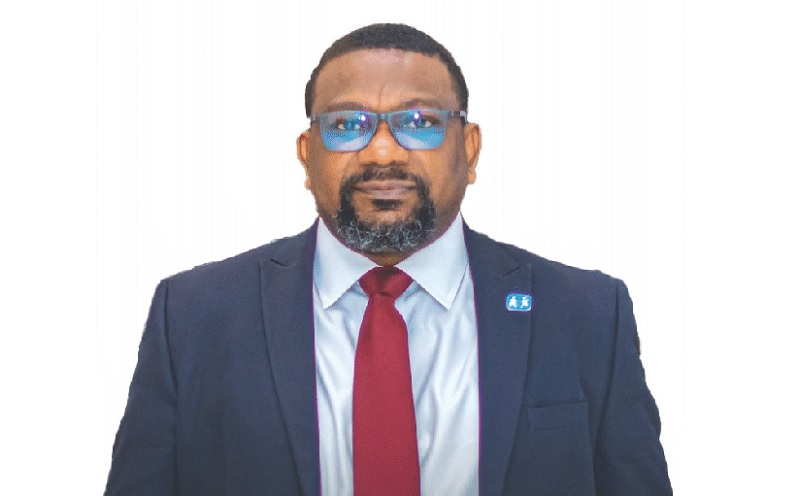
By Henry Uche
SOS Children’s Villages Nigeria has called on government, humanitarian partners, civil society, and community leaders to accelerate reforms that guarantee rights, strengthen justice systems, and institutionalize women’s leadership in emergency and recovery frameworks, saying that the future stability of the nation depends on these.
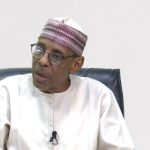
The National Director of SOS Children’s Villages Nigeria, Mr. Eghosa Erhumwunse, in an address to newsmen during the International Women’s Day 2026, said, as the world marks International Women’s Day, it’s apt to remember that for those in Nigeria’s most volatile regions, protection remains far below acceptable standards.
With the theme of the celebration: ‘Rights. Justice. Action. For ALL Women and Girls’, he bemoaned how women and girls have carried the disproportionate burden of instability since the onset of protracted conflict, violent extremism, and the escalating climate-conflict nexus in Nigeria.
“Today, Nigeria hosts over 3.4 million internally displaced persons—a figure driven by both insurgency in the North-East and rampant banditry in the North-West—with women and children constituting nearly 80 per cent of this vulnerable population.
“In these volatile settings, women face systemic exposure to Gender-Based Violence (GBV), including abduction, trafficking, and forced marriage used as a tactic of war.
“Humanitarian assessments indicate that at least one in three women in these zones experiences physical or sexual violence, often exacerbated by the lack of gender-segregated sanitation and safe access to water points”
Erhumwunse pointed out how the collapse of local justice mechanisms and the loss of legal documentation have left displaced women in a ‘protection gap,’ where fragile systems translate directly into the systemic violation of their fundamental rights, urging that “Progress toward gender equality can no longer be symbolic; it must be structural”
He explained, “Rights without enforcement are merely promises on paper; justice without accessibility—especially for the displaced and rural poor—is a form of exclusion; and action without accountability leaves the most vulnerable to navigate fragile systems alone.
“True equality requires moving beyond rhetoric to the robust financing and policing of the frameworks meant to protect them.
“For women and girls living in humanitarian, conflict-affected, and disaster-prone communities in Nigeria, these truths are lived realities. Emergencies intensify existing inequalities”
Other News
The right advocate exposed how displacement disrupts livelihoods, fractures social protection systems, increases exposure to violence. Floods and climate shocks he decried destroy homes, farmland, and informal businesses, sectors where women thrive and often dominate.
“In these contexts, protection systems are overstretched, legal pathways are difficult to access, and women’s participation in recovery planning remains limited or merely consultative.
“Yet women consistently stand at the frontlines of crisis response. When conflict or disaster disrupts communities, it is women who reorganize survival; they form food networks, sustaining informal livelihoods, caring for children, providing psychosocial support, and stabilizing households.
“Long before formal systems respond, women are already rebuilding social cohesion and holding families together. Their resilience is the backbone of recovery. But resilience must not be romanticized or used to excuse systemic failure” he warned.
Praising women’s strength while leaving protection gaps unaddressed he noted may translate to normalizing injustice. Strength, he cautioned should not replace safety, and survival should not substitute for rights. “True recovery is built not on how much women can endure, but on how effectively systems protect, include, and uphold their rights.
“The 2026 theme of IWD26 challenges the global community to move beyond incremental change. In Nigeria, it demands urgent and deliberate reforms. It calls for the removal of discriminatory legal and customary barriers that undermine women’s inheritance, land ownership, and economic participation.
“It demands strengthened enforcement of existing protection laws, particularly in conflict-affected states where impunity remains pervasive. It requires survivor-centred justice systems that prioritize confidentiality, dignity, and accessibility.
“It insists on safe and inclusive humanitarian services that integrate protection, WASH, health, and psychosocial support. It compels equal representation of women in decision-making at every level of emergency response and recovery — from camp management committees to national reconstruction frameworks.
He added that Justice must extend beyond the courtroom and must be reflected in national policies and strategies, reinforced through legislation, and championed by civil society and international partners.
“Protection for women in emergencies must be visible in secure water points, gender-sensitive sanitation facilities, confidential GBV reporting desks, accessible legal aid services, inclusive recovery committees, and budget allocations that prioritize women’s safety and leadership. It must be evident in data systems that capture women’s realities and in policies that translate into tangible community-level impact”
“International Women’s Day 2026 is a national checkpoint — a moment to ask whether Nigeria is accelerating reform or normalizing inequality; a moment to determine whether women in displacement camps, flood-affected communities, and conflict zones will continue to navigate systems not built for their protection. Action must be intentional and measurable, backed by sustained investment in women-led organizations operating in fragile settings” he implored.