Follow Us on Google
-
2027: I don’t see Atiku’s presidency, I believe he’ll contest again in 2031
By Juliana Taiwo-Obalonye
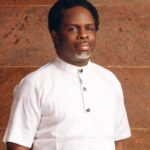
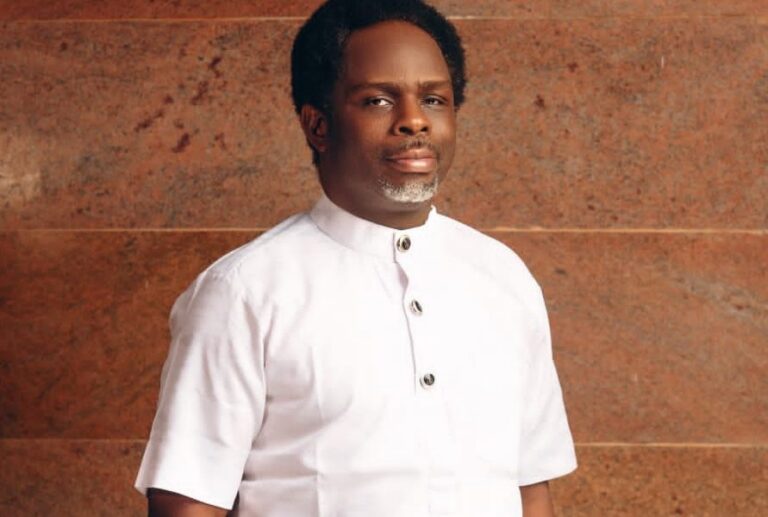
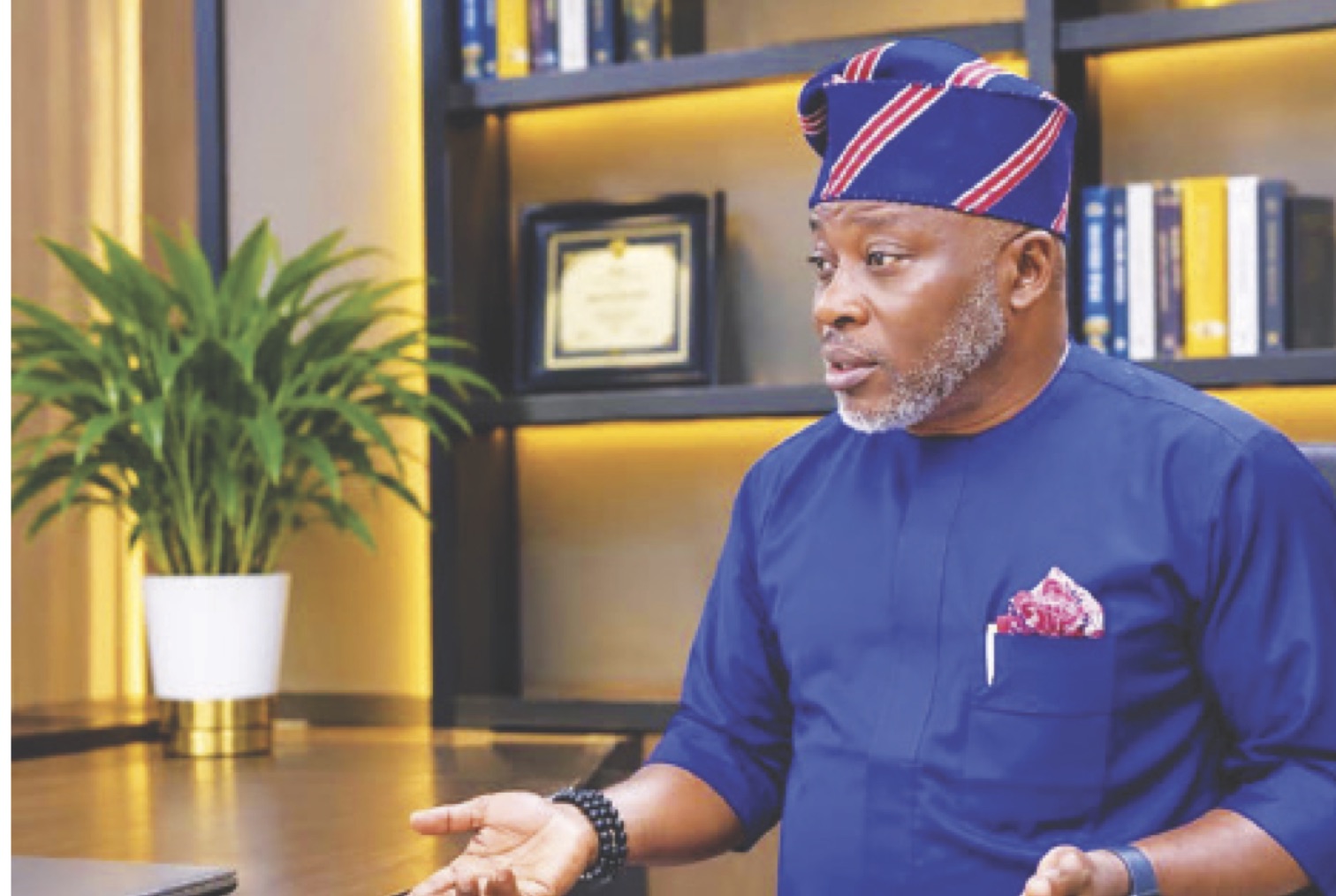
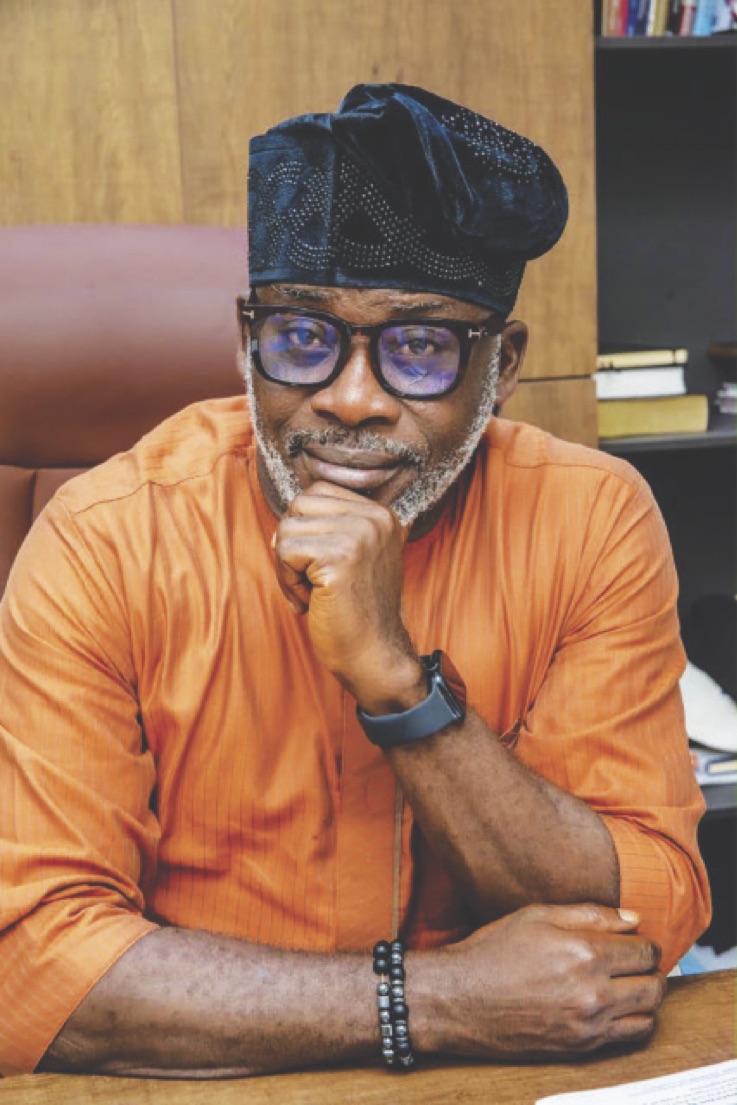
Hon Tajudeen Yusuf is a three-term member of the House of Representatives. He is also the candidate of the Peoples Democratic Party (PDP) candidate for Kogi West Senatorial District in the 2027 general election.
In this interview, he speaks on his return to elective politics, the party’s leadership crisis, Atiku Abubakar’s presidential ambition and the controversy over political zoning. He also outlines his legislative priorities, explains why he believes Nigeria needs a stronger opposition and faults aspects of the Tinubu administration’s economic reforms, particularly the simultaneous removal of fuel subsidy and foreign exchange unification.
Having served three terms in the House of Representatives, what is driving your ambition for the Kogi West senatorial seat in 2027, and what gaps do you hope to address?
I had intended to stay out of public office this electoral cycle to focus on personal matters. However, I noticed a significant gap in Kogi West’s political representation that needed to be filled.
Kogi West has exceptional human resources and a tradition of producing people who speak up for their communities and deliver results. I initially encouraged others to step forward, but they cited a lack of political structures and urged me to take up the challenge, given my 12 years in public office and the structures I had built.
Having served for 12 years, including eight in opposition, and won elections even when I was the only elected PDP official in Kogi State, I understand the challenges of opposition politics.
I also believe the National Assembly needs a strong, constructive opposition that scrutinises government policies and offers credible alternatives rather than merely making noise. My experience and capacity would enable me to contribute to this.
Beyond that, the PDP needs to rebuild following its 2023 electoral setback. While the party recovered strongly after losing in 2015, mistakes, particularly during the 2023 primaries, contributed to its defeat. We must reassess our position and rebuild, with elected representatives and governors playing key roles in repositioning the party ahead of 2031. I believe I have the experience to contribute meaningfully to that process.
Elections in Nigeria are not determined by policies alone. Religion, ethnicity and other considerations also play significant roles.
The same individual who left the PDP in 2015 because he believed it was the North’s turn to produce the presidential candidate later became central to the party’s presidential ticket in 2023. These are some of the contradictions that contributed to our difficulties.
When a party inflicts wounds on itself, it must take time to recover and rebuild. I believe the PDP needs that kind of rebuilding, and a vibrant opposition in the National Assembly will be critical to the process.
With the governors we may have and those of us in the National Assembly, we will need experienced leaders to help reposition the party. I believe I am equipped for that responsibility.
The same individual you referred to—although you did not mention his name, Atiku Abubakar—is contesting the 2027 presidential election on the platform of the African Democratic Congress (ADC). What are his chances of winning?
I will not act as God. God determines whom He gives power to. However, based on my experience in politics, I do not see him going far in the 2027 presidential election.
I believe he will contest again in 2031. When I said he would contest in 2027, many people did not believe me. I also predicted that he would leave the PDP a year before he eventually did, but people doubted me. Both predictions came to pass. I am confident he will contest again in 2031.
My concern is that he appears to be excessively focused on himself. There is also what I consider a problem of insecurity, which can be worsened when a leader surrounds himself with people whose loyalty is based more on flattery than on honest counsel.
When people constantly tell you what you want to hear, you may lose the ability to recognise your mistakes, take stock and make necessary adjustments.
I recall a statement attributed to Adolf Hitler about repeated lies eventually being accepted as truth. I mention this because leaders who are constantly surrounded by sycophants may eventually begin to believe their own narratives.
When people begin to treat you as though you are already president, even when you are only a former vice-president aspiring to the office, you risk losing touch with reality. Your position can begin to influence how you see yourself and how others relate to you.
One important lesson in politics is that whatever position you occupy is not necessarily because you are better than everyone else. It is often because people have chosen to invest their goodwill in you.
I cannot win an election in my own polling unit without the support of others. I have won three elections because people across different polling units donated their goodwill to me. If I had assumed that my victories were solely the result of my personal strength, I would probably have lost.
A politician must understand that power is a privilege that others can withdraw.
Consider the history of political sacrifices in Nigeria. In 2007, the man who is president today was a governor. He reportedly supported another candidate for the Senate to avoid creating a crisis that could affect the governorship election. He also supported Atiku Abubakar’s presidential ambition that year.
In 2011, he supported other political interests, and in 2015, he supported Muhammadu Buhari. These were strategic political decisions that involved sacrifices and the willingness to support other people.
Bola Tinubu’s political organisation also demonstrates the importance of building structures and sustaining political relationships. I did not vote for Tinubu, but one cannot overlook the role his political structure played in his eventual emergence as president.
The point is that political success sometimes requires you to step aside and allow others to lead. You may do good to ten people and only one may remember it, but I believe God does not forget.
My concern is that Atiku appears to believe he is the only person capable of winning the presidency. He may perform well in certain states, but I do not believe that will be sufficient to win the presidency in 2027.
I also disagree with the suggestion that any single region can determine the outcome of a presidential election in Nigeria. No region can, on its own, guarantee victory for a presidential candidate.
Take the 2011 election for instance, when Goodluck Jonathan contested against Muhammadu Buhari. Jonathan won despite not securing 25 per cent of the votes in several northern states. He won substantial support in the South-South and South-East and secured sufficient votes elsewhere to emerge victorious.
In 2015, Jonathan lost. A comparison of the results shows that his votes in the South-South and South-East declined significantly. The reduction was about 3.7 million votes, which was substantial enough to affect the outcome.
The lesson is that no presidential candidate should take any region for granted. A candidate needs substantial support across different parts of the country.
In 2011, Jonathan secured about 82 per cent of his votes from the South-South, South-East and North-Central. In 2015, the proportion was about 79 per cent. These figures illustrate the importance of maintaining a broad electoral coalition.
The North is important, just as every other region is important. However, no region can simply declare that it will determine who becomes president.
As for the ADC, we respect its presidential candidate, however, I do not see him winning the presidency in 2027. As for the PDP, we should be realistic about our political prospects and build towards 2031.
In 2027, the APC will have considerable support across several regions. Some politicians who are currently vocal critics of the president may also align themselves with the winning side as the election approaches.
How do you intend to galvanise aggrieved members of your party in Kogi West, given the internal divisions within the PDP? Does the crisis affect your region?
We do not have an internal crisis in the PDP in my region; the crisis is at the national level.
Before the Ibadan convention and the Supreme Court judgment, several party leaders, including Ademola Adeleke, Bukola Saraki, Olagunsoye Oyinlola, Kingsley Chinda and former Governor Makarfi, made efforts to reconcile the factions, but those efforts failed, leading to litigation.
Now that the Supreme Court has ruled on the leadership dispute, I believe party members should study the judgments carefully and approach the disagreements with reason rather than emotion. I am also aware that some members of the opposing faction are making efforts to return to the party.
The crisis has not significantly affected our operations in Kogi West, although some members have become less active. Ultimately, elections are not won by party membership alone. In my constituency, APC and PDP members may account for less than 10 per cent of voters. The larger electorate, including non-party members, will determine the outcome, and that is the group I intend to engage.
What are the three major issues you intend to prioritise if elected senator, and what concrete steps will you take to address them within your first year?
My three priorities are youth delinquency, insecurity and infrastructure.
First is youth delinquency, particularly drug abuse and internet fraud. I believe the decline in educational and family values has contributed to these problems. We must encourage education, provide positive role models and create legitimate opportunities for young people. During my previous tenure, I facilitated employment for over 100 people and supported more than 3,000 beneficiaries through scholarships. I also helped some young people return to school, with some now working as lecturers. I intend to build on these efforts by recognising positive achievements and supporting artisans with equipment to establish sustainable livelihoods.
My second priority is security. Insecurity has worsened in my constituency, restricting farmers’ access to their farms and disrupting economic activities. We must support security agencies to tackle criminal activities and restore safety, while addressing the socioeconomic factors that fuel insecurity.
Third is infrastructure, particularly roads. Many roads in my constituency are in deplorable condition, partly due to the heavy trucks operated by cement companies in the area. I have engaged the companies and relevant authorities over the poor state of the roads. These companies must ensure their roads meet required standards, withstand heavy traffic and serve the interests of host communities. They must also contribute meaningfully to local development. These three areas—youth delinquency, security and infrastructure—will form the core of my legislative priorities.
How do you intend to address these three priorities them through legislation, oversight and other responsibilities of a senator?
I intend to build on my existing Back to School, Come Back to Life initiative to expand educational opportunities and support for young people.
On infrastructure, I will engage relevant government agencies, pursue budgetary provisions and lobby for projects that will benefit my constituency. On security, I will work with the relevant agencies and use the opportunities available to a legislator to protect my constituents.
A lawmaker’s responsibilities include representation, legislation and oversight, as well as engaging government institutions to attract development projects. I have experience in these areas, having facilitated periodic road rehabilitation during my eight years in the House of Representatives. However, the roads have deteriorated considerably, and I intend to use my legislative experience to pursue more sustainable solutions.
Critics argue that legislators focus more on constituency empowerment programmes than on lawmaking. How do you assess this criticism?
I agree to some extent, but we must recognise the realities of our democracy. While lawmakers are expected to legislate, provide oversight and contribute to national policy, many constituents judge them primarily by the tangible benefits they deliver.
I have sponsored bills and motions, including the bill on the demutualisation of the Nigerian Stock Exchange, a reform that had been under consideration for about 20 years. I have also contributed to discussions on tax reforms. However, such legislative achievements may not be easily appreciated by the average constituent. Until basic needs such as roads, hospitals and schools are adequately addressed by the executive, constituents will continue to expect lawmakers to help attract these projects and provide empowerment opportunities.
Although I would prefer to be recognised for my contributions to national policy, I understand these expectations. A legislator must therefore balance effective lawmaking with delivering tangible benefits to constituents.
What lessons from your 12 years in the House of Representatives do you intend to bring to the Senate, particularly regarding lawmaking, oversight and the allocation of national resources?
Our legislature faces several structural challenges, including a weak political recruitment process, inadequate research support and insufficient training for lawmakers and their aides.
In my 12 years in the House of Representatives, I attracted less than ₦1 billion in budgetary provisions for my constituency, despite the National Assembly’s substantial annual budget. However, I believe the challenges go beyond funding.
Lawmakers need well-trained legislative aides and access to experts in fields such as law, finance, medicine and economics to support research, policy analysis and effective lawmaking. We must also ensure that people entering the National Assembly have a genuine commitment to public service.
Legislative experience is equally important. Unfortunately, our political system places too much emphasis on elections at the expense of building institutional expertise. When I entered the House in 2011, we had a two-week induction programme and periodic training, but by my last term, induction had been reduced to a one-day conference.
We need comprehensive induction and regular training, drawing lessons from other African democracies, including Ghana. Ultimately, we must build a legislature equipped to scrutinise budgets, interrogate government policies and perform its constitutional responsibilities effectively.
After 12 years in the House of Representatives, how do you respond to calls for political rotation in Kogi West and arguments that you should give others an opportunity?
I believe much of the opposition to my senatorial ambition is driven by emotion rather than facts. My 12 years in the House of Representatives were secured through elections, not an arrangement that excluded others.
When I first contested, Ijumu held both the Senate and House of Representatives seats, prompting calls from my constituency for a fairer distribution of representation. This history should be considered in any debate about zoning.
I believe rotation should promote equity, not arbitrarily restrict people’s political ambitions. In Kogi West, with seven local government areas, some have had fewer opportunities to produce senators than others. Rotation should therefore be applied consistently, with the people allowed to choose their representatives.
My record in the House should also count. I facilitated constituency projects, empowerment programmes, equipment and employment opportunities across communities in my constituency. I am not claiming superiority over others, but I believe my performance should be part of the assessment.
Ultimately, I believe public office is a responsibility, and the electorate should decide who represents them.
During your time in the House of Representatives, you regularly published reports of your legislative activities and constituency projects. Do you intend to continue that practice if elected senator?
Definitely. I intend to continue publishing my legislative stewardship reports and documenting my achievements to ensure that my contributions to public service are properly recorded for future generations.
I also plan to revive my annual engagements with stakeholders, including traditional rulers, civil servants, professionals and community leaders, to discuss issues affecting the constituency and receive feedback.
I believe no politician has a monopoly on knowledge. These consultations have helped me understand how government works and how best to attract projects to my constituency. I intend to sustain them because they provide opportunities to learn, listen and improve my service to the people.
With the 2027 elections approaching, Nigerians are concerned about hunger, insecurity and the state of the economy. What is your advice to the electorate, political leaders and INEC as the country prepares for the general election?
I would advise INEC Chairman, Professor Joash Amupitan, whom I have known for a long time, to protect his reputation by ensuring that the commission conducts free, fair and transparent elections. INEC’s credibility must rest on strong institutional processes, not just the chairman’s personal integrity.
Nigerians must also learn to accept electoral outcomes, recognising that every election produces winners and losers. Political leaders, meanwhile, should focus on the legacy they will leave behind. On the economy, I acknowledge that some of the current administration’s policies may have been necessary, but I disagree with aspects of their implementation. Many Nigerians are still struggling, and we must be honest about that reality.
What specifically do you disagree with about the government’s approach?
I believe the government should have implemented the economic reforms more gradually, balancing the need for difficult decisions with empathy for ordinary Nigerians. My concern is not the reforms themselves but their implementation without adequate measures to cushion their impact.
I agree that fuel subsidy needed to be addressed, but affordable public transport and targeted support for education and other essential services should have been provided to ease the burden on households. For instance, my transport fare to work rose from about ₦1,500 to ₦4,000 after the subsidy was removed.
Nigerians must also scrutinise politicians beyond their campaign promises, examining their records and holding them accountable. Voters should assess every candidate by their past performance and the consistency of their promises, rather than allowing ethnic, religious or emotional considerations to influence their choices.