Follow Us on Google
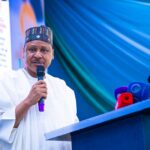
Governor Ahmad Aliyu has set a new record for his government in the preparation of the 2026 state appropriation bill. To garner input, he held town hall meetings across three senatorial districts, with more than 900 participants from 23 LGAs and 244 wards. This is an inclusive process designed to achieve citizen participation in governance. The consultative townhalls gave birth to the budget proposal presented to the Sokoto State House of Assembly on December 17. He is the first governor in Nigeria to adopt this approach in budget preparation. Under his administration, fiscal policy has emerged as a cornerstone for transformation, guided by a nine-point SMART agenda that prioritizes security, agriculture, education, health, and economic diversification.
The 2026 budget, tagged the “Budget of Socio-Economic Expansion,” totals N758,700,526,537.89. This is a substantial leap from the 2025 “Transformation and Infrastructural Sustainability” budget of N526,882,142,484.39. This 44% increase in overall size reflects not just economic optimism but a deliberate scaling up of investments, and builds on the 2025 budget that recorded about a 65% implementation rate. This is said to be a historic budget performance high that underscores improved fiscal discipline by the Aliyu administration. Interestingly, the Sokoto 2025 budget cycle is ending without incurring new debt. This creates the leverage that the state needs to push its 2026 budget plan from foundational infrastructure to expansive socio-economic interventions, which promise a broader citizen engagement and measurable poverty alleviation.
At the core of the 2026 budget improvements is its enhanced recurrent-to-capital ratio, which rises to 28:72 from 34:66 in 2025. This adjustment, with capital expenditure surging to N551.4 billion, up from N349.4 billion in 2025, signals a maturing governance approach that focuses less on administrative overheads and more on assets that yield long-term dividends like job creation and service delivery. Recurrent costs, pegged at N207.2 billion, remain lean, covering salaries and operations without bloating bureaucracy. This is in contrast to 2025’s higher overheads that drew criticisms for vehicle procurements totalling about N10 billion.
Governor Aliyu’s debt-free stance persists, with all funding drawn from federation accounts and internally generated revenue (IGR), which rose modestly in 2025 through streamlined tax collection. It also speaks to fiscal prudence, which is remarkably absent in administrations before Aliyu, and positions 2026 as a blueprint for sustainable growth amid Nigeria’s macroeconomic headwinds, including inflation hovering above 30%. A hallmark improvement of the 2026 budget over the 2025 version is the deepened emphasis on security, a perennial challenge in Sokoto state that is exacerbated by cross-border banditry from Zamfara state and the Niger Republic. The 2025 budget allocated resources for 270 patrol vehicles and 500 motorcycles, establishing the Sokoto State Community Guard Corps (SSCGC) with 40 Hilux vans and 700 additional motorcycles, alongside a new military base in Illela and the operationalisation of the Nigerian Air Force Base. This has become an existential necessity. They also restored monthly allowances for personnel in volatile areas, especially in places previously scrapped by the Peoples Democratic Party (PDP) government before Aliyu. These necessary interventions have opened previously inaccessible farmlands for agriculture and consequently increased agricultural yield in the state.
The 2026 budget further addresses security-related challenges by earmarking N45.2 billion specifically for security logistics, including advanced equipment and 5G-upgraded DSS trackers. This marks a 20% to 25% inferred increase over 2025’s security outlays, based on project scaling. This proactive allocation not only consolidates gains but introduces community-based vigilance programs, potentially reducing response times to incidents by integrating local guards more seamlessly. Analysts note this as a “force multiplier” effect, enhancing deterrence in rural Local Government Areas (LGAs) like Tangaza and Gwadabawa, where 2025 saw a 40% drop in reported kidnappings but persistent farmer-herder clashes. It is argued that by prioritising prevention over reaction, the 2026 budget fosters a safer environment for economic activities in Sokoto state. This is a clear upgrade from 2025’s reactive procurements.
Infrastructure, which was the 2025 budget’s flagship, received amplified attention in the 2026 budget as it evolved from a construction frenzy to sustainable connectivity. In 2025, Aliyu commissioned 167 township roads and completed 16 rural ones alongside another 120 urban and 17 rural projects ongoing. These achievements were funded without loans. The N109.1 billion allocation for works and transportation in 2026, which is about 50% increase from the 2025 infrastructure spend, targets rehabilitation over new builds, incorporating solar-powered streetlights across all 23 LGAs and public transit upgrades. Notably, N8.5 billion is dedicated to reconstructing the fire-ravaged Sokoto Central Market, a commercial hub that keeps thousands of people actively engaged for daily bread. This task will be executed by 38 local contractors, which is an insightful move to boost IGR through trade revival. This community-sourced approach contrasts with 2025’s top-down virements of N38.8 billion to priority projects, which, while effective with about 75% performance mid-year, lacked public buy-in.
Other News
The plan for the 2026 budget to integrate rural road networks with agricultural value chains by way of linking farms to markets could amplify Sokoto’s GDP contributions from agribusiness, which stagnated at 2% to 3% growth in 2025 despite inputs like fertilizer subsidies. Health and education sectors also exemplify 2026’s equity-driven refinements as they address 2025’s underperformance in human capital. The 2025 budget’s health spend, while advancing primary care, saw only N100.4 million disbursed for maternal services in the first half of 2025. This was far below need. Education capital for universities like Sokoto State University is capped at N1.1 billion.
In response, the 2026 budget allocates N122.7 billion to health, which is about 16% of the budget total, and exceeds the Abuja Declaration’s 15% benchmark. These will actively fund the completion of the Sokoto State University Teaching Hospital, Murtala Muhammad Hospital, and specialist facilities in Binji, Tambuwal, and Sabon Birni, as well as increase ambulance fleets and equipment. The health budget will also affect State targets in addressing maternal mortality in the state, where the rates are about 1,000 per 100,000 births, and infectious diseases. This will potentially save 5,000-10,000 lives annually through better access to improved healthcare facilities.
Education’s N115.9 billion, which represents 21% of the budget, aligns with UNESCO’s 15% to 20% recommendation and dwarfs 2025’s 25% overall commitment, which translates to fragmented projects like JAMB form distributions but low university funding. The 2026 outlook supports teacher training, renovation of schools like the State College of Legal and Islamic Studies, and skills acquisition centres. It also aims to re-enrol 100,000 out-of-school children through integrated Qur’anic-modern curricula, which is seen as a culturally sensitive upgrade from 2025’s generic allocations. This could elevate literacy rates from 28%, as per NBS data, toward 40% by 2030, and foster a skilled workforce for agro-processing industries.
Governor Aliyu’s focus on economic expansion in the 2026 budget builds on 2025’s agricultural push but introduces diversification. While the 2025 budget emphasised food security via inputs and rural roads, its implementation, however, faltered in the second quarter of the year, with reports showing underutilisation in farming subsidies. However, the 2026 budget’s above N50 billion plans for agriculture and commerce, which include irrigation schemes along the Sokoto-Rima basin and MSME grants, will potentially boost agro output by 20%.
Governor Aliyu’s 2026 budget comes with a holistic approach that could reduce poverty incidence by 10% to 15% when effectively cash-backed with enhanced transparency. The 2026 budget transcends 2025’s foundational wins and evolves into an expansive, inclusive engine for prosperity. By emphasising capital investments, sector-specific scaling, and participatory governance, the budget not only sustains momentum but accelerates Sokoto’s steady march toward self-reliance. As Governor Aliyu aptly notes, this is a “bold” fiscal statement, one that could redefine the Caliphate’s legacy in modern Nigeria.