Follow Us on Google
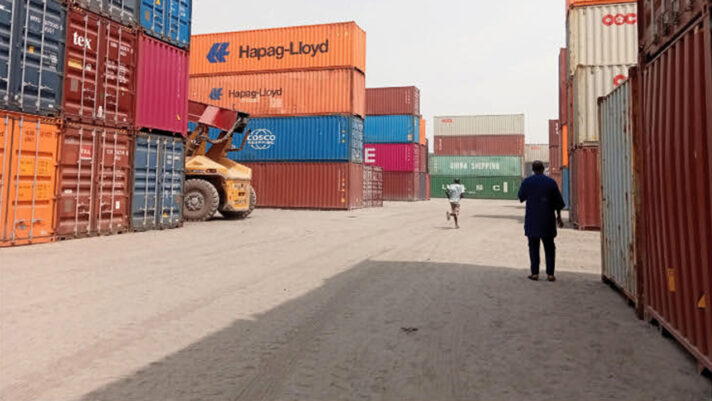
•Importers, agents pay N400,000 for 40ft boxes
Despite the new marine insurance regime introduced under the Nigeria Insurance Industry Reform Act (NIIRA) 2025, which prohibits offshore shipping companies from demanding upfront deposits, importers and their agents are still slammed container deposits and detention charges.
NIIRA, signed into law by President Bola Tinubu in August 2025, introduced a major shift in the maritime sector by replacing the container deposit system operated by shipping companies with a mandatory container insurance framework.
Under Section 203 of the Act, shipping companies are prohibited from demanding upfront deposits from importers and freight forwarders as security for the return of containers. The provision also prescribes penalties of more than N1 million for companies that violate the requirement.
The reform was designed to unlock billions of naira tied up in refundable container deposits, facilitate faster cargo clearance, reduce the cost of doing business at Nigerian ports and bring the country’s maritime industry in line with international best practices.
However, one year after the law came into force, concerns persist over its implementation, with importers and freight forwarders continuing to face container-related detention charges despite the provisions of the new legal framework.
This comes as importers and clearing agents continue to pay N200,000 for a 40-foot container within Lagos, while the charge rises to N400,000 for the same container outside the state.
Beyond paying container deposits, importers and their agents often face prolonged delays in securing refunds after returning the containers. Shipping companies have, in some cases, attributed the delays to late returns or claims that containers were damaged.
Daily Sun also learnt that no shipping company has so far been sanctioned for allegedly violating the provision, even as operators continue to demand container deposits and impose detention charges, contrary to the requirements of the new law.
Stakeholders have also identified persistent operational bottlenecks affecting the return of empty containers, including inadequate holding bays provided by shipping companies, prolonged truck turnaround times and severe congestion along major port access corridors.
Speaking on the development, National President, Africa Association of Professional Freight Forwarders and Logistics of Nigeria (APFFLON), Frank Ogunojemite, bemoaned the failure to provide adequate facilities for the return of empty containers to the Lagos ports.
According to him, the insufficient number of holding bays and designated collection points for empty containers has created unnecessary bottlenecks that frustrate cargo movement, delay truck turnaround times, and worsen traffic congestion around the Tin Can and Apapa seaports corridor.
He lamented that importers are compelled to pay excessive container detention charges because they cannot return empty containers within the stipulated period due to the lack of available receiving spaces.
“Why should importers be punished financially for a problem created by the shipping company, which amounts to exploitation of Nigerian businesses and runs contrary to the principles of fair trade and ease of doing business being championed by the Federal Government,” he questioned.
Other News
He called on the shipping companies immediately to provide adequate holding bays and empty container collection centres, and suspend container detention charges when importers are unable to return empty containers due to inadequate reception facilities.
He demanded compensation for importers and freight forwarders who have suffered avoidable financial losses arising from delays in returning empty containers as well as strict enforcement of service standards and appropriate sanctions against any shipping company found to be creating artificial bottlenecks for commercial gain.
The former National Secretary of the Association of Nigerian Licensed Customs Agents (ANLCA), Abdulazeez Mukaila, confirmed that foreign shipping lines are still collecting container deposits from importers and their agents.
According to him, if the law exists, why has the NPERA not enforced it? He also questioned whether enough awareness had been created to let importers and other stakeholders know about the law.
He said the law was yet to be enforced, as foreign shipping lines continued to collect container deposits at the ports.
“Nevertheless, even before the law became very effective, if there is any law to that effect that is now enforceable.
I think Lagos and Niger, the first shipping line that said, okay, we are not charging deposit again. But every other shipping company is still doing that.
“So, I think the Shippers’ Council or the NPERA needs to be asked why the law has not been enforced, as they have now transformed into the NPERA. Why is this money still being paid? So, we are still paying,” he emphasised.
On delays in refund, he said that all the foreign shipping lines’ mechanism is for importers and agents not to even get the refund, adding that it takes more than 120 days from some of the shipping lines to pay the refund.
“The fastest among them should take you like two months. So if you ask me, they are using the money to trade. Otherwise, there is no reason for taking a long time for you to refund money back to the person who has deposited money with you after getting your box returned in fine condition. It is a big tug of war to apply and get your refund,” he explained.
He revealed that about 60-70 per cent of shipping lines in Nigeria do not have a holding bay of their own when it comes to rendering services to the importer and agents efficiently.
“What I mean by holding bay, holding bay is where you return your empty container to. So that alone makes refund collection a very big issue because you cannot even return the container at the record time. Even when they designate you to return the container to this port, when you get there, the private companies that run those shows tell you we are filled up.
“We are not collecting again. So, where do you go? You are stranded with your container. So if I’m going to rate shipping lines overall in Nigeria, I want to give kudos to some shipping lines who have access to operate within the port presently. While about 40 per cent are not doing well and are contributing to the port congestion,” he said.