Follow Us on Google

From Juliana Taiwo-Obalonye, Abuja
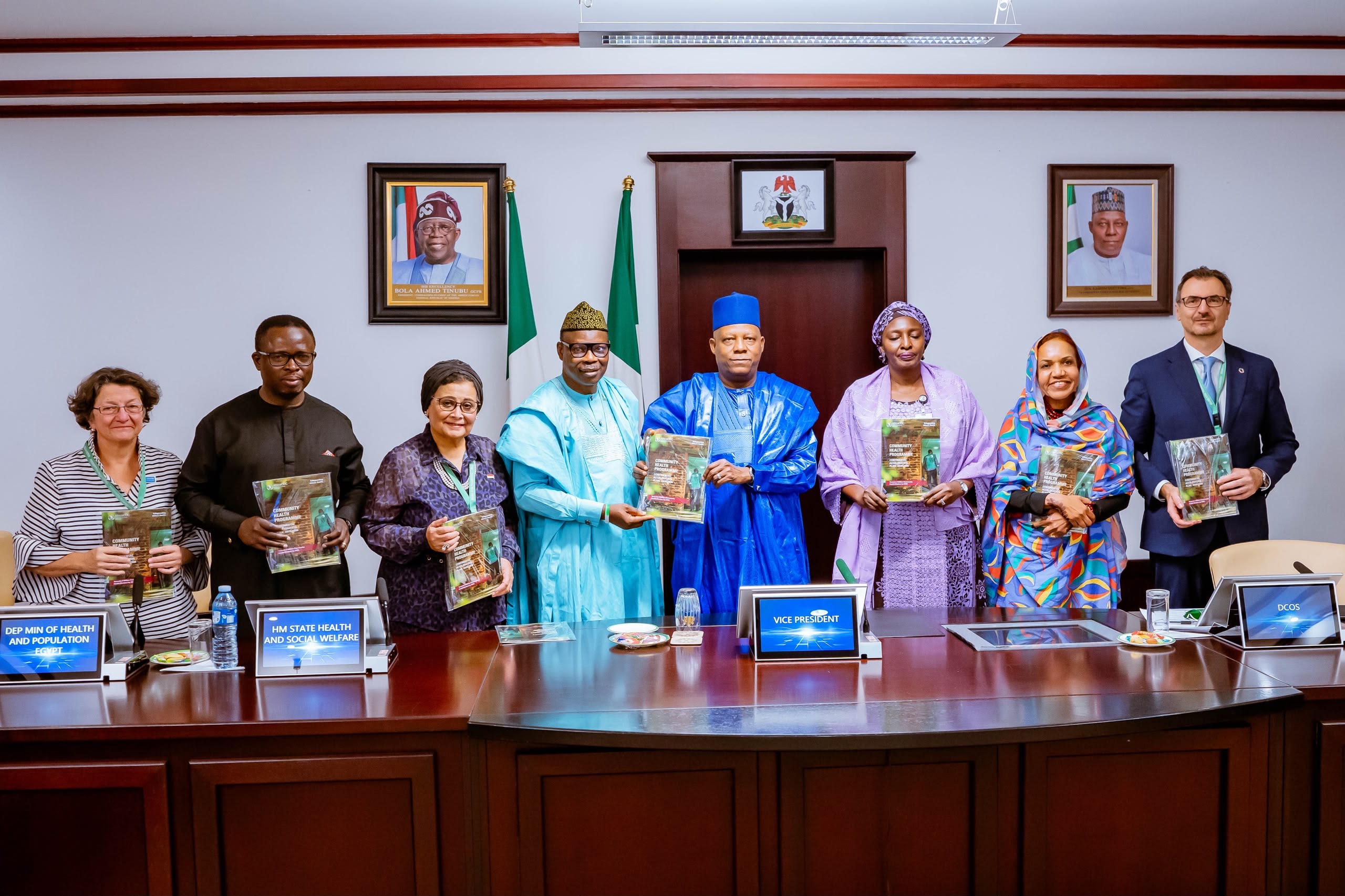
Vice President Kashim Shettima on Thursday launched the Community Health Programme Continental Acceleration Plan 2026–2030, with Nigeria targeting 100,000 salaried community health workers by 2027 as African countries step up efforts to strengthen primary healthcare delivery.
Shettima, who launched the plan at the Continental High-Level Forum on a Fit-for-Purpose Health Workforce at the State House, Abuja, said community health workers must enjoy legal recognition, reliable salaries, professional certification and clear career progression to deliver effective healthcare services.
According to a statement by his media aide, Stanley Nkwocha, the Vice President said the plan was designed to address critical gaps in community healthcare across Africa through improved governance, workforce development, sustainable financing, digital systems, medical supplies and accountability.
He said the distance between a household and a health worker could determine the difference between survival and death, stressing the need to ensure that access to healthcare was not determined by where people were born.
“We cannot afford the luxury of taking our community health workers for granted,” he said, noting that they played vital roles in identifying maternal health risks, finding unvaccinated children, gathering household data and detecting disease outbreaks.
Shettima said President Bola Tinubu’s Health Sector Renewal Investment Initiative had secured more than $2.2 billion in commitments, with programmes to revitalise over 17,000 primary healthcare centres and train 120,000 frontline health workers.
“Our goal is 100,000 salaried community health workers by 2027,” he said.
The Vice President warned that shrinking external health financing posed a major threat to community healthcare across Africa, noting that 85 per cent of member states depended heavily on donors to support their community health programmes.
He said the continent’s new acceleration plan would require about $28 billion through 2030, with more than 80 per cent of the funding allocated to recurrent expenditure.
According to him, the investment is projected to generate $19 in economic and social benefits for every dollar spent, provided countries sustain funding and implement the programme effectively.
Other News
“Every country must therefore commit to one nationally owned plan, one budget and one monitoring framework,” he said.
Shettima also drew attention to the gap between Africa’s healthcare commitments and actual delivery, noting that 25 years after the Abuja Declaration pledged at least 15 per cent of national budgets to health, many households remained beyond the reach of essential healthcare services.
He said Tinubu had continued to advance health financing and workforce development as the African Union Champion for Human Resources for Health and Community Health Delivery Partnership.
Earlier, the Minister of State for Health and Social Welfare, Iziaq Salako, said Nigeria was committed to the African Union’s target of deploying two million community health workers across the continent by 2030.
Salako said the plan aligned with the Tinubu administration’s Renewed Hope Agenda, particularly its priorities on strengthening disease surveillance, primary healthcare delivery and community resilience.
The Deputy Director-General of the Africa Centres for Disease Control and Prevention, Dr Raji Tajudeen, said Africa was falling behind the two-million-worker target adopted by African leaders in 2016, with only about half of the target achieved.
He attributed the shortfall to recurring infectious disease outbreaks, declining international development assistance for health and inadequate operational readiness of primary healthcare facilities.
Tajudeen, however, commended Nigeria’s response to an Ebola outbreak, saying the country’s experience offered lessons for other African nations.
“Let me congratulate Nigeria for the excellent work you have done in primary healthcare, community health systems and universal health coverage, and your excellent response to the Ebola outbreak and how you have contained it. We have so much to learn from Nigeria,” he said.
Egypt’s Deputy Minister of Health for Population and Family Development, Dr Abla Al-Alfi, also stressed the importance of strengthening primary healthcare systems and empowering community health workers to improve maternal and family health outcomes.