Follow Us on Google

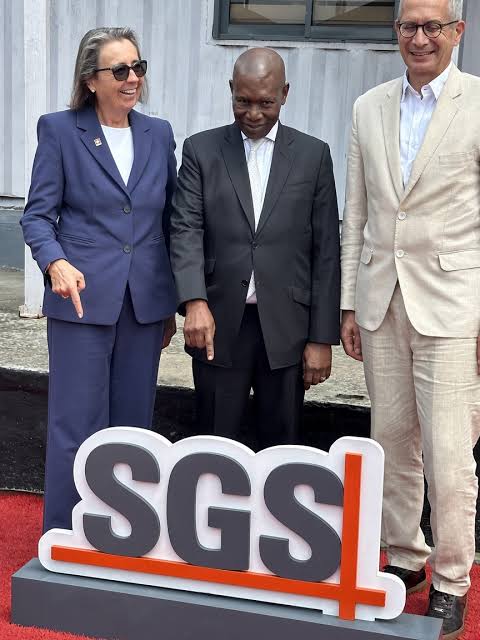
SGS Inspection Services Nigeria Ltd. has expanded its laboratory capacity to conduct comprehensive crude oil assay analysis, strengthening local technical support for Nigeria’s petroleum industry and reducing the need to rely solely on external expertise for specialised testing.
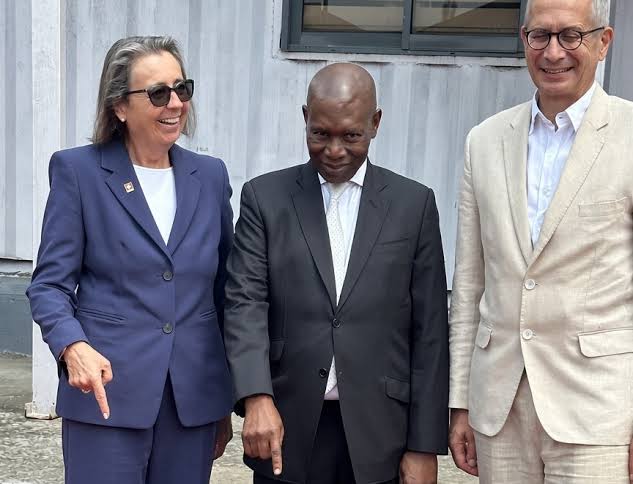
The expanded capability was showcased during a visit to the company’s facility in Apapa, Lagos, by Switzerland’s Ambassador to Nigeria, Patrick Egloff, and the Consul General of the Swiss Consulate in Lagos, Conny Camenzind.
The diplomatic delegation toured SGS Nigeria’s newly built crude oil assay laboratory and received briefings on the company’s investment in local infrastructure, technical expertise and services to the Nigerian petroleum industry.
Speaking during the visit, Chairman of SGS Nigeria, Francis Ogboro, said the company was combining its international technical resources with locally developed expertise to deliver specialised services to Nigerian businesses.
Ogboro said SGS operates in 115 countries, with more than 2,500 offices and laboratories, adding that its Nigerian operations draw on the group’s global knowledge and capabilities while being driven by local professionals.
He disclosed that SGS Inspection Services Nigeria Ltd. operates as a member of the SGS S.A. Group, with a majority Nigerian shareholding structure.
Ogboro said the company’s expanded oil, gas and chemical laboratory now has the capacity to undertake comprehensive crude oil assay analysis, an important service that provides detailed information about the properties and composition of crude oil.
According to him, the analysis helps petroleum industry operators determine crude characteristics for processing, refining, blending and commercial transactions.
Ogboro said the investment represents an addition to SGS Nigeria’s technical support for the petroleum sector and reflects its commitment to developing local infrastructure and expertise for specialised industrial services.
The SGS Chairman listed the company’s services to include: testing, inspection, certification, training and consulting, covering natural resources, oil, gas and chemical analysis, metering and calibration, industries and environment, business assurance and trade facilitation. He added that SGS would continue to leverage its global network and local capabilities to strengthen confidence in business transactions, support industrial operations and deliver value to the Nigerian market.
Ogboro added that SGS Nigeria was incorporated in July 1957 and would celebrate 70 years of operations in the country in 2027.
He said the milestone reflected the company’s longstanding presence in Nigeria and its commitment to principles of integrity, respect, quality and professionalism, health, safety and environmental responsibility, sustainability and leadership. Commending the company’s contributions, Switzerland’s Ambassador to Nigeria, Patrick Egloff, praised SGS for building local expertise and investing in indigenous management and technical capacity.
Egloff described the company’s Nigerian operations as an example of how foreign businesses could combine international ownership and expertise with local talent and management.
“What I especially like when I see it is that it is a Swiss company, but it is locally engineered, locally managed, and locally driven. And I think this tells a lot about the strength of SGS here, and also the business model of SGS and of many Swiss companies,” he said.
The Ambassador said Nigeria had considerable local expertise that could support industrial expansion and economic development, stressing that investment in indigenous talent was an important feature of Swiss companies operating abroad.
He said the visit provided valuable first-hand insight into the operations of Swiss businesses in Nigeria, noting that direct engagement with companies helped him better understand their investments, technical activities and contributions to the economy.
Egloff described Nigeria as an important market for Swiss businesses, disclosing that more than 50 Swiss companies currently operate in the country.
He said the size of the Nigerian economy and its considerable commercial opportunities continued to make the country attractive to Swiss investors.