Follow Us on Google
From Juliana Taiwo-Obalonye, Abuja
The Federal Ministry of Women Affairs has debunked claims, which it tagged as false, circulating in a recent video alleging that survivors of sexual and gender-based violence (SGBV) under the Ministry’s care have been abandoned.
In a statement signed by the Permanent Secretary, Federal Ministry of Women Affairs, Maryam Keshinro, she described the accusations as not only misleading but also as undermining the structured, ongoing efforts to protect and empower survivors.
She said: “First, it is crucial to clarify the Ministry’s role in SGBV interventions. By constitutional mandate, state governments are responsible for managing SGBV shelters and survivor support systems through their respective State Ministries of Women Affairs.
“The Federal Ministry of Women Affairs operates only one temporary shelter in the Federal Capital Territory (FCT), which is designated for urgent, high-risk cases requiring immediate federal intervention. This facility is not a long-term care home but a transitional space where survivors receive immediate support before being reintegrated into appropriate state or community-based systems.
“Beyond emergency shelter, the Ministry has taken a proactive approach to survivor support.
“In 2024, the FMWA conducted a nationwide needs assessment across Kano, Lagos, Nasarawa, and the FCT to identify gaps in survivor services.
“This assessment directly informed the Ministry’s targeted interventions, ensuring resources were allocated where they were needed most and strengthening collaboration with state authorities to improve survivor support frameworks.”
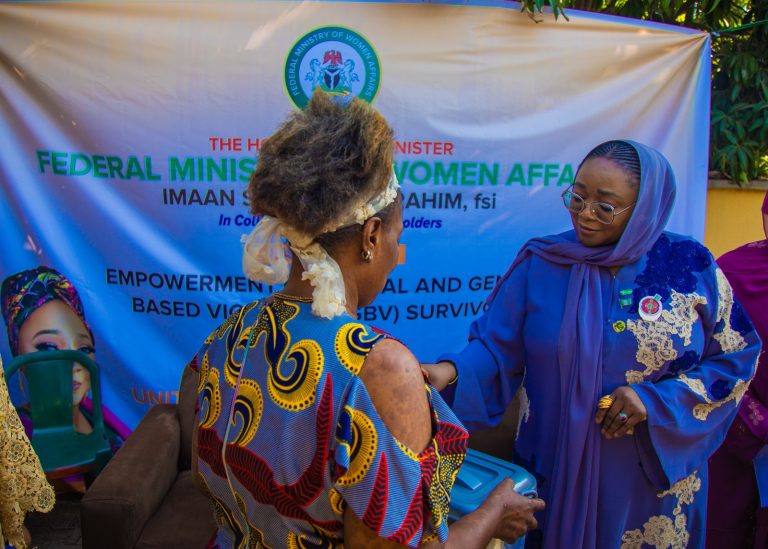
Keshinro listed a series of initiatives aimed at supporting survivors and strengthening the national response system. They include: On 14th December 2024, the Honourable Minister of Women Affairs visited a shelter in the Federal Capital Territory, accompanied by a multidisciplinary team. During this visit, six survivors and their families received psychosocial counselling, stipends, food supplies, and hygiene kits.
Two survivors with critical health needs were provided urgent medical care, while others received customised support packages, including economic grants and housing assistance, to ensure long-term stability. By January 2025, all survivors had successfully transitioned out of the shelter under full reintegration plans.
Other News
On 5th March 2025, the Ministry conducted a follow-up review for a particularly vulnerable survivor, securing additional temporary accommodation and increased financial support. A tailored rehabilitation plan was designed, and a dedicated caseworker was assigned to oversee progress.
She said the Ministry is finalising a National Action Plan on SGBV, set for adoption in Q2 2025. This plan involves partnering with experts, NAPTIP, and civil society organisations to standardise shelter operations and survivor care protocols. Efforts are also underway to expand federal shelter capacity and enhance training programmes for state-level staff.
On Nigeria’s 2025 humanitarian needs and response plan, the Permanent Secretary highlighted the critical need to address GBV, exacerbated by ongoing conflict, displacement, and floods. The plan emphasises establishing safe spaces, enhancing case management services, and improving healthcare infrastructure.
Partners are working to scale up multisectoral GBV prevention and response services, targeting over 1.1 million individuals with critical needs across the BAY states.
On community engagement and capacity building, Keshinro also said projects supported by organisations like Pathfinder International have strengthened Sexual Assault Referral Centres (SARCs) in nine states, providing essential services to survivors and promoting community awareness. These efforts, she said, aim to create a comprehensive and sustainable approach to SGBV prevention and response.
Despite these efforts, challenges persist, including inadequate data on online gender-based violence and insufficient attention to these issues during crises like the COVID-19 pandemic. Addressing these gaps remains crucial for effective response strategies.
The Ministry is seeking intervention, emergency, and operational funds to address urgent issues that arise.
It is also reviewing legislation on violence and abuse, such as the VAPP Act and other legal and policy instruments.
“The allegations made in the circulated video are entirely false. They distort the facts and undermine the progress being made to address gender-based violence in Nigeria. Every case brought to the Ministry’s attention is treated with urgency and care, and every claim is rigorously verified.
“We encourage Nigerians, the media, and all stakeholders to seek factual information directly from the Ministry. The FMWA’s commitment to survivors is unwavering, evidence-based, and results-driven—reflected in its immediate interventions, long-term support systems, and broader systemic reforms,” Keshinro said.