Follow Us on Google

From Adesuwa Tsan, Abuja
The Senate has recommended the establishment of a National Youth Stabilisation Fund in conflict-affected regions to address unemployment, poverty, hunger, drug addiction, and radicalisation, while supporting local economic recovery and community resilience.
It identified unemployment, corruption in governance, drug abuse, cultism, poverty, illiteracy, porous borders, radicalisation, and other factors as core drivers of Nigeria’s worsening insecurity, warning that the country cannot continue to rely solely on military force to address complex security threats.
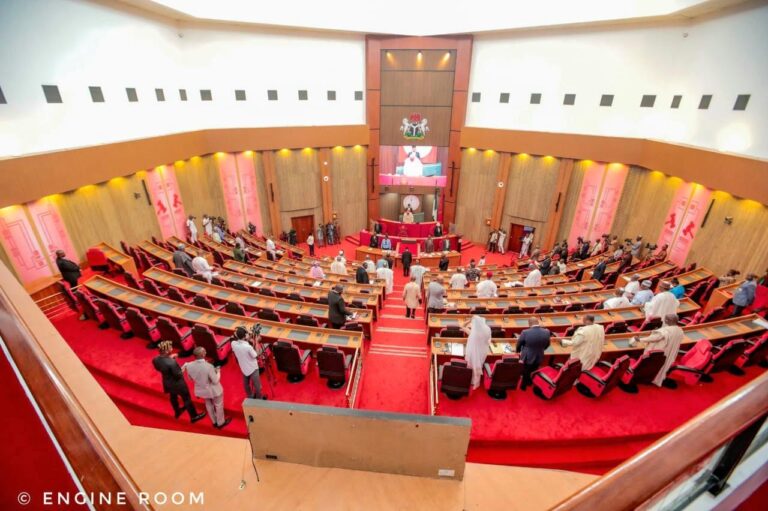
These were parts of the findings and recommendations of the Interim Report of the Senate Adhoc Committee on National Security Summit, which conducted zonal public hearings across the six geopolitical zones – North-East, North-West, North-Central, South-West, South-East, and South-South – which were adopted in plenary on Wednesday.
Presenting the recommendations, Senate Leader Opeyemi Bamidele noted that “the root causes of insecurity must be addressed deliberately and sustainably,” noting that joblessness and economic deprivation have made many young Nigerians vulnerable to recruitment by criminal gangs, insurgents, and extremist groups.
“There is an urgent need for the Federal Government to establish a fund to address the root causes of insecurity, namely unemployment, poverty, corruption in governance, cultism, drug abuse, illiteracy, porous borders, and radicalisation by religious extremists,” the report stated.
The Senate also called for a fundamental overhaul of Nigeria’s security architecture, stressing that the country was “fighting 21st century crimes with 20th century tools and apparatus.”
It urged security agencies to adopt intelligence-driven and data-led operations, leveraging digital intelligence, surveillance technology, and early warning systems to proactively combat insecurity.
“All security agencies should deepen intelligence-driven operations by leveraging digital intelligence and data-driven analysis as the way forward,” the report said.
It further recommended stronger inter-agency collaboration, calling for deeper synergy between the military, police, DSS, Immigration, Customs, NSCDC, intelligence agencies, vigilante groups, as well as traditional and religious institutions.
Furthermore, it proposed the establishment of joint operations centres nationwide to improve intelligence sharing, coordinated responses, and communication among security agencies.
Other News
On economic activities linked to insecurity, the lawmakers raised alarm over illegal mining, directing all unlicensed mining companies operating across the country to immediately halt operations and regularise their status with the Federal Government.
“The surge in unregulated and foreign mining activities, often in collaboration with some Nigerians, has been linked to insecurity in many communities,” they warned, calling for a comprehensive national policy to regulate mineral exploitation.
The Senate also expressed concern over the activities of the Indigenous People of Biafra (IPOB) in the South-East, citing loss of lives and property, disrespect for traditional institutions, and an increase in out-of-school children.
It called for an end to the weekly sit-at-home order, urging state governments in the region to act decisively to restore normal economic and social life.
“The Monday sit-at-home syndrome should be curtailed, if not completely stopped,” it said.
Among other recommendations, the panel called for the identification, arrest, and prosecution of sponsors of insecurity, both locally and internationally, including the cutting off of their funding sources.
It also advocated the restoration of ancestral lands, farmlands, shelters, and cultural heritage sites taken over by insurgents, as well as the rebuilding and resettlement of affected communities with adequate compensation by all tiers of government.
The Senate further recommended the creation of mobile courts to ensure speedy dispensation of justice, the protection of forests through modern technology and the establishment of forest guards, as well as the empowerment of the NDLEA to curb rising drug abuse among youths.
It reiterated calls for state police, local security liaison committees at ward levels, strict adherence to the federal character principle to address marginalisation, and greater inclusion of traditional and religious leaders as recognised security stakeholders.
According to the panel, only a holistic, preventive, and people-centred approach that addresses both the symptoms and root causes of insecurity would restore lasting peace and stability across Nigeria.