Follow Us on Google

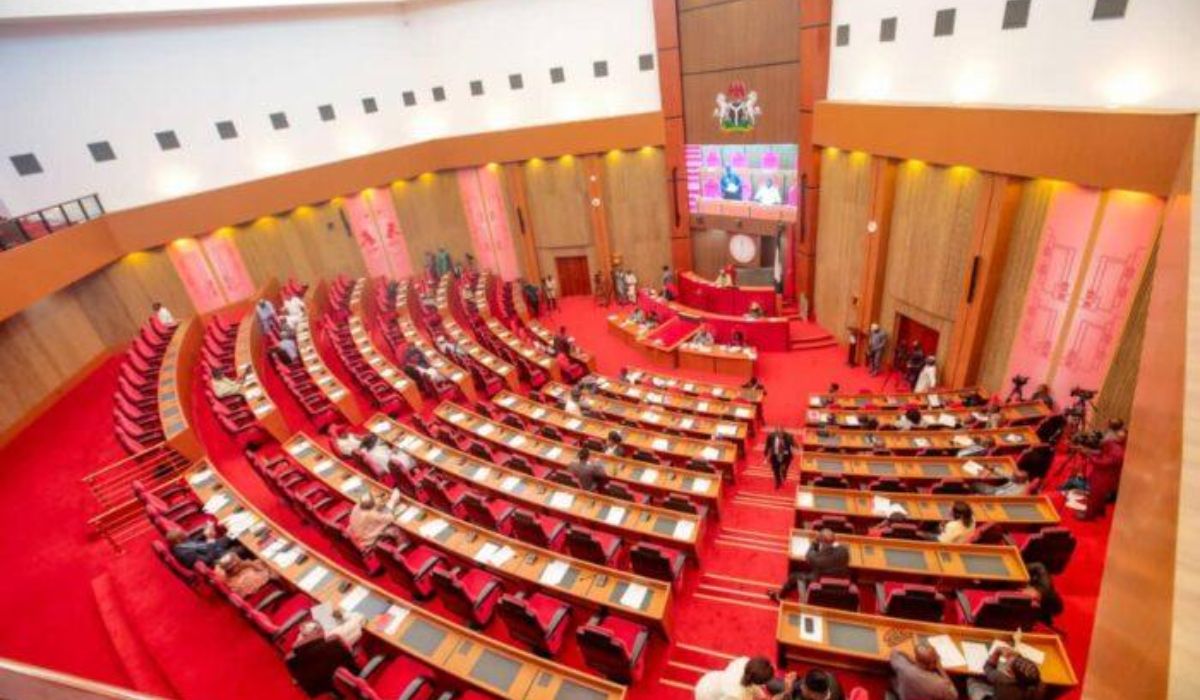
From Adesuwa Tsan, Abuja
The Senate on Thursday passed for second reading a bill seeking to establish a National Research and Innovation Development Fund, with a proposed annual allocation of 20 per cent of the Nigerian Content Development Fund to finance research, indigenous technology and the commercialisation of inventions in Nigeria.
It is aimed at addressing funding and coordination gaps in the country’s research sector and strengthening the link between academic discoveries, industrial development and economic growth.
Sponsored by the Senate Leader, Opeyemi Bamidele, but presented for consideration by Senate Chief Whip, Tahir Mungonu, the National Research and Innovation Development Fund (Establishment) Bill, 2026, also seeks to establish a National Council on Research and Innovation to provide strategic direction, policy oversight and supervision of the proposed fund.
Leading the debate on the bill, Mungonu said Nigeria had the universities, polytechnics, research institutes, professional academies and technology entrepreneurs required to drive innovation, but needed a sustainable framework to coordinate their activities, provide funding and translate research findings into commercially viable products and services.
The bill was read for the first time on Tuesday, 13 October 2026.
He said, “The importance of research and innovation to national development cannot be overemphasised. In a rapidly evolving global economy driven by science, technology, industrial advancement and the application of knowledge, the capacity of a nation to generate ideas, develop indigenous technologies and translate research findings into practical solutions is critical to its economic competitiveness and prosperity.”
Mungonu argued that research should move beyond academic publications and laboratory experiments to deliver practical solutions capable of improving the lives of Nigerians.
“Equally important is the Bill’s emphasis on collaboration between government, academia, industry and the wider community. It recognises that research should not remain confined to academic publications or institutional laboratories, but should be translated, where viable, into goods, services, technologies and practical solutions capable of improving the lives of Nigerians,” he said.
Under Section 19 of the proposed legislation, the fund would derive its resources from an annual contribution of 20 per cent of the Nigerian Content Development Fund, appropriations by the National Assembly, grants, donations, endowments, proceeds from patents and commercialisation, investment income and other lawful sources.
Section 20 provides for the use of the resources to finance research grants, innovation initiatives, research infrastructure, product development and prototyping, indigenous technology development, intellectual property acquisition, technology transfer, capacity building and the commercialisation of research outcomes.
The bill also proposes a limit of 25 per cent of the annual contribution from the Nigerian Content Development Fund for administrative expenditure, with the aim of ensuring that the bulk of the designated resources goes towards research and innovation activities.
According to the lawmaker, the proposed fund would support the development of indigenous and emerging technologies, improve research infrastructure and address challenges peculiar to Nigeria, while creating a national database of research, development and innovation resources and outputs.
Other News
The bill also contains provisions for financial accountability, including annual estimates, proper financial records, auditing, annual reports and oversight by the proposed National Council and Joint Ministerial Committee responsible for budget approvals.
It further prescribes offences and penalties for the diversion or misapplication of grants, failure to account for funds, submission of false information, unauthorised disclosure of information, obstruction of officials and conflicts of interest.
On intellectual property, the proposed legislation provides a framework for determining ownership of rights arising from funded research, protecting the interests of researchers and beneficiary institutions, and facilitating technology transfer and the commercialisation of viable inventions.
The senator said the initiative could support local solutions in agriculture, healthcare, education, manufacturing and environmental management, while harnessing the talents of Nigerian youths, attracting greater private-sector participation and facilitating the productive engagement of Nigerians in the diaspora.
He, however, stressed the need for clear funding priorities, rigorous assessment of research proposals, measurable outcomes and effective monitoring to ensure that projects supported by the fund deliver tangible benefits to the economy.
Contributing to the debate, Senator Samson Ekong said Nigeria’s development prospects would remain limited if the country continued to neglect research and innovation.
He said the country could have made significantly greater progress if the two areas had received the attention they deserved in the education sector.
“Research and innovation, we would have gone far in this country if we had taken these two aspects of education seriously,” Ekong said.
He asked, “How do we catch up when we ignore research, when we ignore innovation?”
Also contributing, the chairman of the Senate Committee on Banking, Insurance and Other Financial Institutions, Tokunbo Abiru, described research and innovation as critical to promoting creativity and ingenuity.
Abiru expressed confidence in the proposed governance structure of the fund, saying it would provide an effective mechanism for managing its operations.
The bill scaled second reading and was referred to the Committee on Tertiary Institutions and TETFund for legislative action. It is to report back in four weeks.