Follow Us on Google

By Folake Oladeinde
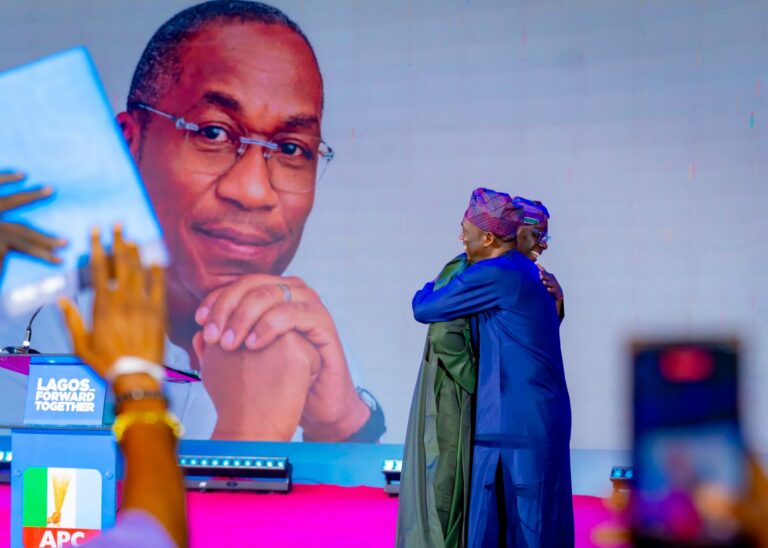
One of the more understated passages in Governor Babajide Sanwo-Olu›s speech at the unveiling of Dr. Obafemi Hamzat›s manifesto in Lagos at the old National art Theatre, may eventually be remembered as one of its most revealing.
It concerned neither the celebrated infrastructure projects of Lagos nor the extraordinary circumstances of the 2018 APC governorship primary.
Instead, it was an account of what happened whenever the governor travelled out of the state on official assignments.
“When I travelled to bring investors to Lagos, he was in the room I had left, and Lagos did not notice that I had gone,” he said, building up an argument.
The statement carried a particular meaning in Nigerian politics, where the relationship between governors and their deputies has sometimes been defined by suspicion, competing loyalties and carefully restricted responsibilities.
Sanwo-Olu was offering his perspective on a working arrangement in which the deputy governor was not merely a constitutional placeholder but a participant in the business of governing.
His description was also unusually candid. He suggested that the smooth functioning of government in his absence represented one of the highest compliments he could pay his deputy.
There are, of course, limits to what such a personal account can establish. The absence of a public disagreement is not necessarily proof of effective administration, just as the appearance of harmony does not eliminate the need for independent assessment.
Nevertheless, the passage reveals something important about the political character of the succession Sanwo-Olu is seeking to construct.
For seven years, the governor and his deputy have remained publicly aligned despite the competing interests and pressures that typically accompany executive office.
It is a relationship whose significance becomes more pronounced against Nigeria›s experience of disputes between governors and deputy governors.
Such disagreements have, at different times, escalated into impeachment contests, litigation, factional struggles and disruptions to governance. The Lagos governor drew directly from that history.
He maintained that there had not been a single day when he was uncertain of his deputy’s loyalty. He subsequently declared that Lagos was preparing to change governors without a quarrel.
That second statement represented the political destination of his speech.
A governorship transition is not merely an exchange of offices. It can determine whether ongoing projects retain institutional support, whether officials remain focused on implementation and whether government becomes consumed by internal contests over influence.
Other News
By presenting his relationship with Hamzat as one of sustained cooperation, Sanwo-Olu was making the absence of open conflict part of his proposed succession narrative. But political harmony, however desirable, is not an alternative to electoral legitimacy.
The governor›s confident reference to handing over to Hamzat in May 2027 must be understood as a campaign expectation rather than an accomplished electoral outcome. The electorate will still have to determine who occupies the office.
That distinction is important because the speech also presented continuity as a system that should survive individual officeholders.
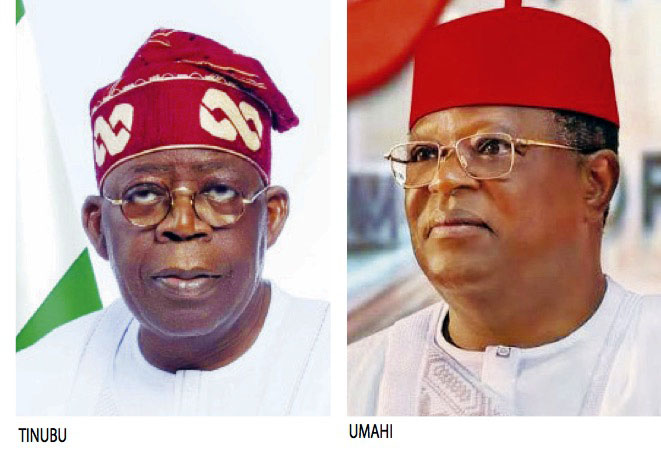
Sanwo-Olu›s relay-race metaphor, which traced Lagos› political development from Bola Tinubu through Babatunde Fashola and Akinwunmi Ambode to the present administration, was intended to explain the value of accumulated experience and institutional memory.
The challenge is ensuring that continuity remains compatible with accountability, competition and the possibility of change through the ballot.
There was another instructive element in the address.
Sanwo-Olu turned to Hamzat›s running mate, Princess Damilola Sonayon-James, drawing attention to her representation of Lagos West, particularly Badagry, as well as the visibility of women and younger political actors within the proposed ticket.
He urged her to protect the partnership she was about to enter. The advice reflected the larger theme of the speech: that executive cooperation is not simply a matter of personal compatibility but a factor with consequences for institutional performance.
It also indicated that Sanwo-Olu wanted the governorship ticket to present itself as a working partnership rather than a hierarchy in which the deputy exists merely to satisfy political calculations.
The manifesto presentation therefore became an occasion for discussing the management of power, not just its acquisition. That is where the speech draws much of its historical relevance.
At the end of an administration, political succession is often accompanied by efforts to establish competing legacies, settle unresolved disagreements or consolidate rival centres of influence.
Sanwo-Olu presented a different account, founded on the public confidence he says he has developed in his deputy through years of shared responsibility.
His expression, “He was in the room I left,” condensed that argument into an accessible image. It suggested confidence in delegation, continuity of administration and the ability of government to function beyond the physical presence of its chief executive.
Whether that account becomes an enduring legacy will depend on more than Friday›s declarations. It will require the conduct of the remaining months of the administration, the campaign itself and the eventual transition following the election.
For now, the speech has established peaceful succession as a central theme in the political conversation around Lagos in 2027.