Follow Us on Google

By Fred Itua, Abuja; Jude Idu, Abuja; Tony John, Port Harcourt; Priscilla Ediare, Ado Ekiti; Oluseye Ojo, Oyo; Jude Dangwam, Jos; Femi Folaranmi, Yenagoa; Timothy Olanrewaju, Maiduguri; John Adams, Minna; Mohammed Abubakar, Dutse; Scholastica Hir, Makurdi; Noah Ebije, Kaduna; Stanley Uzoaru, Owerri; Sylvanus Viashima, Jalingo; and Emmanuel Adeyemi, Lokoja
Insecurity is often discussed in Nigeria as a single national problem. Reports from Daily Sun’s correspondents in 14 states show that its nature, intensity and political implications vary from one state to another. From Rivers to Borno, and from Ekiti to Taraba, stakeholders describe widely different conditions. In some states, residents and political actors speak of worshippers abducted during prayers, the electorate displaced from their communities and highways controlled by armed groups. In others, government and party officials maintain that security is intact and that reports of danger are a matter of perception.

The divergence reflects how insecurity is understood in the build-up to the 2027 general election. It is a physical reality for communities that have lost access to land, homes and livelihoods. It is also a subject on which ruling party, opposition party, security agencies, analysts and affected communities offer different accounts. The central issue for the 2027 polls, stakeholders say, is whether every Nigerian can be reached by candidates, protected by security agencies and allowed to take part in the process.
A country of many insecurities
The reports show that the security challenge takes several forms across the states under review. The first is insurgency, concentrated in Borno, where security analysts identified Guzamala, Abadam, Marte, Kukawa and Kala Balge as high-risk councils. The second is banditry and mass abduction, most prominent in Niger but also reported in Kaduna, Taraba, Benue and Plateau. The third is prolonged displacement, in which violence has kept residents away from their homes and farms for years, as documented in Benue, Taraba and Plateau. The fourth is local political and criminal violence, ranging from the corridors of Rivers and the flashpoints identified in Bayelsa West to the thuggery recorded in Kogi and the hotspots listed by the police in Jigawa.
Party and government officials in Ekiti, Imo, Oyo and Ondo, and to a large extent Jigawa, described conditions in their states as calm or improving. In several of these places, however, those accounts were disputed by other stakeholders. Each category presents distinct operational demands. Insurgency involves the contest for territory. Banditry is tied to intelligence, rural policing and the ransom trade. Prolonged displacement raises questions of resettlement and restitution, while political violence centres on the conduct of security personnel and the enforcement of electoral law.
Borno: A state of ghost councils
Borno presents the clearest picture of territorial loss. Security analysts told our correspondent that campaigns may not be feasible in nearly a quarter of the state’s local government areas, since five councils remain volatile, with insurgent attacks and military counter-offensives occurring in almost equal measure.
In Kukawa, the entire electorate is reported to have fled to Monguno, a neighbouring town that hosts a major Army base. Security in the area is now largely organised around fortified towns, with the surrounding territory still contested.
A security analyst, Abubakar Saleh, offered a graded assessment. He described Gwoza, Damboa, Askira/Uba and Chibok as manageable-risk areas, but said they still require additional logistics and security deployment. He said the journey from Maiduguri to Biu or Damboa now takes five hours or more, because the original road is inaccessible owing to the presence of Boko Haram.
An anonymous chieftain of the All Progressives Congress (APC) in the state said a rally would be held in Monguno, as nobody would take a crowd of supporters to Guzamala or Kukawa. The APC, the African Democratic Congress (ADC) and the Peoples Democratic Party (PDP) did not respond to the claims, and their official positions could not be recorded.
Niger: Where abduction has become a business
In Niger, our correspondent reported that the number of local government areas under siege has fallen from eight to six in two years. Shiroro, Rafi, Mashegun, Agwara, Mariga and Borgu, however, remain under the control of armed groups, with about 50 villages declared no-go areas.
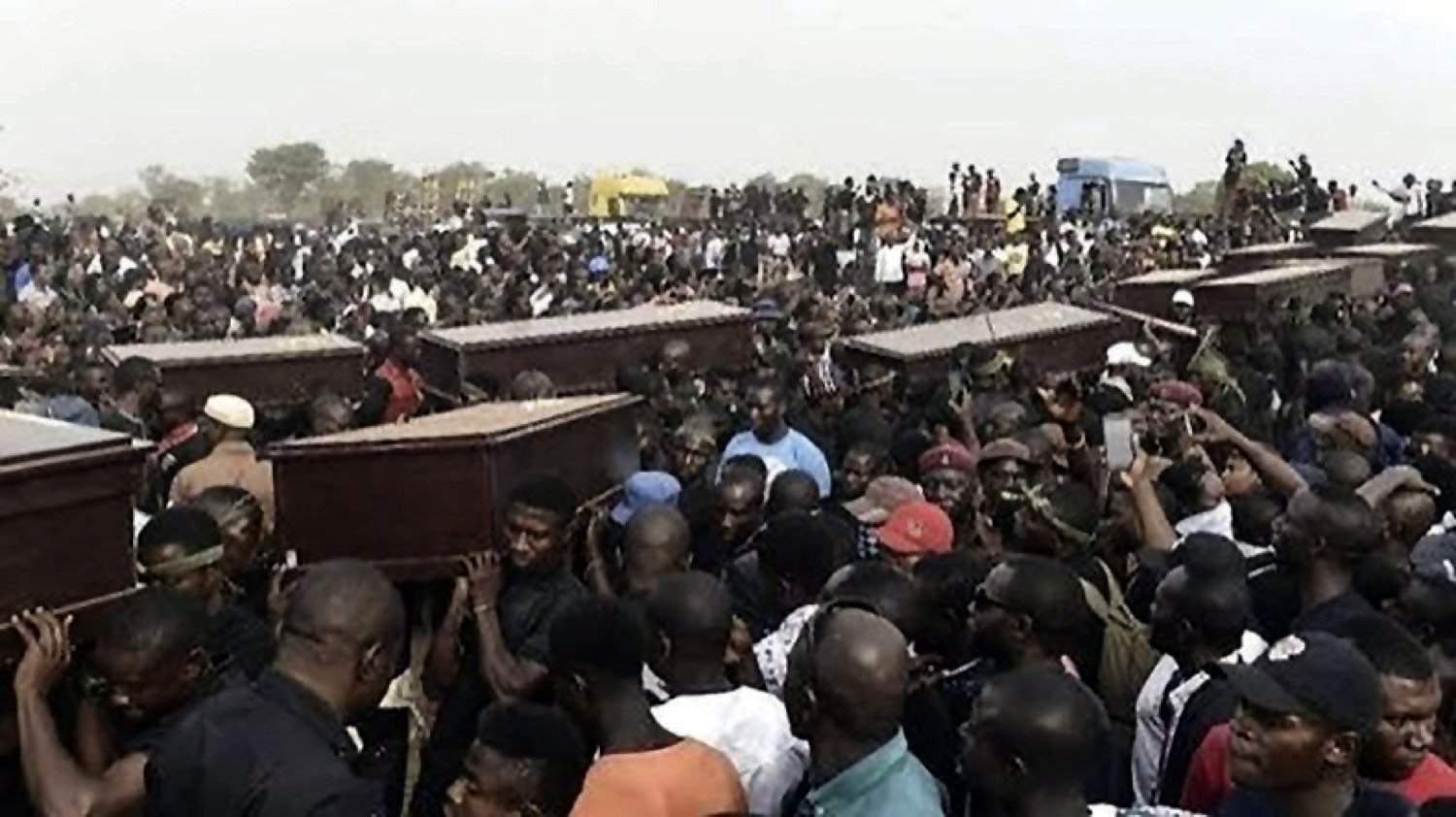
Recent incidents were recounted by residents. In Borgu, bandits stormed Dekera community during Friday prayers and abducted about 500 people, including women and children. Six worshippers who attempted to escape were shot dead. Conflicting accounts put at about 30 the number of captives reportedly killed since then.
In Mariga, 37 farmers, mostly women, were seized while harvesting groundnut, and a ransom of N50 million was demanded. On the Mokwa to New Bussa highway, bandits abducted and killed travellers, until commercial vehicle owners staged a peaceful protest over the daily killing of their members. Farmers, traders and drivers are among those most affected, with consequences for rural livelihoods and the movement of goods.
In Agwara, the community around the Catholic Missionary School in Papiri, where students and pupils were abducted in 2024, remains deserted, and the school is still closed.
Security forces have also engaged the attackers. The Army fought a gun battle with bandits on the Zungeru to Tegina road after a distress call from communities, losing one soldier and recording three injuries, while claiming that scores of the bandits were neutralised. An Immigration officer was killed in Wawa and his rifle taken. Our correspondent reported that security agents continue to confront the attackers, who have so far not been dislodged from the affected areas.
The state’s Commissioner for Homeland Security, Maurice Magaji, said the government was doing everything humanly possible and dismissed suggestions that the situation could affect electioneering. The APC publicity secretary, Musa Sakinkaji, said his party would cover all 25 local government areas.
Benue, Taraba and Plateau: The long exile
Reports from Benue, Taraba and Plateau point to displacement stretching across years. In Benue, the clergyman and security analyst, Reverend Jonathan Terka, said the area from Anyiase to Jor Wata in Kwande has been a no-go zone for 16 years. Its residents are scattered around Nyihemba, Ikyogen and Jato Aka and have not been able to return. Another cleric, Reverend Akpen Leva, said more than 10 local government areas, including Kwande and Guma, are affected, with some council wards inaccessible. He asked how residents of such wards would be able to vote and warned that they could be disenfranchised.
In Taraba, residents were still recovering bodies after the attack on Binnari village in Karim Lamido. The PDP campaign council said Chanchaji Ward in Takum was “literally under siege” and that displaced people in Wukari risk death if they attempt to return home. These were party statements and could not be independently verified. The ADC media director, Saidu Adamu Sadiq, and the Accord candidate, Professor Jerome Nyame, separately said they may be unable to reach parts of the state, especially around Karim Lamido and the south.
In Plateau, the PDP chairman, Peter Tongshep, said displacement has made campaigning difficult in some communities, where people can hardly be gathered. Governor Caleb Mutfwang said 1,500 Operation Rainbow personnel have been added to protect vulnerable and ungoverned areas across the 17 local government areas.
Where communities have been emptied of residents, the number of recorded attacks may not fully reflect the extent of the displacement. Two Nigerias, one dispute over the facts Official and unofficial accounts of the same states diverged sharply in several places.
Other News
In Ekiti, the APC spokesman, Segun Dipe, said his party has presence in every ward and unit, described the notion of a security problem as imagination, and said the state ranks among the best in the country. The ADC chairman, Dele Ekunola, said his party would not label any community inaccessible without credible security information, but would consult security authorities and shift venues where genuine threats exist.
In Kaduna, the APC spokesman, Muhammad Sani Haruna, pointed to the improved Kaduna to Abuja road and said more than 500,000 hectares have been reclaimed from bandits, while conceding that insecurity has not been entirely eradicated. The ADC spokesman, Abdulwaheed Olayinka Adubi, said insecurity remains a major concern and that rural residents could be disenfranchised.
In Benue, the APC publicity secretary, Benedict Yawe, said there are no designated no-go areas and that government action has significantly reduced insecurity. The PDP secretary, Dan Nyikwagh, accused the administration of failing to protect lives and property.
The Ekiti police said they have not designated any area a no-go zone, while the Taraba police said enough personnel have been deployed to protect the electoral process. Independent data to verify the competing claims on attacks, displacement and returns was not immediately available.
Assessments were not always along party lines. In Imo, the Nigeria Democratic Congress (NDC) secretary, Stanley Ukagha, said most areas that once had serious problems have returned to some form of normality and that militias have been seriously degraded, even if some persist. In Taraba, by contrast, the PDP campaign council expressed doubts about the government’s assurances.
Pockets of calm, and their caveats
Some states reported relative calm. In Imo, parties said there are no no-go areas, and the state police spokesman, Henry Okoye, said a comprehensive election security roadmap, guided by neutrality, professionalism and accountability, is in place, with personnel trained in election security management.
In Ondo, Governor Lucky Aiyedatiwa said the state is secure and that his administration’s measures would curb criminals who may try to strike. A senior aide, Steve Olaloro, ruled out killings and kidnapping during the campaign period and said the flashpoints identified are manned by security operatives, including Amotekun.
In Oyo, kidnappings and armed attacks in rural communities have raised concern. The APC publicity secretary, Olawale Sadare, said his party has campaigned in urban and rural areas alike and has solid security arrangements. The Allied Peoples Movement also said campaigning in every part of the state has not been a problem.
In Jigawa, police said they expect no major threat but acknowledged that no state is free of violence. They marked Hadejia, Gumel, Dutse, Birnin Kudu and Gwaram as areas needing extra vigilance because they are densely populated and home to influential political actors.
Even in states described as calm, police and officials identified flashpoints, urged parties to notify them of rallies and cautioned against inflammatory speech.
Violence at the ballot’s door
In Rivers, our correspondent reported that insecurity along corridors such as Igwuruta to Etche, Emohua to Kalabari, Ahoada East and West, Ogba/Egbema/Ndoni and parts of Andoni, Opobo and Nkoro has long forced parties to scale down night campaigns, use security escorts or rely on community stakeholders. The security expert, Jackson Ojo, called for peace committees, vigilance against hate speech, a crackdown on thuggery and illegal arms, and impartiality by security personnel.
In Bayelsa, despite appeals for peace from Governor Douye Diri, the PDP chairman and the NDC national leader, Senator Henry Seriake Dickson, investigations identified Bayelsa West, in Sagbama and Ekeremor, as a likely flashpoint between APC and NDC supporters. Police Commissioner Saka Adewale Ajao warned his officers against partisanship and against being used as instruments by politicians.
In Kogi, two incidents were reported, in Ejule and Gegu, where thugs disrupted a meeting and attacked a campaign train. The PDP chairman also complained that signage fees of N150 million for presidential candidates, and smaller sums for other offices, were designed to weaken opposition campaigns.
In these states, the risk is linked to political actors themselves and to concerns over the conduct of security agencies. Commissioners and security advisers in Plateau, Bayelsa and Kogi have publicly pledged impartiality.
A crowded field of guardians
Security duties in several states are no longer handled by federal agencies alone. In Ondo, officials said the Amotekun Corps guards major forests and flashpoints, and the corps commander said border towns in Owo, Akoko, Ore and Okitipupa are secure.
In Oyo, a national leader of the Oodua Peoples Congress, Adesina Akinpelu, urged residents to form vigilance groups to complement the security agencies, while the governor’s security adviser, Abayomi Fagbenro-Bibire, asked residents to report threats on an emergency line. In Plateau, the government has deployed Operation Rainbow personnel. In Jigawa, police directed divisional officers to identify flashpoints and held stakeholder consultations that ended in a peace accord.
The involvement of state-backed and community outfits brings local knowledge and quicker response times. It also raises questions of coordination and accountability among the various agencies. The reports did not provide evidence on how the arrangement is working in practice.
Democracy under duress
Beyond the security concerns, stakeholders raised the implications for participation in the polls. Reverend Leva said residents of inaccessible wards risk disenfranchisement. The ADC in Kaduna said insecurity must not strip rural communities of their right to take part.
The Labour Party presidential candidate, Chibuzor Okereke, linked fear to voter apathy, recalled the deaths of National Youth Service Corps members serving as electoral staff, and cited low turnout at flashpoints. The Young Progressive Party candidate, Peter Agada, said parents keep their children indoors on voting days for fear of violence.
Parties are already adjusting their plans. The Ekiti ADC said it would work through ward executives, community leaders, radio and digital platforms, and smaller meetings, with door-to-door visits where safe. The Plateau PDP chairman said such meetings may work better than open rallies in areas where people can hardly gather. In Borno, rallies are expected to hold in secure towns such as Monguno. As a result, campaigns in the most affected areas are expected to rely more on small gatherings and indirect contact than on mass rallies.
The road ahead
Three patterns run through the reports from the 14 states. First, insecurity differs by state. Insurgency, banditry, prolonged displacement and local political violence each present distinct conditions, and accounts of crisis or calm vary accordingly.
Second, claims about security are contested. Official assurances in Niger, Ekiti and Kaduna stand alongside reports of attacks, displaced populations and warnings from opposition parties. Verifiable figures on attacks, displacement and returns were not immediately available to settle the competing claims.
Third, stakeholders link the situation to electoral participation. Where territory cannot be accessed, populations are displaced and candidates change their campaign methods, access to the electorate is affected.
Issues that remain outstanding include how much of each state candidates, officials and voters can reach, how many displaced people have returned home and under what conditions, and how the additional layers of security are performing. Until verifiable data is available on these, accounts of security in the 2027 contests will continue to depend largely on who is speaking and where.