Follow Us on Google
By Chinenye Anuforo
As rising electricity tariffs and worsening inflation continue to strain household budgets, more families are shifting attention to energy-efficient home appliances as a way to cut recurring costs and reduce food waste.
Among appliances under increasing scrutiny are refrigerators, which run round-the-clock and remain one of the biggest contributors to household electricity consumption.
Industry players say this growing consumer concern is influencing buying decisions, with inverter-powered refrigerators gaining traction for their ability to regulate power use and maintain cooling efficiency.
Home appliance manufacturer LG Electronics said its inverter refrigerator range is designed to respond to these realities, particularly as households seek alternatives that consume less power while preserving food for longer periods.
Unlike conventional refrigerators that operate at fixed speeds, inverter compressor technology adjusts cooling power according to usage conditions, reducing unnecessary electricity consumption and helping stabilize internal temperatures.
Tech experts noted that such technologies are becoming increasingly relevant in Nigeria where erratic power supply, high energy bills and rising food prices combine to place additional pressure on families.
Other News
Beyond power savings, food preservation is emerging as another key concern. Frequent power interruptions often lead to spoilage, forcing households to spend more on replacement food items.
LG said its inverter systems are designed to improve cooling recovery after outages and maintain more consistent temperatures, helping reduce spoilage and extending food freshness.
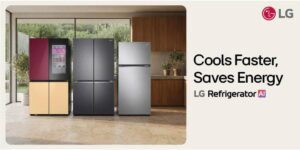
The company’s refrigerator portfolio includes Top Mount, Side-by-Side and Door-in-Door models aimed at different household needs and income segments.
Some of the models, including the GN-F452PFAQ refrigerator, feature temperature-control systems designed to suit different food categories and automatic ice-making functions.
Larger Side-by-Side models target homes requiring greater storage capacity and compartment organization, while Door-in-Door designs seek to limit cold-air loss by allowing quick access to frequently used items.
At the premium segment, the company is also introducing smart refrigerator models with features such as viewing panels that allow users to check contents without opening the appliance, a function intended to further conserve energy.
Speaking on the trend, General Manager, Home Appliance Solutions, LG Electronics Nigeria, Mr. Oktai Kim, said consumers are becoming more conscious of energy usage and long-term household costs.
“Nigerian consumers are becoming more intentional about how they use energy and manage household costs. By offering a diverse range of inverter-powered refrigerators, we are giving families the flexibility to choose solutions that suit their homes while delivering long-term value through energy efficiency and dependable performance,” he said.