Follow Us on Google
From Ola Muhammad, Birnin Kebbi
The Kebbi State Government and Rotary Health Communities Challenge (RHCC) are working to address the retention of volunteer workers in 13 Local Government Areas (LGAs), as well as challenges affecting the procurement of non-malaria commodities.
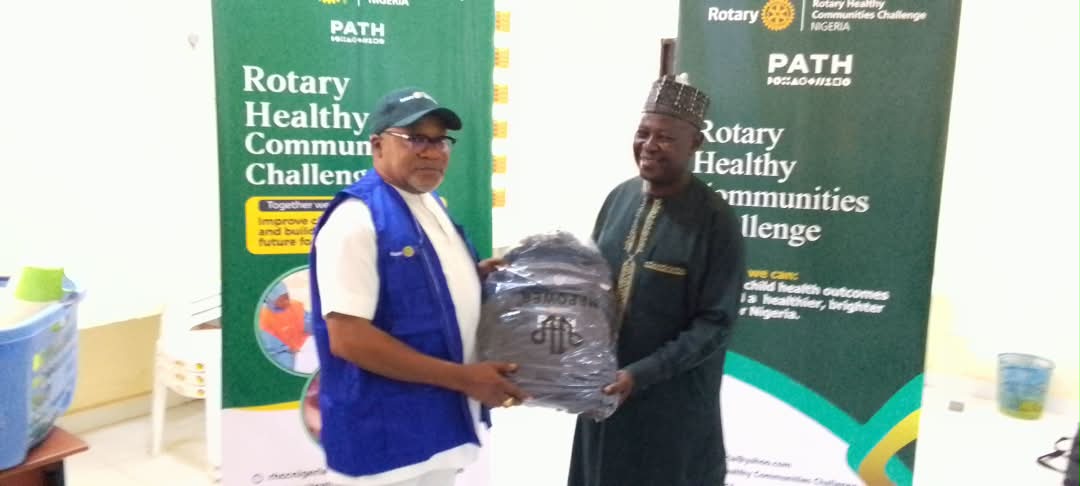
The RHCC project, a three-year intervention implemented by Rotary International and PATH, targets the three leading causes of death among children under five in Nigeria: malaria, pneumonia and diarrhoea. The project has been implemented in 13 LGAs in Kebbi State.
The organisation is partnering with the Federal Ministry of Health, the National Primary Health Care Development Agency (NPHCDA), the Kebbi and Akwa Ibom State governments, as well as local communities.
The RHCC team, led by the Chairman of its Advocacy Sub-Committee, Dr Festus Adetonwa, paid a courtesy visit to the Secretary to the Kebbi State Government, Alhaji Yakubu Bala Tafida, in Birnin Kebbi, where it presented its requests.
While briefing the SSG, Dr Adetonwa said the team was in Kebbi for advocacy and to solicit additional support from the government to absorb its volunteer workers into the state civil service.
Adetonwa also appealed to the state government to support the organisation ahead of the visit of its World Donor to the state in October.
He commended the state government for its support since the RHCC began its intervention in the state.
In his reaction, the SSG, Yakubu Bala Tafida, appreciated the contributions of RHCC and other development partners to the state and expressed the government’s willingness to strengthen its engagement with them.
According to him, “We appreciate your efforts in our state and those of other development partners like you. We are going to support you because the Governor has an interest in what you are doing in the state. We hope to have more constructive engagements in the future.”
Other News
Earlier, at the Ministry of Health, the RHCC Nigeria District 9111 Project Manager, Mr Okuwafemi Oketayo, disclosed that the organisation was facing challenges including the procurement of non-malaria commodities, the integration and formalisation of community volunteers into the civil service, and the need to increase the monthly stipends of its volunteers.
He said, “We request that you formally increase support for the procurement of non-malaria commodities, including Amoxicillin and ORS/Zinc, for iCCM services to avoid stock-outs, especially in hard-to-reach areas, and sustain the RHCC intervention.
“Secondly, we ask for formal CHIPS integration. We urge the state, through the Ministry of Health, to formalise the status of all RHCC-trained community volunteers within the government system. This will secure them a permanent and recognised role within the state’s primary healthcare system.
“Thirdly, we ask for support to increase the monthly stipends of the CHIPS. We request support to increase the monthly stipends of the CHIPS. This will encourage them to be more dedicated to the cause of improving maternal and child survival across the state.”
In his reaction, the Commissioner for Health, Alhaji Samaila Yakubu Augie, commended RHCC for its efforts and said the state government would look into the requests.
Augie explained that the state government had recruited a large number of workers in the health, education and other sectors, adding that the ministry would forward the requests to the Governor for necessary action.
The Permanent Secretary of the Ministry of Health, Dr Zaki Abubakar, also lauded RHCC for its work across Nigeria and assured the team of the maximum support of the state government.
At the State Primary Healthcare Development Agency, the Executive Secretary of the agency, Alhaji Abubakar Muhammad Noma, assured the team that the state government would absorb its volunteer workers.
He, however, appealed to them to exercise patience until 2027, when the state would be adequately prepared to integrate them into the system.