Follow Us on Google
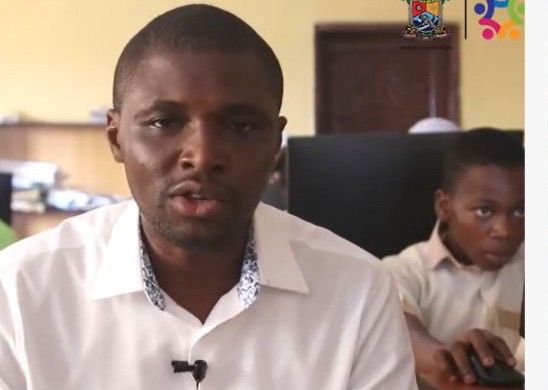
By Benson Michael
Nigeria’s quest to compete in the global knowledge economy will depend not only on university research or national policy, but on what happens each day inside classrooms from Agege to Ibadan.
And across the country, a quiet revolution is taking shape, driven not by large-scale federal reforms, but by local initiatives, educators, alumni associations, and innovators committed to changing how students engage with science.
As 2025 Global STEM Education week, three standout efforts drew our attention: a robotics program revitalizing technical education in Ibadan, a state-wide STEM transformation underway in Lagos, and a homegrown chemistry textbook helping demystify organic reactions for senior secondary school students.
They represent different geographies, partners, and strategies, but together, they point to an emerging ecosystem of solutions that may finally tip the balance in Nigeria’s struggle to strengthen science, technology, engineering, and mathematics (STEM) education.
Coding the Future: Robotics in Ibadan
At Ibadan Grammar School, a STEM robotics program launched by the Old Students Association of North America (IGSOSANA) is helping students learn to design, build, and program robots from scratch. The initiative is about more than electronics, through which it’s teaching young people how to think computationally, troubleshoot real-world challenges, and collaborate on teams, all skills critical for 21st-century innovation.
The program has been met with enthusiasm not just from students but from teachers and alumni, many of whom believe this is what STEM education in Nigeria should look like: practical, empowering, and future-focused.
Digital Labs and Teacher Development in Lagos
Meanwhile, in Lagos, a strategic partnership between the Lagos State Ministry of Education and CcHUB (through its re:learn initiative) is making waves with its Transforming STEM Education in Lagos State project.
The initiative has introduced:
• Digital laboratories for science instruction;
• A shift toward inquiry-based learning, where students experiment, ask questions, and drive the learning process;
• And professional development communities where teachers across districts share techniques, peer-coach, and adapt together.
Teachers like Mr. Ojoro Azeez at State Senior High School, Oyewole, say it’s a turning point:
“We now teach in a way that gets students to think, not just memorize. The labs, the training, it’s changed everything.”
Demystifying Organic Chemistry in Classrooms
In another corner of the education space, Idris Oladimeji Junaid, a pharmaceutical scientist, authored a textbook titled Organic Chemistry Made Easy for Senior High School. With its clear diagrams, localized examples, and topic flow aligned with the WAEC and JAMB syllabi, the book has gained traction in both public and private schools in Lagos and Ibadan.
Teachers report that students who once feared organic chemistry are now participating more actively and performing better in exams.
“This is what we’ve been waiting for, a book that speaks to our students,” said a teacher in Lagos. “It’s improved both confidence and grades.”
Junaid, who is also active in mentoring students and young professionals, sees the book as part of a broader mission to equip Nigeria’s youth with the tools to enter scientific fields and succeed globally.
Where Policy Meets Practice
These three programs are not coordinated by a national agency, yet each is answering the same urgent question: How do we prepare Nigerian students to solve real problems using science and technology?
While Nigeria has rolled out national STEM strategies in the past, these examples show that the real transformation is happening when local expertise meets local need. They prove that innovation doesn’t always need a federal budget, sometimes, it needs an idea, a committed teacher, or a group of alumni who believe in giving back.
With scalable support, these grassroots successes could serve as templates for national replication.
And if Nigeria truly wants to prepare the next generation of scientists, engineers, researchers, and innovators, it will need many more efforts like these.