Follow Us on Google

Ose Oyamendan: Unveiling the man behind the Abiola story
By Beifoh Osewele
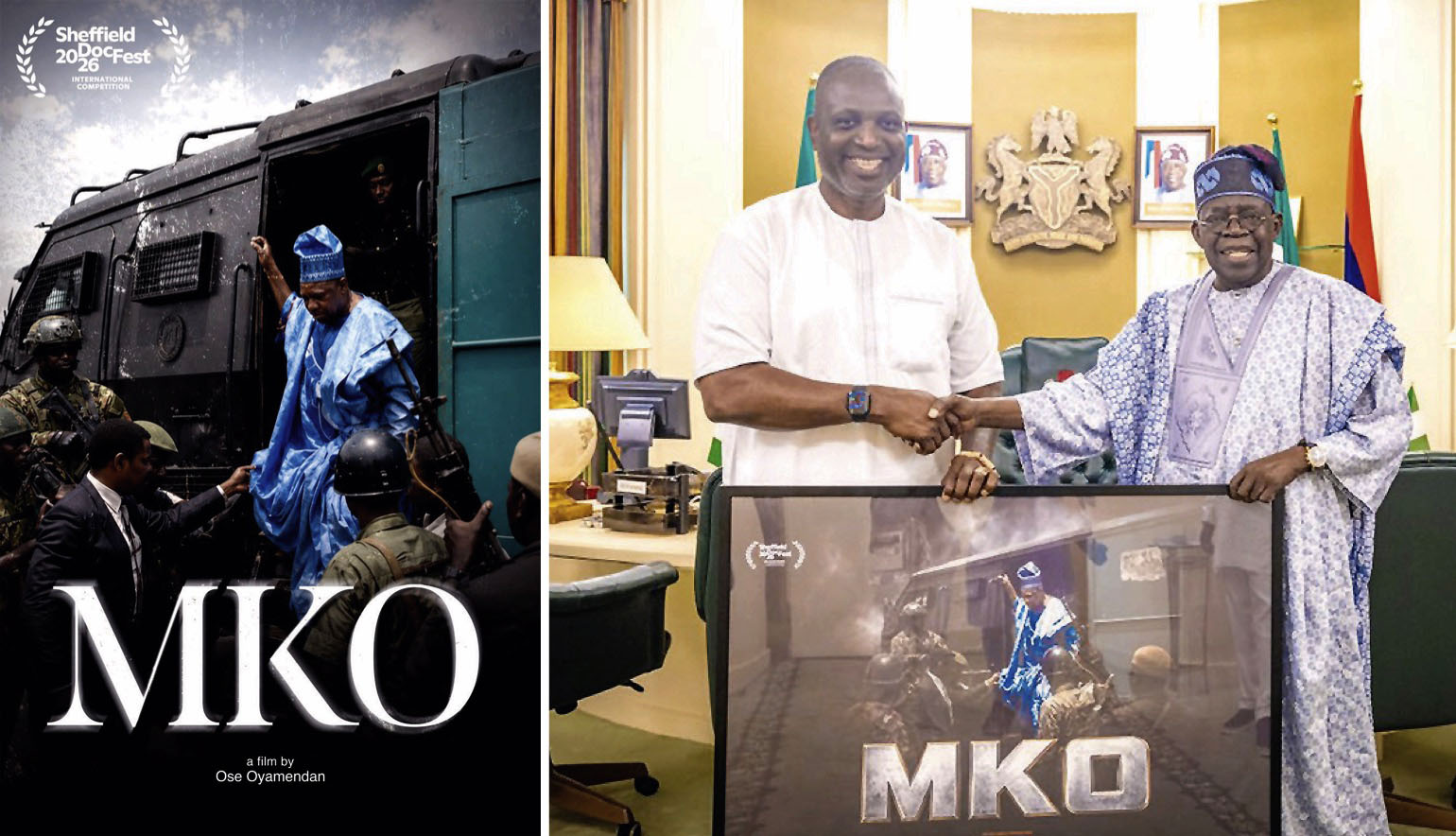
The national premiere of MKO at the newly refurbished National Theatre, Lagos, brought President Bola Tinubu, governors, ministers, diplomats and media figures together around Ose Oyamendan’s work, a rare feat for a filmmaker.
MKO required almost 13 years and more than $1 million, with debts remaining as the film reached its audience.
“We have a film we do not own because we had to mortgage it to gap financiers just to complete it,” Ose disclosed, illustrating the considerable sacrifices behind its completion.
Behind the documentary on Abiola and June 12 is a man whose remarkable journey deserves attention. Ose’s brother had a dream for him: become a journalist and own a media conglomerate. He has fulfilled the first part, but the media empire remains unrealised. The young University of Lagos graduate has nevertheless built an international filmmaking career, connecting Nigerian stories with global audiences and bringing Nollywood into Hollywood.

His foundation was laid at the defunct Weekend Concord. After studying Mass Communication at the University of Lagos, Ose entered the newsroom under Mike Awoyinfa and the late Dimgba Igwe, editors who valued enterprise, wit, colour and strong writing. It was a place where a young reporter learnt to recognise a story and pursue it.
The newsroom also gave him a fellowship that outlasted its daily pressures. Under Awoyinfa and Igwe, the search for a good story went with an appreciation of language and the telling detail, qualities that would later find expression in his films.
Sports reporting was his first love, teaching him to look beyond scores and statistics for the personalities, rivalries and ambitions that make a story. His assignments later broadened into society and politics.
Television followed through MasterSports, the NTA programme created by Danladi Bako, where his humour and knowledge found another audience. His work across print and television was, however, unfolding against a political crisis that would change the course of his life.
Chief Moshood Kashimawo Olawale Abiola was the publisher of Concord, giving the June 12 crisis a personal resonance for its journalists. Returning to Abiola’s story meant revisiting a period that had shaped Ose’s understanding of power and public responsibility.
The military crackdown following the annulment of the June 12 election drove Ose into exile. Concord Press was shut down, while journalists and dissenters faced repression. Recalling a period when opposition was “crushed with bullets,” he said: “I fled to America.”
In Washington, he continued the human rights struggle as a programme associate with Amnesty International USA, engaging with the American administration, Congress and State Department. Exile had moved his concern for Nigeria into international advocacy. He earned an MFA in film production at the University of Southern California’s School of Cinematic Arts. His Washington experience influenced 200 South Capitol, a television drama optioned by Fox Broadcasting Corporation.
His credits include Aswat Acherim (Other Voices), Oh-Bama, Cross Currents, Bridges Over Blood, Sace, Waste to Life and I Am Muhammadu. Aswat Acherim took him into the Gaza-Sderot theatre of the Israeli-Palestinian conflict, while Waste to Life followed an Abuja recycling initiative and women displaced by conflict.
Other News
His filmmaking now spans work in the United States, Africa, Europe, Asia and the Middle East, with projects reaching audiences through cinemas, television and streaming platforms. The Nigerian newsroom gave him his professional footing; America offered training and opportunities, and his work travelled across continents.
Through O2A Media, the Los Angeles production company he founded, Ose has worked across film, television and other media. Its stated purpose of connecting Africa with the wider world reflects the same outward movement visible in his own career.
His official biography records recognition at Tribeca, Rome and Houston WorldFest, alongside work shown internationally. That reach gives substance to the distance travelled by the young Nigerian reporter, whose stories now move through audiences and institutions far beyond his first newsroom.
That experience inspired him to create opportunities for colleagues at home. In 2018, he founded Nollywood in Hollywood, an annual showcase bringing Nigerian films before American professionals, diaspora audiences and cinema lovers in Los Angeles. Presented with USC’s School of Cinematic Arts, the American Cinematheque and O2A Media, it gives Nigerian filmmakers access to screenings, conversations and contacts. Screenings at USC’s Norris Theatre and American Cinematheque venues place Nigerian stories before new audiences in America’s filmmaking capital.
Its activities extend to seminars, training and networking, making the initiative an expression of Ose’s investment in Nigerian storytelling. Having found a place for himself in international cinema, he has helped create a platform through which others can introduce their work and meet collaborators.
“I was born in Nigeria but partly shaped in America,” he has said. Nollywood in Hollywood gives expression to that dual belonging, connecting the country that formed him with the industry in which he developed another career.
“I traded journalism for film,” he says. The reporter’s habits travelled with him, including the obligation to question his assumptions. “Going into this film, my first objective was that I am going to take my biases out of it,” he told Business Doc Europe, explaining his approach to a subject who had been his employer.
Ose is easy with laughter and quick with humour. The filmmaker remains a devoted son to his mother in Ibadan, a loyal friend, a husband and the father of two boys, Ehimen and Obehi. His affection for his mother and loyalty to old friends remain evident despite the distances and demands of his career.
For all the journeys, Ibadan retains a special place because his mother is there. Around her, the professional identities give way to a relationship that long predates the films, the international connections and the demands of a life spent travelling.
There was also a price his family paid. “It takes you away from home a lot,” he said, before finding humour in the prolonged commitment: “It’s like doing another youth service, only much, much longer.” That observation connects the film’s production to the husband and father whose responsibilities continued across an ocean.
Those identities converged as preparations gathered pace for the national premiere of MKO on October 1 at the National Theatre, Lagos. While organising one of the biggest occasions of his career, Ose was carrying a private worry that the excitement around him could conceal.
“My kids play American football, the older, Ehimen, is a division 1 college football player. As we prepared for the premiere, he tore his medial collateral ligament playing football and had to go into surgery two days before the premiere,” he recalled. “It was an emotional toil I managed to hide as we prepared for the premiere.”
The hardest part was being away from “your kid who you’re very close to.” Across the Atlantic, his son was undergoing surgery; in Lagos, the demands of a film that had consumed 13 years continued to press. The filmmaker had to keep going while the father worried.
That disclosure gives added meaning to an exchange just before he entered the main auditorium for the screening. His telephone rang, interrupting our conversation. “Nat, hold on a bit. Na my wife wan talk to me,” he said. A smile spread across his face, lifting a man who had appeared fatigued. Calling from the United States, she wanted to know how he was holding up and what he was wearing. Her encouragement reached him at a moment when professional fulfilment and family anxiety were sharing the same space. His wife had lived through the making of the film, while Ehimen and Obehi had shared the demands of their father’s vocation.
The family’s closeness surfaced during the Los Angeles fires in January 2025, when evacuation became a possibility. Ose returned home to find his wife taking charge, asking everyone to pack only what they needed into carry-on bags. The boys chose clothes and electronic devices; she packed essentials, leaving jewellery behind, while he gathered passports, cards, hard drives and clothing.
“Four lifetimes in four bags!” was his description. It was the reporter’s eye meeting a father’s recognition of what mattered. That same instinct runs through the story of the man behind MKO: the former sports journalist following his boys’ football, the husband buoyed by a telephone call, the son devoted to his mother and the friend who remembers old companions.
The 108-minute documentary premiered on October 1 and opened commercially the following day through Nile Entertainment. Its October 9–15 schedule spans cinemas nationwide, including Denco and Sandford in Ekpoma, taking Ose’s work beyond the premiere audience.
“This is a story that belongs to Nigerians,” Ose said ahead of the release, stressing its connection to shared history and the choices that shaped it. “Most importantly, it is about people who believed that their voices mattered.” The cinema rollout gives younger viewers an opportunity to encounter that history and those who lived it.
The conglomerate his brother imagined remains unrealised, but Ose has built a different kind of influence: an international filmmaking career, a platform for Nigerian cinema and the standing to command attention at the highest level.