Follow Us on Google
From Uche Usim, Abuja
Nigeria, the largest economy in Africa and a major crude oil producer, is in the midst of a major shift.
After decades of running a destructive fuel subsidy regime, President Bola Ahmed Tinubu pronounced it dead on May 29, in a move to rescue the economy from the final gasp of ruin.
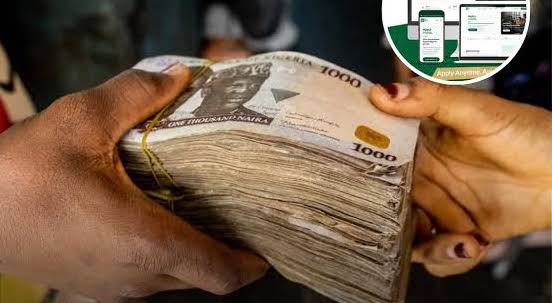
With that unpopular action, though in sync with current economic realities, petrol prices jumped from the subsidised price of N184/litre to a more realistic price range of N448 to over N537, depending on the jurisdiction.
However, the Nigeria Labour Congress is not taking the matter lightly.
It insists that removing petrol subsidy without commensurate economic palliatives for the citizens was akin to sentencing 133 million Nigerians, already battered by multidimensional poverty, into deeper desolation.
While the organised labour has suspended its planned industrial action, it said it would reconvene on June 18 to see what the Federal Government intends to do with its litany of demands, including a N200,000 minimum wage for workers if subsidy must go.
While that simmers, experts insist subsidy should be discarded because Nigeria has not been able to reap bountiful dividends from oil and gas endowments for many reasons; which includes a criminally-designed subsidy payment structure that gulps the bulk of oil proceeds and leaves the shorter end of the stick to other areas like health, security and education.
Ordinarily, subsidies are good initiatives to sort of bridge the social security gap between the poor and the rich; but the Nigerian template is fraught with fraud such that few rich Nigerians are benefiting from it at the expense of the larger, poorer population.
From records, subsidy payouts on petrol from 2005 to 2023 gulped over N21 trillion.
Analysts query the reason for sustaining a profligate programme that has drained the nation’s finances without commensurate value-addition to millions of Nigerians.
A recent report by the Nigeria Extractive Industries Transparency Initiative (NEITI) shows that whereas N13.7 trillion was spent on subsidy between 2005 and 2021, N8 trillion was spent between 2022 and the first half of 2023 alone.
A breakdown of annual subsidy spending provided by NIETI in the report shows that in 2005, starting year for the survey, N351 billion was spent while the figures for 2006-2010 were N257 billion, N272 billion, N272 billion, N631 billion, N469 billion and N667 billion. In 2011, spending ballooned to N2.1 trillion.
From 2012-2017, spending on subsidy was N1.36 trillion; N1.32 trillion; N1.2 trillion, N654 billion, N240 billion and N154 billion respectively. From 2018 to the first half of 2023, the government spent N1.1 trillion; N508 billion; N864 billion N1.43 trillion, N4.4 trillion and N3.6 trillion respectively.
The NEITI reports further x-rayed expenditure on petroleum products.
It linked the disparity in figures on consumption to the vehicle ownership structure in the country where the rich have multiple cars. They account for 96 per cent of total petrol consumed in the country.
“This implies that 90 per cent of PMS subsidy benefits go to the rich, and just 4 per cent to the poor,” the report added.
High petrol consumers are; corporate firms, government agencies, politicians, a section of public transportation and Micro Small and Medium Enterprises (MSMEs).
On the flipside, haulage trucks, tankers, heavy-duty generators, luxury buses and other big vehicles for public transport are diesel-powered, which was deregulated years ago.
Kerosene, which is the energy pillar of the masses, has also been deregulated and many have switched to gas. On a broad analysis, it means that the poor, which the subsidy was designed for ab initio, have long been paying commensurate prices for their energy needs; while the rich which ought to make the necessary sacrifices are feeding fat from a fractured subsidy arrangement.
This has amplified the call for petrol subsidy removal in line with President Bola Ahmed Tinubu’s position.
Again, rather than diversify the economy from petroleum bounties, successive civilian and military administrations frittered away oil proceeds through dubious subsidy payments in generational flaunt of profligacy.
Counsels from the international bodies like the International Monetary Fund and the World Bank to ditch the scandalous subsidy regime and channel the funds to other critical parts of the economy fell on deaf ears.
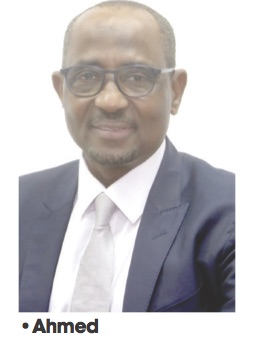
However, with the deregulation of the downstream sector of the petroleum industry in full swing, the Authority Chief Executive (ACE) of the Nigerian Midstream and Downstream Petroleum Regulatory Authority (NMDPRA), Farouk Ahmed, says the era of price fixing is over.
He also said that petroleum equalisation as well as the national transport allowance have been officially scrapped as they have been built into the new pump price of petrol.
He said the field is now level for all players willing to play in the downstream sector as it is in any liberalised market.
Ahmed said: “We put the regulation in place, we make sure quality control is complied with, we make sure the product is there and we give license to a prospective importer. The market is now open for everybody that wants to import as far as they meet all the requirements. So, it is not about the NNPC alone. For everybody in the sector, we make sure we guide their operations whether at the depot or wherever the product is but we will not put a cap to say this is what the price must be. As far as we are concerned in the NMDPRA, this is not like before when the PPPRA fixes the price. In a deregulated market, it is the market force that dictates the price.”
He also stated that the NMDPRA and the Federal Competition and Consumer Protection Commission (FCCPC) will closely monitor activities in the downstream sector to prevent profiteering by petroleum marketers.
Though no template spells out the pricing components of petrol price, Ahmed hinted that the market will henceforth be modulated to allow the fluidity of prices.
He added: “This means that the price will no longer be static. It will depend on the international price of the gasoline market. But this does not imply that marketers can sell at any price. If we find that certain prices are way above the expected profit margin, we and the FCCPC can move in to curb such excesses because that will be profiteering. The market structure will dictate the price swings at every point in time.”
He warned marketers not to under-dispense as strict monitoring and enforcement of standards and recommended practices will never be compromised.
Efforts by successive civilian administrations to end it have always been met with resistance from the citizens; many of whom ignorantly consider it their major or only benefit from the federal government.
Smuggling subsidized petrol to neighbouring countries like Niger, Chad, Benin Republic, Cameroon and others is a full-time job of the subsidy supporters’ club because they feed fat from it.
The Group Chief Executive Officer of the Nigerian National Petroleum Company Limited (NNPCL), Mr Mele Kyari, said Nigeria’s smuggled petrol gets as far as Sudan.
But following President Tinubu’s decision to end the subsidy bazaar, reports indicate that scarcity of Nigeria’s subsidised petrol has hit Benin Republic, a major smuggling hub. Consequently, the price of locally refined gasoline has tripled. It’s the same scenario in Chad, Cameroon and other neighbouring countries.
Nonetheless, the GCEO of NNPCL, Mele Kyari, has fully welcomed subsidy removal, saying it unshackles the national oil company from the burdensome payouts.
According to him, “There was a provision for N6 trillion in the 2022 Budget, and N3.7 trillion from January to June in 2023.
“Since that provision was made for subsidy, not a single naira was paid to NNPC to fund the subsidy. The NNPC had to fall back on the cash flow from its operations to fund the subsidy provision in the budget, to continue to supply petroleum products in the country. It is becoming a daunting task, making it almost impossible for NNPC to continue to discharge its fiscal functions”, he said.
Yusuf Lawal Othman, the National President of the Nigerian Association of Road Transport Owners (NARTO), in a recent presentation in Lagos, said that deregulation will reduce economic waste and lighten social burdens caused by governmental control.
“It will further expand opportunities for economic growth in the competitive sector and help achieve a greater cost of effectiveness,” he said. “Saving the cost of petroleum subsidies.”
Also weighing in on the issue, Dr Ahmed Adamu, a petroleum economist, said that consumer losses are expected but not inevitable even if a future date of the subsidy removal was announced.
According to him, the final removal of petroleum subsidy in Nigeria remains a welcome development as market forces will dictate fuel prices.
He however noted that with the sudden increase in petrol price by more than 170% due to the subsidy removal, the economy will shrink in the short run as productivity reduces.
“There will be less demand for petrol, and overall spending will decrease. Businesses will lay off staff to cope with the increasing cost of doing business, and general welfare will reduce.
“However, there will be new inventions as people start looking for alternatives. They will explore alternative transport systems or fuel or adjust their lifestyle. More business opportunities will emerge from this development. People will now begin to organize collaborative transportation means to share or reduce the cost of transportation per head.
“There will be efficiency of demand and reduced wastages, and unnecessary trips will be reduced. There will be fewer cars on the road and reduced carbon emissions. The NNPC Limited remittance to the government will increase because the cost of the subsidy is being removed. This enables the government to do more development projects and borrow less” he explained.
He added that petrol prices will fluctuate periodically as crude oil prices and dollar exchange rates change.
“NNPC Limited and other importers will post their prices whenever there is a change in the variables that affect the cost of their fuel. These could be the distance from which the fuel is imported, its quality, or variation in profit margins.
NNPC Limited’s posted