Follow Us on Google
•Mull legal framework for decarbonisation programme
From Ndubuisi Orji, Abuja
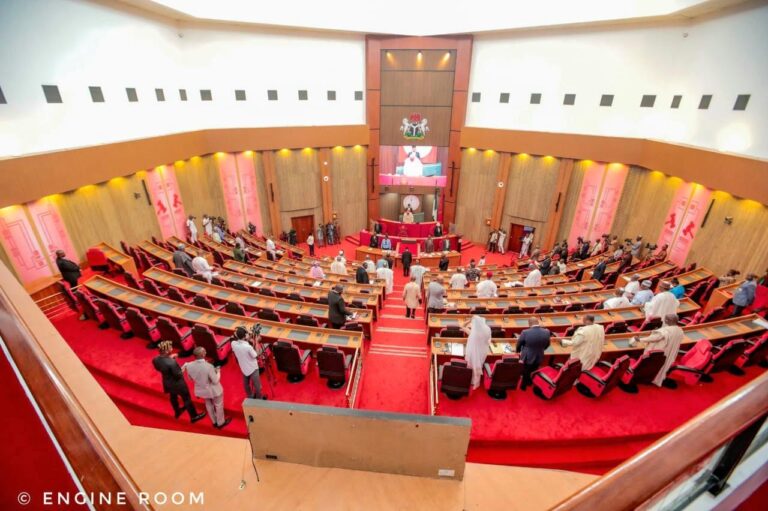
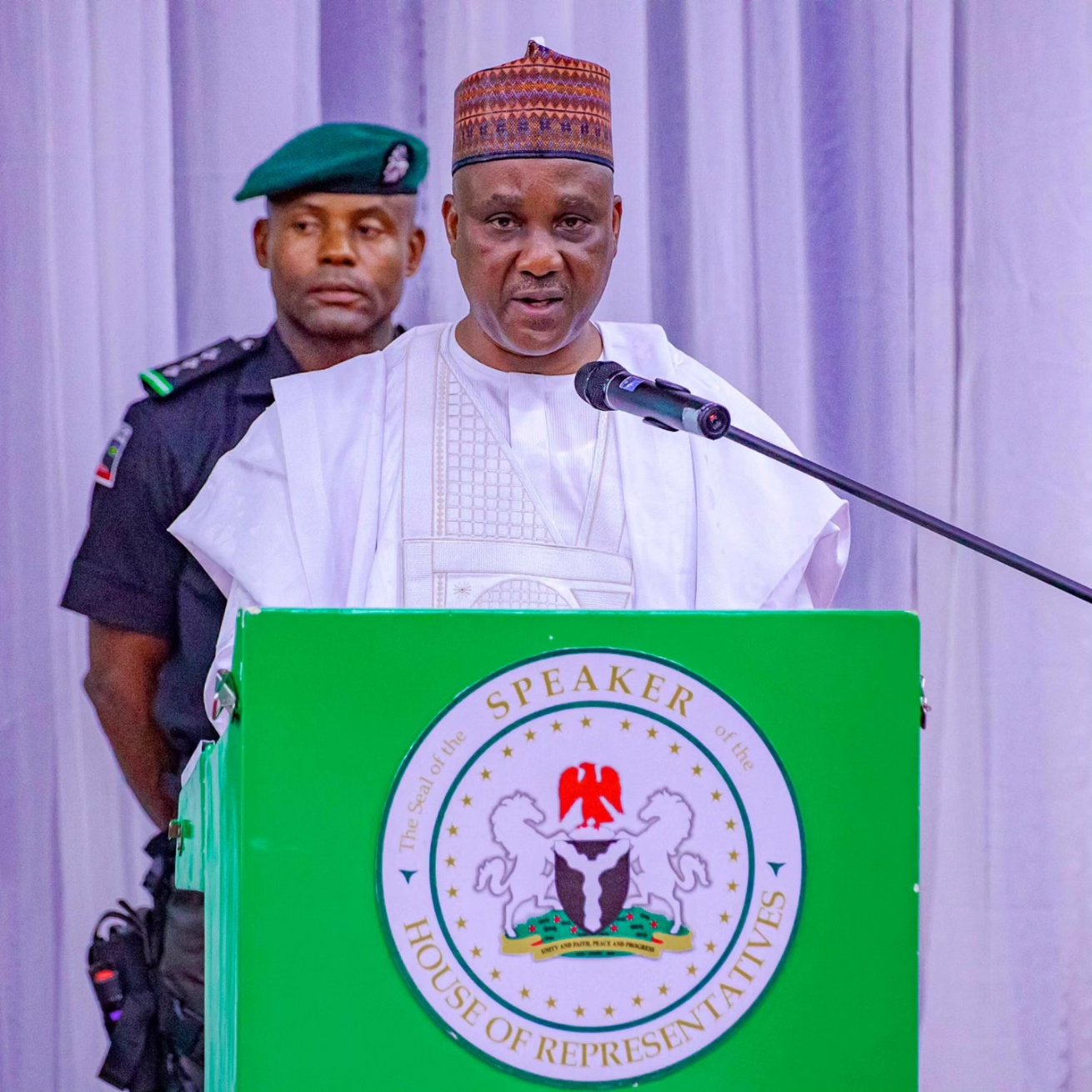
Speaker, House of Representatives, Abbas Tajudeen, has reaffirmed the commitment of the House to support the Federal Government to transit Nigeria into a low-carbon economy.
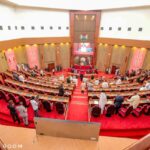
Tajudeen made this known at a roundtable discussion on the ‘Mandatory National Decarbonisation’ programme organised by the House Ad-hoc Committee on Mandatory Decarbonisation in Abuja, yesterday.
Represented by Muktar Shagaya, Ilorin West/Asa Federal constituency, Tajudeen affirmed the reality of climate change, saying that the 10th Assembly would not fail to support the executive to achieve a low-carbon economy.
“This roundtable discussion signifies our collective interest in the nation’s quest to achieve a low-carbon economy.
“Let me begin with a truth we can no longer afford to ignore, climate change is real and its impact is no longer to be faced in the future, it is here.
“The droughts in the North, the high temperatures in the West, flooding and erosion in the East and the abnormal rainfall in the South point to the fact that climate change is a lived experience for Nigerians.”
He urged Nigerians not to sit on the sideline, but to join their global counterparts in acting.
He described Nigeria as one of the largest economies and most populous nations in Africa, adding that Nigeria consistently ranked among the most affected countries globally by extreme weather.
“The economic costs of inaction are grave, ranging from agricultural losses to damage in critical infrastructure,” he said.
The speaker quoted the UN as saying that Nigeria’s climate inaction could cost up to 30 percent of the Gross Domestic Product (GDP) by 2050, about $460 billion.
Special Assistant to the President on Climate Technology and Operations, Mr Olamide Fagboji, expressed the determination of the Federal Government to transition Nigeria to a low-carbon economy.
He lauded the efforts of President Bola Tinubu in achieving a low-carbon economy and the House of Representatives for supporting the programme.
Chairman, House Ad-hoc Committee on Mandatory Decarbonisation Programme, Sesi Whingan, also affirmed the House commitment to achieving a low-carbon economy.
He assured that the House would consider legislation to provide a legal framework for the country’s decarbonisation programme.
Whingan said this is in sync with efforts to strengthen the country’s climate transition strategy and accelerate the shift toward a low-carbon economy. He explained that the proposed National Decarbonisation Bill is aimed at reinforcing the country’s climate governance architecture.
Other News
The lawmaker noted that the proposed legislation, which is currently at the committee stage, if passed would strengthen the work of the National Council on Climate Change (NCCC) and harmonise the various energy transition policies.
According to him, “This bill is designed to complement what the NCCC is already doing. It has already gone through the first and second readings in the House and hopefully before the end of the month, we will move towards the public hearing stage.
“Our plan is to continue engaging stakeholders to see how we can consolidate the different government policies and programmes and incorporate them into a workable and achievable framework.
“We all agreed that there is a need for strong collaboration between the executive and the legislature so that investors, both within and outside the country, can clearly understand the direction Nigeria is taking in its decarbonisation efforts.”
Meanwhile, Director for Africa at the Global Wind Energy Council, Wangari Muchiri, has said Nigeria’s push toward decarbonisation presents a major opportunity to create jobs, attract investment and diversify the economy.
Muchiri, who spoke at the stakeholders technical roundtable, noted that the transition to a low-carbon economy is critical for Nigeria, owing to the heavy carbon footprint of key sectors, including the oil and gas and agriculture sectors.
“The decarbonisation agenda for Nigeria is really critical. Many sectors in Nigeria, including oil and gas and agriculture, are very carbon-heavy. But, in today’s global economy, this presents a big opportunity for Nigeria to capitalise on the carbon economy, create jobs and bring new income into the sector.
“Decarbonisation is still a new field and not many people fully understand what it means for different sectors or how it can create jobs and opportunities in the Nigerian economy. That is why support, both technical and financial, is very important at this stage.”
She stated that the government’s commitment has encouraged international partners and private sector stakeholders to support Nigeria’s clean energy transition.
“I think one of the things we are seeing is that Nigeria is ready. The President has said on several occasions, including at COP last year, that Nigeria is prepared for a decarbonisation agenda. We are excited to see many partners ready to walk this journey with the country.”
Whingan noted that the current legislative drive of the House of Representatives is a commitment to complimenting the laudable efforts of President Bola Tinubu’s administration’s efforts.
He commended the President’s efforts in unlocking the potentials in the carbon ecosystem aimed at catalysing massive economic development and clean and healthy environment among several expected national benefits.
“It is of note that President Bola Tinubu is making significant strides in creating a low-carbon economy in Nigeria.
“He had in 2024 established the Presidential Committee on Climate Action and Green Economic Solutions to oversee climate mitigation and adaptation efforts, as well as green economy initiatives,” he said.
Whingan said that the President had also approved the establishment of Nigeria’s first Green Industrial Zone, Evergreen City, which would be a leading manufacturing hub for renewable energy technologies.
He emphasised the imperative of operationalising government plans to establish a national carbon registry, mandate emissions reporting by companies and introduce phased compliance measures.