Follow Us on Google
From Fred Ezeh, Abuja
The Interfaith Dialogue Forum for Peace (IDFP) has unveiled an interfaith code of conduct aimed at curbing hate speech, religious intolerance and violence, while calling for greater investment in peace-building initiatives across Nigeria.
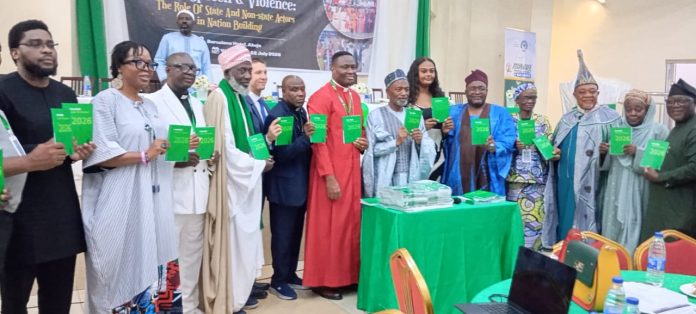
The Code was launched yesterday during the Forum’s Eighth General Assembly and Peace Conference in Abuja, themed, “Peace and Violence: The Role of State and Non-State Actors in Nation Building.”
The conference brought together government officials, religious and traditional leaders, diplomats, development partners, civil society organisations and members of the media.
Speaking at the event, the co-chairman of the Forum, Dr. Yusuf Yakubu Arrigasiyu, who was represented by Rev. Abainitus Hamman, said Nigeria’s growing insecurity, ethnic suspicion, misinformation, violent extremism and political tensions underscored the need for sustained dialogue and collective action to preserve national unity.
He stressed that peace could not be taken for granted, insisting that it must be consciously built, protected and sustained by responsible citizens, leaders and institutions.
He recalled that IDFP was founded on the belief that dialogue remains one of the most effective tools for preventing conflict and promoting peaceful coexistence among people of different faiths and ethnic backgrounds.
“Our religious differences must never become a justification for hatred. Our ethnic diversity must never become a reason for discrimination. Our political differences must never become a reason for violence,” he said.
The Forum warned that hate speech and misinformation have become dangerous drivers of conflict capable of creating suspicion, dehumanising communities and provoking violence.
While acknowledging the constitutional responsibility of the government to protect lives, uphold justice and guarantee security, the Forum maintained that peace-building requires the active participation of religious leaders, traditional rulers, civil society organisations, the media, social media users and ordinary citizens. It urged religious leaders to preach peace from churches and mosques, called on traditional rulers to strengthen community cohesion and charged journalists and social media users to promote responsible communication and resist the spread of false or inflammatory information.
Other News
The Forum also advocated greater investment in young people, saying they should be empowered as ambassadors of peace rather than instruments of violence.
A major highlight of the conference was the launch of the Interfaith Code of Conduct, which the Forum described as a framework for promoting responsible religious leadership, mutual respect, peaceful communication and the rejection of hate speech, incitement and violence.
The organisation said the Code should become a practical guide for religious institutions and leaders, rather than remaining a symbolic document. “It must become a living commitment that influences our words, guides our actions and shapes our leadership,” the Forum said, urging faith leaders to continually assess whether their messages foster peace or deepen divisions.
The Forum thus appealed to development partners, donor agencies, diplomatic missions and the private sector to support community peace-building, interfaith dialogue, peace education, women’s participation in peace processes, youth empowerment, early warning and early response mechanisms and initiatives aimed at countering misinformation.
It also emphasised that preventing conflicts before they erupt is more effective than responding after violence has occurred. “Sustainable peace-building requires knowledge, trained personnel, technology, effective networks, adequate resources and long-term partnerships,” it noted.
The organisation expressed appreciation to its international and local partners, particularly the King Abdullah bin Abdulaziz International Centre for Inter-religious and Intercultural Dialogue (KAICIID), for providing technical support, mentorship and capacity-building programmes that have strengthened interfaith dialogue in Nigeria.
Earlier, a representative of KAICIID described the General Assembly and unveiling of the Interfaith Code of Conduct as another milestone in Nigeria’s efforts to promote peaceful coexistence through dialogue.
The representative said KAICIID had supported the establishment of the Interfaith Dialogue Forum for Peace since 2017 through training, facilitation and technical assistance, with some of the Forum’s early capacity-building programmes held at the Centre’s headquarters in Vienna, Austria.
He reaffirmed KAICIID’s commitment to working with the Forum, the Office of the National Security Adviser and other relevant stakeholders to strengthen peace-building efforts and reduce religious and communal conflicts across the country.
The representative expressed optimism that the newly launched Interfaith Code of Conduct would encourage responsible religious leadership, deepen interfaith dialogue and contribute to lasting peace and national cohesion in Nigeria.