Follow Us on Google
By Odunayo Ayo Ojo
OBIREEN presented OKPA Ń IYOBA on 20 September 2025 at Ladbroke Hall, London. The collection is inspired by Benin royal history and the legacy of Queen Idia, the first Iyoba of the Benin Kingdom.
It focuses on the strength, dignity, and authority of the Benin woman, while showing how these values can exist in modern fashion today. Showing this work on an international platform like London Fashion Week places the collection under close attention, both creatively and culturally.
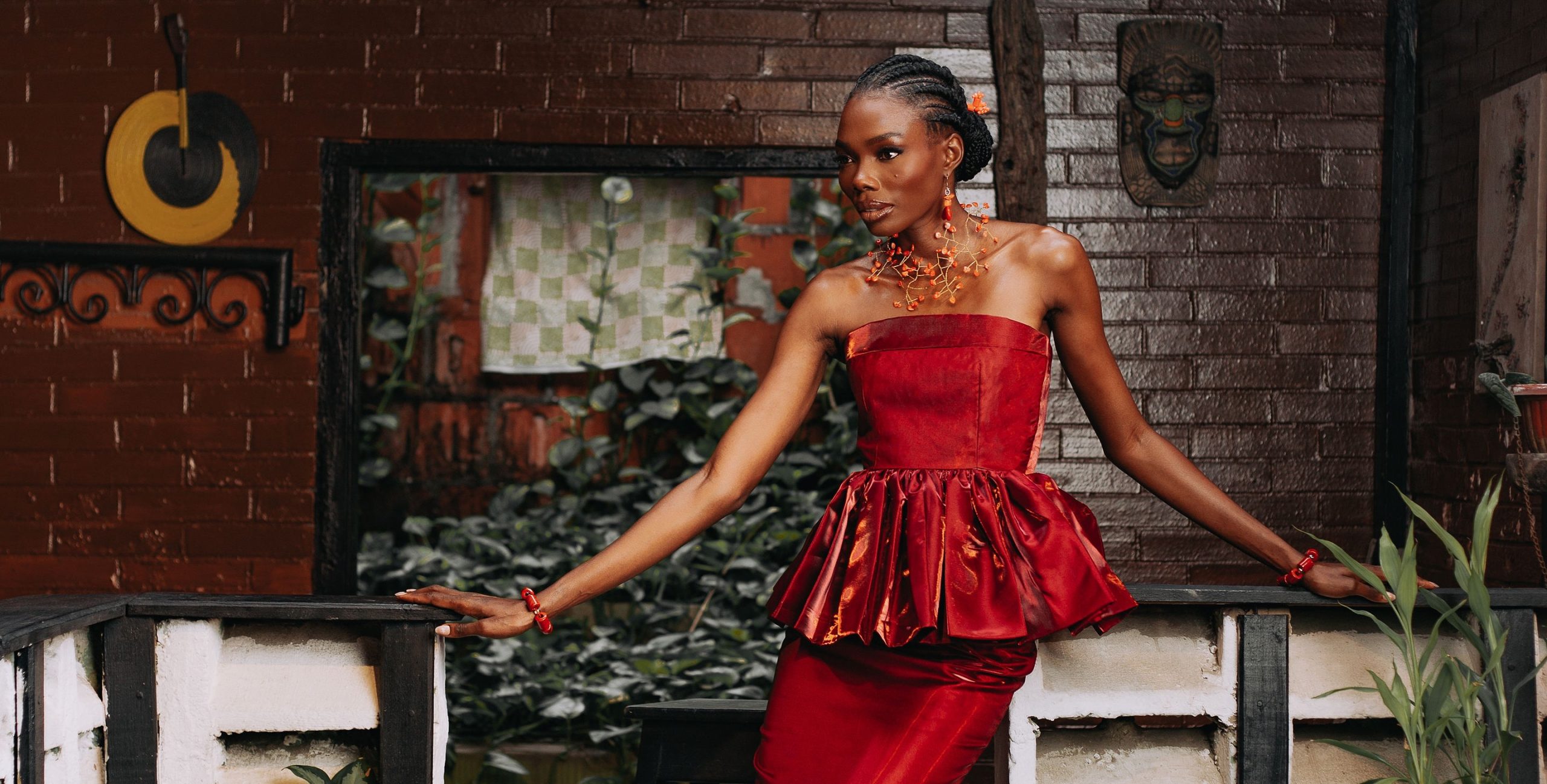
The collection is built around red and burgundy tones, colours that are closely linked to Benin royalty and coral regalia.
In Benin culture, these colours represent power, respect, and status. OBIREEN uses these colours with intention, making them the foundation of the collection rather than decorative accents. The colours immediately connect the garments to Benin history while still feeling suitable for a modern fashion setting.
Benin inspired clothing is often limited to bridal or ceremonial wear, usually heavily decorated with coral beads such as the okuku. OKPA Ń IYOBA moves away from this narrow idea. The collection suggests that Benin influenced fashion can be worn beyond traditional ceremonies.
The garments are designed for black tie events, formal evenings, and high profile gatherings, while still holding on to their cultural origin. This shift is important, especially in fashion spaces where African clothing is often treated as costume rather than everyday or formal wear.
The collection uses coral beads and royal colours as key design features, which clearly point to Benin heritage. However, culture is more than appearance. In Benin history, coral regalia carries social, spiritual, and political meaning.
When these elements are used in modern fashion, the question is whether the design goes beyond looking cultural or if it truly carries the deeper meaning behind them. Does the collection push the Benin story forward, or does it rely mainly on familiar symbols to show heritage?
This does not suggest that the collection misuses Benin culture, but it does raise the issue of depth. Reimagining tradition is necessary, but it requires clear storytelling through design choices, not only through colour or embellishment. A stronger connection between the historical meaning of the Iyoba and how the garments are constructed, worn, and experienced would strengthen the cultural message of the collection.
Despite these points, OKPA Ń IYOBA is a confident and well considered presentation. It places Nigerian history on an international stage without exaggeration or performance. The collection shows a clear design direction and a serious attempt to balance heritage with modern fashion.
With more attention to wearability and clearer cultural expression through design, OKPA Ń IYOBA has the potential to grow into a stronger cultural fashion statement. Presented at London Fashion Week, it reflects a designer engaging thoughtfully with identity, tradition, and contemporary fashion, while contributing meaningfully to discussions around African fashion today.