Follow Us on Google
Former Senate President Senator Pius Anyim has declared that President Bola Ahmed Tinubu is “not a politician of today” but a statesman taking difficult decisions to secure Nigeria’s future, saying the president is thinking beyond the next election and “planting” reforms for the next generation.
Anyim made the remarks while chairing a national forum of former and serving presiding officers of state Houses of Assembly, where he defended the administration’s reform agenda, including petrol subsidy removal, student loans and the proposed state police initiative.
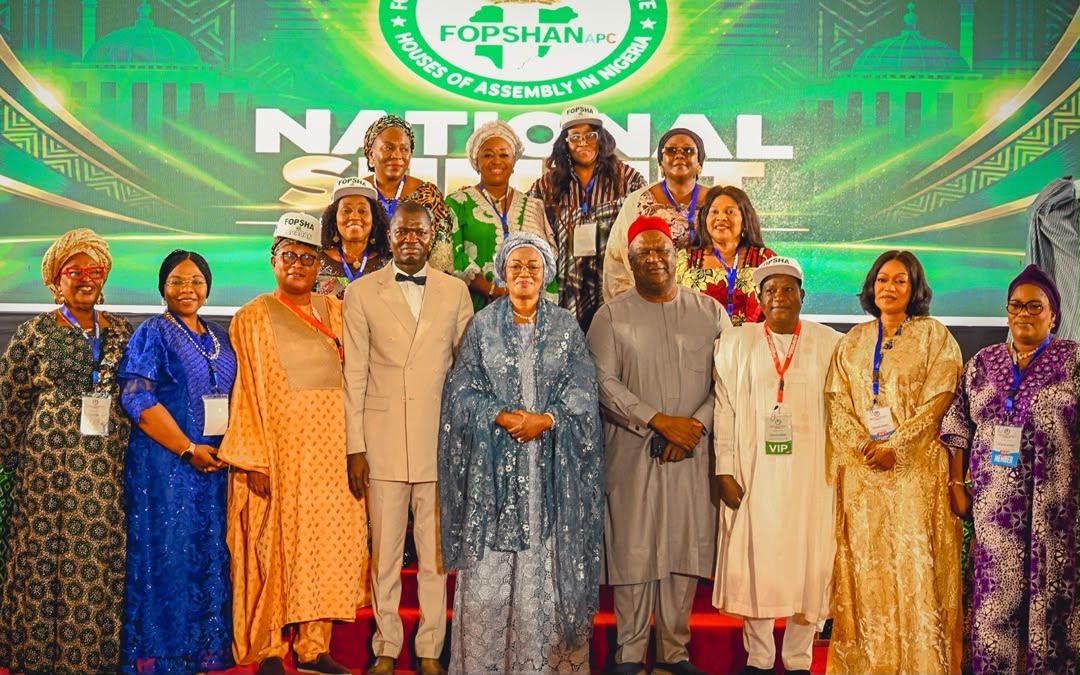
The forum, organised to assess the economic trajectory of the Tinubu administration, was held under the theme “Bold Leadership, Bold Reforms: From Subsidy to Renewed Hope.”
According to Anyim, reforms are rarely popular when they are introduced because their benefits are often realised long after the immediate pain of implementation.
“I rarely talk about iconic leaders. I rather observe them because most of the times they are not defined by the projects they do. They are rather defined by their vision and reforms to implement,” he said.
He argued that reforms become necessary when societies reach critical points requiring fundamental political, social and economic changes, adding that only courageous leaders are willing to make decisions whose benefits may not be immediately apparent.
“Reforms at every time had never always been very popular, but only courageous leaders who are not thinking about today but tomorrow actually embark on reforms,” Anyim said.
The former Senate President said his assessment of Tinubu’s political trajectory had convinced him that the President was looking beyond immediate political considerations.
“I have observed the political trajectory of President Bola Tinubu, and I am to say he was never a politician of today, but a statesman of the moment and the next levels,” he said.
“He is far-sighted and visionary, but above all, he is courageous and strategic in planning as well as in execution.”
Anyim cited the administration’s student loan policy, state police initiative and removal of petrol subsidy as examples of measures he said were designed with long-term national objectives in mind.
“His student loan policies target not today, but the next generation of leaders. The state police programme targets not today, but the stability of our social environment for the next generation,” he said.
On the removal of petrol subsidy, he said: “Subsidy removal is not necessarily for today, but to bail out today and to secure the future, because reforms are not for immediate impact.”
He likened Tinubu’s approach to that of a farmer who plants crops knowing that the harvest may come in another season.
“A reformer is therefore likened to a farmer. A farmer hopes for harvest, not during planting season, but harvest season. Statesman plans for the next generation to harvest,” Anyim said.
Former Plateau State Governor and former Speaker of the Plateau State House of Assembly, Simon Lalong, in his presentation, acknowledged the economic difficulties generated by the reform programme but said Nigeria needed to move from macroeconomic stabilisation to shared prosperity.
Lalong examined the removal of petrol subsidy, foreign-exchange reforms, fiscal consolidation, debt management, revenue generation and tax reforms as key components of the administration’s economic programme.
He noted that subsidy removal had increased transportation and living costs and placed considerable pressure on households and businesses, but argued that the issue had been postponed for years.
Other News
The former governor said assessments cited from the World Bank indicated movement towards macroeconomic stability, while poverty remained high and household incomes had yet to fully recover.
He therefore stressed that macroeconomic gains would need to translate into tangible improvements in the lives of Nigerians.
Lalong identified infrastructure, agriculture, human capital development, security, social protection, and youth opportunities as critical to achieving that transition.
He called for sustained investment in roads and bridges, while insisting that infrastructure projects must be delivered with quality and value for money.
On agriculture, he said the government needed to look beyond the distribution of inputs and strengthen irrigation, mechanisation, technology, storage, processing, transportation and marketing.
The former governor also highlighted student financing, consumer credit, targeted cash transfers, entrepreneurship, technical training, and digital skills as important tools for cushioning the effects of economic reforms and expanding opportunities.
Lalong said the Renewed Hope agenda should be treated as an interconnected framework covering food security, poverty reduction, economic growth, jobs, infrastructure, security, human capital, governance, and the rule of law.
He, however, stressed that continuity in the reform programme should be accompanied by correction, accountability and improved implementation.
Earlier, the National Chairman of the forum, Senator Wasiu Eshilokun Sani, said the gathering was intended to provide an avenue for experienced legislators to examine the consequences of major policy decisions and contribute to national development.
He said the removal of fuel subsidy, changes in federal allocation, and efforts to strengthen local government financial autonomy had generated significant national debate.
“These are consequential decisions which immediately affect citizens and institutions, and they therefore deserve thoughtful, honest and constructive engagement,” he said.
Eshilokun said the success of reforms would ultimately depend on the quality of implementation, the strength of institutions, and the extent to which Nigerians experienced their impact.
He urged participants to identify unintended consequences and areas requiring improvement rather than merely reflecting on government policies.
The former presiding officers, he said, had a responsibility to bring their legislative and governance experience to bear on national issues and advocate greater accountability in the management of public resources.
He also called for stronger collaboration among the three tiers of government, saying increased public revenue should be reflected in responsible governance and improved public services.
Eshilokun acknowledged First Lady Oluremi Tinubu, who was Special Guest of Honour, her legislative background, and her continued involvement in issues concerning women, children, and vulnerable Nigerians.
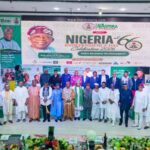
The forum brought together former and serving presiding officers of state Houses of Assembly, legislators, ministers, and other political stakeholders to examine the direction and impact of the ongoing reforms.