Follow Us on Google
By Moses Akaigwe
The 2026 edition of the West Africa Automotive Show (WAAS) ended on Thursday, May 14, at the Landmark Centre, Victoria Island, Lagos, with widespread acclaim from exhibitors, visitors and industry stakeholders, many of whom described it as the biggest and most successfuledition of the regional automotive exhibition so far.
Opened on Tuesday, May 12, WAAS 2026 attracted more than 350 exhibitors from across the world and was projected to host over 6,000 visitors during its three-day run.
This year’s show recorded a remarkable expansion, filling five exhibition halls—an increasefrom previous editions—and featured thousands of automotive products ranging from spare parts, lubricants and tyres to complete vehicles and cutting-edge mobility solutions.
A major highlight of the event was the overwhelming presence of Chinese exhibitors, underlining China’s growing dominance in Nigeria’s automotive aftermarket, manufacturing support and spare parts ecosystem.
Hall 3, in particular, hosted an expanded China Pavilion, where numerous manufacturers and suppliers displayed a broad spectrum of products and technologies targeted at the West African market.
Among the notable Nigeria-based participants were the National Automotive Design and Development Council (NADDC), Fouani Group, Toyota Nigeria, and Coscharis Motors Plc, all of which used the platform to reinforce their commitment to the country’s automotive development.
W Motors displayed Jetour vehicles while Tata showcased trucks Fouani Nigeria Limited, widely known for representing leading electronics brands LG and Hisense, made a significant debut in Nigeria’s automotive market by introducing the ROX brand of luxury electric vehicles.
The company showcased the flagship ROX 01 while also promoting the ROX Adamas, positioning itself as a key player in the emerging market for Extended-Range Electric Vehicles (EREVs) in Nigeria.
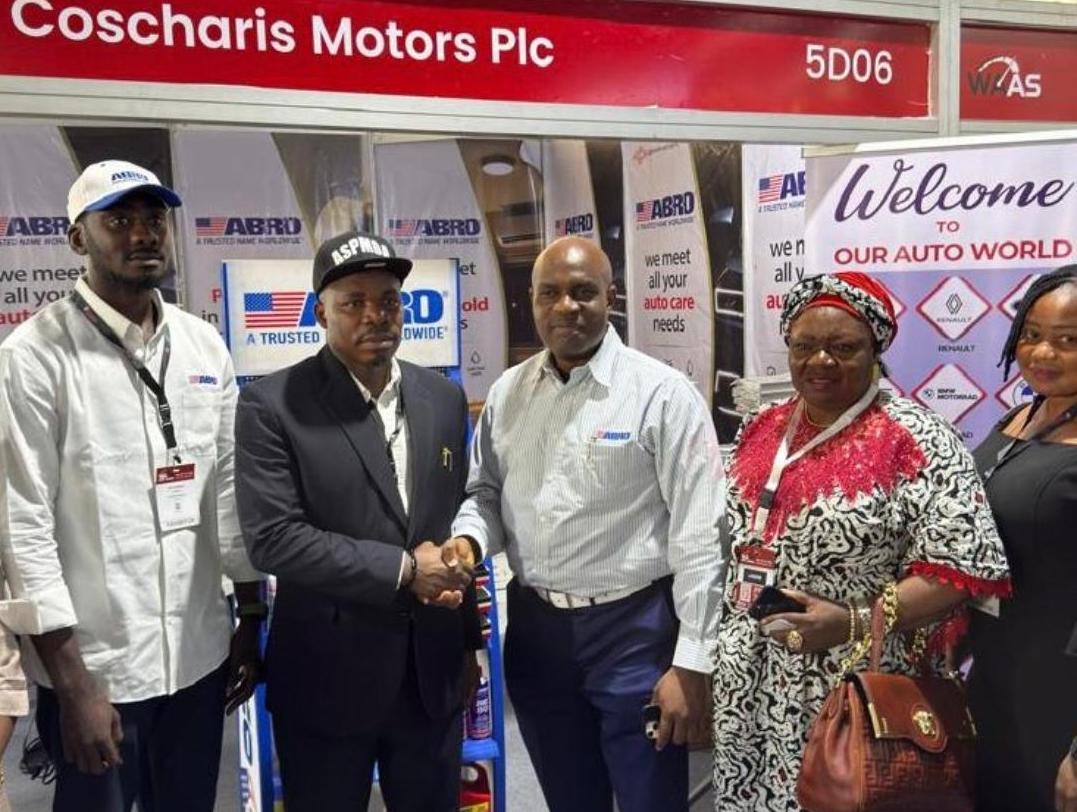
Coscharis Motors, through its Auto Care and Consumer Products Division, also drew considerable attention with its display of ABRO-branded automotive maintenance products, including a wide variety of cello tapes manufactured locally in Nigeria.
The company’s participation highlighted the increasing importance of local manufacturing and industrial support services within the broader automotive value chain.
Other News
Foreign participation was equally robust. Foton National Distribution Centre, Lagos, was represented by Dongfu Motor Co. Ltd., which showcased an extensive portfolio of genuine Foton spare parts and aftersales solutions.
Other international exhibitors included Axco, known for engine parts; Guangzhou Jiren Automotive Parts Co. Ltd. from China; NASA Chemicals (Pvt) Ltd. from Pakistan; El Mohamed’s from China; and numerous other global brands seeking deeper penetration into the Nigerian and West African automotive markets.
WAAS 2026’s central theme strongly emphasized local manufacturing, aftersales development, and strategic partnerships aimed at reducing Nigeria’s dependence on imported automotive components.
Discussions and exhibitions focused heavily on building sustainable local production capacity, strengthening technical expertise, and fostering a skilled aftersales workforce capable of supporting Nigeria’s expanding automotive industry.
The event also deepened collaboration between international suppliers and local market stakeholders through partnerships with influential organisations such as the Auto Spare Parts and Machinery Dealers Association (ASPMDA), creating direct channels between global manufacturers and Nigeria’s vast network of spare parts traders.
Speaking during the exhibition, ASPMDA President, Ngozi Emechebe, called for a strategic partnership with the Federal Government to reposition Nigeria’s automotive aftermarket sector as a major contributor to industrial growth, employment generation and local manufacturing.
According to Emechebe, ASPMDA is currently undergoing a significant transformation from its traditional status as a major trading cluster into a modern automotive business hub capable of supporting Nigeria’s industrialisation ambitions.
He stressed that with proper government collaboration, policy support and investment incentives, Nigeria’s automotive aftermarket could evolve into one of the country’s strongest non-oil industrial sectors.
Industry observers noted that WAAS 2026 successfully demonstrated Nigeria’s increasing relevance as a strategic gateway for automotive investment in West Africa.
The combination of international participation, local industrial advocacy, product innovation and manufacturing dialogue positioned the exhibition as a critical platform for shaping the future of mobility, aftermarket services and industrial development in the region.
As the curtains closed on WAAS 2026, stakeholders expressed optimism that the momentum generated by this year’s exhibition would accelerate local capacity building, deepen foreign partnerships and strengthen Nigeria’s automotive sector as a driver of broader economic transformation.