Follow Us on Google
…Unity-Providus merger awaits court approval
By Chinwendu Obienyi
With just 27 days left before the recapitalisation deadline set by the Central Bank of Nigeria (CBN), fresh market rumours are swirling about possible mergers among some of Nigeria’s biggest banks.
Industry intelligence gathered over the weekend, though not officially confirmed, points to the likelihood of a merger between two Tier-1 banks as lenders scramble to meet the new capital requirements. At the same time, about $706.84 million in foreign investment is believed to have entered the banking sector during the recapitalisation window.
Investigations by Daily Sun show that while several banks have already completed their capital raising ahead of the deadline, others are still trying to close funding gaps through regulatory approvals, investor funding, or possible mergers with other institutions.
Sources within the banking industry who spoke on condition of anonymity said discussions are still ongoing and remain confidential.
According to them, neither the banks involved nor regulators have confirmed the merger talks yet.
However, they noted that such a development would not be surprising given the large amount of capital banks are required to raise within a relatively short time.
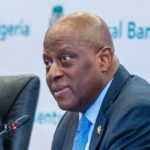
Aside from the merger speculation, a recent report by Proshare Research appears to support an earlier disclosure by the Governor of the Central Bank of Nigeria, Olayemi Cardoso, that significant foreign capital has entered Nigeria’s banking sector during the recapitalisation exercise.
According to the report, about $706.84 million may have been injected into the sector by foreign investors who see long-term opportunities in Nigerian banks.
“The inflow reflects growing offshore investor interest in Nigeria’s financial services industry, particularly among institutions viewed as systemically important and well-positioned for post-recapitalisation growth”, the report said.
Despite these developments, banking executives urged caution, stressing that until formal announcements are made, the merger rumours and capital inflow figures should be treated as speculation.
Executives who spoke to Daily Sun said any merger or major capital injection would have to go through proper regulatory procedures before becoming official.
“Regulatory filings, shareholder approvals, and disclosures to the Nigerian Exchange Limited (NGX) would be required before any such transactions are formally recognized”, they said.
Still, the growing rumours reflect the intense pressure on banks to secure fresh capital before the deadline expires. Analysts say the remaining weeks could see a rush of activity in the capital market, including rights issues, private placements, partnerships and possible mergers.
Some financial institutions have already moved early to secure their positions.
One example is Sterling Financial Holdings Company Plc, which completed its recapitalisation programme ahead of schedule. The group raised about N191.79 billion through a mix of rights issues, private placements and public offers between December 2024 and October 2025.
The group later secured final regulatory approvals in January 2026. This development placed its subsidiaries—Sterling Bank and The Alternative Bank—comfortably above the N200 billion minimum capital requirement required for a national banking licence.
Another bank that recently confirmed compliance is Optimus Bank. The bank announced last week that it had successfully met the recapitalisation requirement after raising its paid-up capital to N200 billion.
In a statement posted on its social media platforms, the bank said it had met the revised minimum capital requirement for national commercial banks just weeks before the regulatory deadline.
The bank said the achievement reflects strong support from shareholders and confidence in its long-term strategy.
Other News
The statement noted that the new capital level demonstrates the bank’s commitment to building “a more resilient, innovative, and globally competitive financial institution.”
The achievement is particularly significant considering the bank’s earlier position. As of its 2023 financial year, Optimus Bank had a capital base of only N35 billion. This meant it needed to raise about N165 billion to meet the new requirement—one of the largest proportional funding gaps among banks participating in the recapitalisation programme.
Although the bank has not yet disclosed the specific financial instruments used in the fundraising or the identities of investors who participated, the successful capital raise places it among the growing list of lenders that have met the CBN’s new capital benchmark.
Meanwhile, FCMB Group is reportedly undergoing regulatory validation by the Central Bank of Nigeria to determine whether it has met the requirements for an international banking licence.
The group currently has a capital base of about N288.96 billion, which is still below the N500 billion threshold required for international banking operations. To close the gap, the bank launched a two-phase public offer aimed at raising additional funds from investors.
Financial analysts say the conversation in the banking industry is gradually shifting away from simply meeting the recapitalisation requirement.
Instead, attention is now focusing on which banks will emerge stronger and more competitive after the exercise.
Experts say investors are now looking closely at factors such as balance sheet strength, governance structures and the ability of banks to generate sustainable earnings in the years ahead.
According to analysts at Proshare, the current developments reflect a broader strategy among financial institutions seeking growth beyond traditional banking services.
“While still speculative, these developments reflect a growing appetite among financial institutions to pursue scale, diversification, and strategic sector positioning beyond traditional banking.
The calculus for banking sector equity in the post-deadline environment is no longer about meeting the CBN’s threshold. It is about who emerges stronger, leaner, and better capitalised to compete in the next earnings cycle, and at what cost to existing shareholder value that position was achieved”, Proshare said.
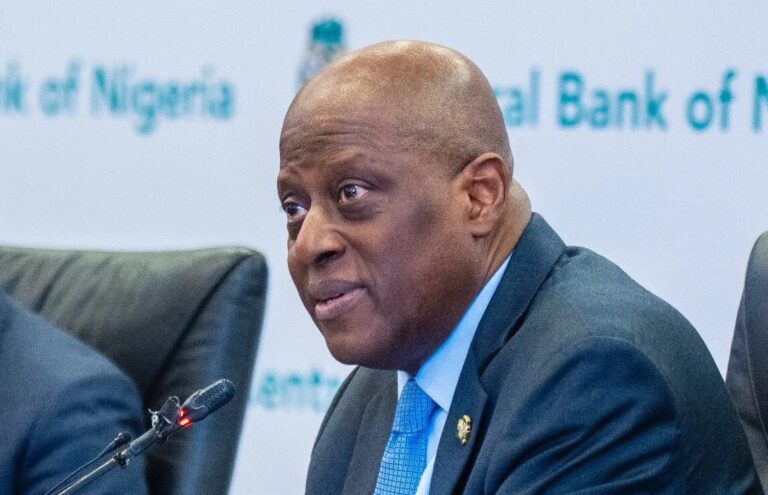
Earlier, the Governor of the Central Bank of Nigeria, Olayemi Cardoso, revealed that Nigeria’s banking sector had already raised N4.05 trillion through the recapitalisation programme.
Speaking during the 304th meeting of the Monetary Policy Committee in Abuja, Cardoso explained that a large share of the funds was raised within Nigeria, while a significant portion came from international investors.
“So in summary, 71.67 per cent is domestic mobilization and 28.33 per cent is foreign participation. This balance, in my view, represents a mix of domestic and foreign which signals broad investor engagement and confidence in the sector”, Cardoso remarked.
The CBN governor also disclosed that 20 banks have already met the new minimum capital requirements set by the regulator.
He added that 13 other banks are at advanced stages of raising the required funds and are expected to conclude the process before the deadline.
However, analysts warn that the final weeks before the deadline could still be crucial for some institutions.
According to market watchers, the key question is not just how many banks will meet the requirement, but which types of banks are still struggling to close the gap.
If some systemically important banks or institutions with weak capital buffers are among those still racing against time, the final stretch of the recapitalisation exercise could trigger last-minute market pressure or consolidation moves across the industry.
With just a few weeks left, the Nigerian banking sector appears to be entering its most decisive phase yet in the push to meet the CBN’s new capital standards.